Africa-Press – Mauritius. Most democracies are recognized through free elections. Here, every five years, the people are invited to make a choice. But, during the last two general elections, the citizens voted not to elect a party but to negatively sanction the mode of management of the Republic.
We live democracy every day with the support of enlightened citizens who use different channels of information to denounce the failings of politicians and demand ethical behavior from the political class.
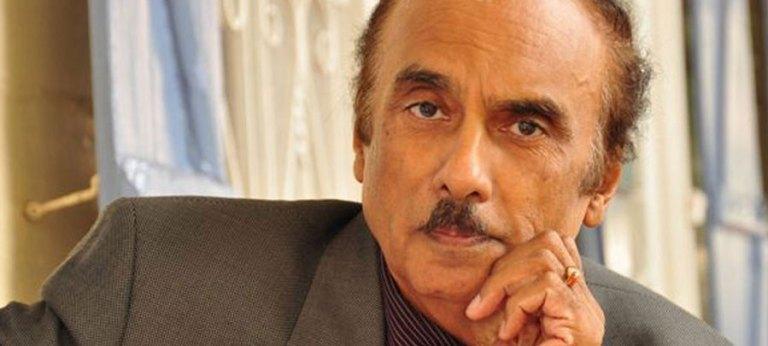
This week, Sydney Selvon, journalist in favor of the free and plural press, takes a critical look at the Mauritian political world. Mauritius Times: It seems that the political negotiations will experience a big boost in view of the next general elections after the visit of Pope Francis.
In the meantime, the trends are emerging, they are becoming clearer on the side of MMM and MSM. No dirty tricks in prospect, then, with the conclusion of an Israeli-style alliance as in 2010, especially after the defections from the ranks of the MMM in favor of the MSM?
Sydney Selvon: First of all, the papal visit will be used, just as the tomb of Blessed Father Laval was, for the propaganda of the MSM and its leader, in the most shameful way possible.
It was a sacrilege as I have already said elsewhere. And this in the hope that this visit could bring a lot of votes to the MSM, which is a miscalculation.
With regard to the defections, let us remember that it is done in a political context entirely dominated by an indecent powerism. I would add: unbridled and unbridled powerism.
On this subject, I will quote here the columnist Jean-Pierre Bondi: “History allows you to come across authentic ‘powerists’. Neither right nor left. Right, then left, or vice versa.
Permanently stretched towards their objective, locked in a strategy which surely leads to it… In fact, the passion for power has something pathological about it. Never having touched me, she always amazed me with her stubbornness and her nerve. »
Powerism seems to me to be the first motivation, the first spring of what is already called the “current political transfer window”, with money in “pole position” in many negotiations.
Thus, in such a rotten context, I will not go through four paths to tell you that the country has never been more plagued by corruption than today. We can even read in Wikipedia, a collective online encyclopedia, open to the rest of the world, that corruption in Mauritius “is pervasive and ingrained”.
In this way, should we be surprised that we debauchery where we can, who we can? As far as any kind of power-sharing is concerned, I don’t see anything like it on the horizon, whether “Israeli-style” or not, and involving any of the three main parties – the Labour, the MMM or the MSM.
The last two examples of power sharing at the top were the “Remake 2000” which was sabotaged by Paul Bérenger and Alan Ganoo, and the PTr-MMM Alliance of December 2014. There is no agreement that is conceivable these right now, at least not before the next election. . .
* It is still surprising that the MMM and the MSM have not been able to find common ground for the next legislative elections when one needs the other and an electoral alliance between these two parties would have could make a difference, right?
For me, this alliance makes sense, but I am aware that difficult negotiations took place but they did not succeed. The main reason, from what I have learned, is disagreements over a possible power sharing between the leaders of these two parties.
There was no question of a ‘repeat’ of the Israeli agreement as was the case for the ‘Remake 2000’. Should we also recognize that today, the MMM is a party split into a thousand pieces, one of the main ones, the Obeegadoo faction, has already joined the MSM.
It could also be that Paul Bérenger basically wanted to favor the ‘one against all’ option with the boulevard which, according to him, should come before him in a three-way fight. But that’s a potentially risky option, don’t you think?
No, Paul Bérenger is right to take this risk that the “one against all” option generates because, historically, there is a very pronounced difference between the structure of the MMM and the MMM electorate.
Whether or not that structure breaks, as it currently does, the psychology of this electorate comes down to voting purple. The Collendavelloo, Ganoo, Obeegadoo, Jeeha are in no way comparable to the giants Anerood Jugnauth, Paul Bérenger or Navin Ramgoolam. It’s a matter of the difference in scale between albatrosses and sparrows, I would say. And which voter would care about sparrows, one might ask?
* But what does the MMM itself represent in terms of electoral strength today? If the latest defections of members of the MMM who were going to be candidates in rural constituencies say a lot about the weakness of this party in rural areas, do you believe that the MMM is today reduced to the same status as the PMSD of 1976, c is to say an urban party?
It is true that the MMM and the PMSD have today become essentially urban parties. Although Labor remains strong in some urban areas such as Vacoas-Phoenix, Belle Rose-Quatre Bornes, Curepipe-Midlands and at No. 3 in Port-Louis.
If Labor wins the 30 rural seats, which is not impossible, these urban regions will secure power to Navin Ramgoolam. The MSM alone will not win a single seat in urban areas, in my opinion.
It is the party that is most looking for an alliance and dissidents to domesticate, as is the case with the defectors it has already welcomed into its midst.
* Let’s stay with the MMM: the great reunification of the militants has not taken place, and the family is dispersing.
.
. to other parties. Who will save the MMM, in your opinion? The Bérenger family… or possibly Ramgoolam?
I don’t see this great militant family reunification happening. But there are a number of younger elements at MMM who will take over. I see the leader’s daughter well placed for this.
She did her apprenticeship like Adrien Duval at the PMSD or Pravind Jugnauth at the MSM. The parties are falling apart like the IFB in the 1970s. This party subsequently disappeared.
But let’s talk above all about the PMSD which had rallied half the country behind it, narrowly avoiding its disappearance with the rise to power of the MMM in the 1970s by joining the power in place. I already hear it said, or speculated, that the MMM would support a Labor Party back in power after the next general election.
So, it would be a rescue of the MMM by Ramgoolam since Bérenger would then be forced to join power so that he could pick up the pieces, and above all and above all, regain his electorate, which is more possible when one has power.
.
* You should know, having been a journalist in Le Mauricien towards the end of the 1970s, at a time when the MMM was hitting very hard on the Labor government that, subsequently, SSR was to confide much later to its closest collaborators that it then saw the MMM being able to make an effective counterweight to Gaëtan Duval. And, this is the reason why he had adopted a more accommodating approach vis-à-vis Paul Bérenger and the MMM than the hawks within the PTr…
I am aware, thanks to two things, firstly my membership of the MMM in the 1970s, then thanks to confidences made to me by Sir Veerasamy Ringadoo when he was at the Réduit in the 1980s, of the secret negotiations between, of on the one hand the tandem Sir Veerasamy Ringadoo-Sir Harold Walter and, on the other hand, Paul Bérenger, with a view to a red-purple alliance before the 1976 elections.
It was indeed SSR’s intention to come to terms with the MMM, or so it seemed at the time. But what is also true is that SSR and his generation of politicians were distinguished by the way they practiced politics.
They were indeed doing politics differently from what we are witnessing today. I must also add that SSR and Paul Bérenger respected each other mutually while remaining political adversaries. The decline of the MMM would not really be a good thing for democracy because of the political vacuum it could create. What do you think ?
I am convinced, having been very close to the Bissoondoyal brothers, often going to their home to discuss history and politics in the 1970s, that the disappearance of the IFB, without which Maurice would not have had independence, was a bad thing for democracy.
This would also be the case if the MMM – which historically has contributed enormously to the maintenance of democracy in Mauritius – were to disappear.
It must be said in passing that the MMM has always had a great deal of respect for the greatest Speakers in our history, be it Sir Harilall Vaghjee or Sir Ramesh Jeewoolall.
I have never seen or heard “I order you out!” repeated, and this, systematically against the adversaries of the party in power which had nevertheless appointed them.
I regret that time when ethics and honor were not lacking in Parliament. The Opposition had a freedom of speech and criticism that it no longer has today.
As for the vacuum that a decline of the MMM could create, it is very possible that it will create a dangerous vacuum for our democracy. Consequently, such a situation would favor the flowering of sectarian, even extremist, tendencies on the political spectrum.
This would be dangerous for national unity and cohesion. * We said at the beginning that trends are emerging and they are becoming clearer. What remains unresolved is the positioning of the PMSD vis-à-vis the PTr.
You don’t see them making the mistake of 1976, do you? The PTr and the PMSD are natural allies. These two parties are, historically, the architects of the first Mauritian economic miracle between 1971 and 1974.
Blue and red together would constitute a popular and powerful banner, perhaps unbeatable. Only blind powerism would make such an alliance impossible. * Is there more to the PMSD than the symbol it represents, which has made this party, once a fierce adversary, today an almost “natural” ally of the PTr?
Yes, the PMSD remains an important party in our democratic context. His support will be crucial, in many respects, to the Labor Party. During this term, the PMSD has prevented rogue attempts to violate democracy.
I give you two examples. First, there was the MSM’s attempt to throw the DPP in jail and abolish its constitutional position. Then there was another rogue measure contained in the electoral reform bill.
The latter would be characterized by a blind and shameful partisanship which continues to pursue the domestication by the MSM-ML of the institutions supposed to be independent, including the police and the Electoral Commission, and so on…
By leaving a post of Deputy Prime Minister and several ministries, the PMSD saved democracy. It is shocking and outrageous to me that the MMM refuses to acknowledge this.
* Lindsay Rivière said in a recent interview that “nothing says that there will not be a clear victory for a single party that can form a government.
.
.
“. It is quite possible, but it is without counting the blows below the belt that the MSM would count on bringing against its main opponent, the PTr. Can we anticipate strong opposition from the electorate against such methods?
There is talk of other blows under the belt against Navin Ramgoolam since his arrest without any justification by a police-Gestapo who threw him in prison.
If, by chance, he spends the next election behind bars, there will be a popular uprising that will break down doors, walls and bars to get him out. The MSM-ML has already done too much harm to democracy.
But it’s not just attacks on democracy, repeated scandals. There is also the economic balance sheet. We were promised an economic miracle. This is what it is:
2014 was a year of great promise for the now deceased Alliance Lepep.
2015 was that of the renewal and repetition, in the President’s Speech and the Budget Speech of 2015-2016, of these famous promises, above all a “second economic miracle”, minus the Labor tramway project, minus also the hidden decisions to come such that there would be 2 prime ministers and 3 finance ministers.
The economic miracle would have been, in fact, not the 2nd but the 3rd economic miracle in our post-independence history. The first was carried out from 1971 to 1974 with – as main architects – Sir Gaëtan Duval who is to date our greatest Minister of Tourism in history and first promoter of the Mauritian export free zone and Sir Satcam Boolell, who played a key role in the sugar negotiations of the Lomé Convention.
Among the most spectacular promise-mirages of the defunct Alliance Lepep were also an “economic miracle” with growth exceeding 5% per year, a permanent water supply, i.
e. 24/7; and also full employment, with the total disappearance of unemployment by the creation of 20,000 jobs per year until the end of the mandate, i. e. a promise of 100,000 new jobs in 5 years of mandate.
Today, while the two economic miracles of the 70s and 80s were an opportunity for Mauritius to produce massively and export more than the value of its imports, the opposite has happened.
All in all, an upside-down economic miracle! In his Budget Speech last year, the current Minister said this, and I quote: “Our GDP is expected to grow by 4.1 percent in fiscal year 2018-19 compared to 3.9 percent in 2017-18.
» On the contrary, economic growth does not reach 4%.
Finally, the former Minister of Finance, Vishnu Lutchmeenaraidoo, faced with this failure, fled, even daring to denounce a growth that he said was still approaching 3% and always.
Where did the promise of an economic miracle go? And that of the promised 5.5% economic growth? Under the old Labor regime, the figures were as follows for net job creation per year, and I quote:
2011: 3,800 less; 2012: +5,800; 2013: +14,000; 2014: +5.200. Total over 4 years of net job creation: 25,000.
Under the current government, the net job creation figures per year are lower, as follows: 2015: +7,400; 2016: +300; 2017: +6,500; 2018: 1,400 fewer jobs. Total over 4 years of net job creation: 14,200
Where have the 20,000 new jobs per year promised by the defunct Alliance Lepep gone? This Government has not even achieved half of the 25,000 jobs created in 4 years by the Labor government. All the budgets of the present Government have been, in this regard, mirages when 100,000 new jobs had been promised.
Moreover, the defunct alliance has given the world signals of a dubious financial practice at the very top of the state and the World Bank has taken good note of it, whatever the Prime Minister says, who chooses the quotes he likes .
Thus, the Portuguese charmer is mentioned in its latest Overview on Mauritius, the World Bank recalling this, I quote: “The president of Mauritius, appointed in 2015, resigned following allegations of financial impropriety.
It was alleged she made personal purchases with a credit card provided by an NGO whose founder is under investigation for alleged fraud in Portugal. ”
You should also read the interview with Jocelyn Kwok, director of AHRIM, entitled ‘Joceyln Kwok, director of AHRIM: “Our tourism is not going very well at the moment”, published in Le Mauricien on May 12 for understand the seriousness of the situation.
I quote an excerpt from this interview: “Question: ‘Do tourism stakeholders and the government understand the scope of these criticisms?’ “Answer: ‘It gets worse than that. With regard to security, the drop in confidence is 50%.
And more alarmingly, while overall, after their stay here, only 1% of our tourists said they did not want to recommend Mauritius to their relatives and friends, this percentage of negative appreciation reached in 2017 the bar of 10% of our visitors! If 10% of our 1.4 million tourists say they do not want to recommend Mauritius after their stay here, there is bound to be a big problem. Order and law, therefore, security are on the loose in this country, contrary, once again, to the promises made in 2014 and 2015.
For More News And Analysis About Mauritius Follow Africa-Press