
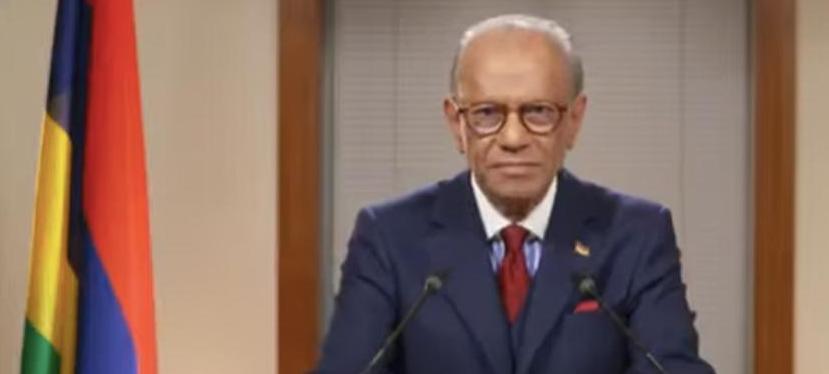
Africa-Press – Mauritius. The kick-off of the “16 Days of Activism against Gender-Based Violence” campaign took place on November 26 at the Harilal Vaghjee Hall in a relaxed yet resolute atmosphere, marked by a strong message from Prime Minister Navin Ramgoolam regarding electoral reform. He confirmed that both Deputy Prime Minister Paul Bérenger and himself would “resolutely move forward” with electoral reform, including the introduction of proportional representation, which would ensure adequate representation of women in the National Assembly.
“The DPM and I will move forward with the commitment we have made. Proportional representation is essential for fairer and more balanced representation,” he emphasized, addressing an audience comprising ministers, deputy ministers, majority parliamentarians, NGOs, members of the diplomatic corps, United Nations system representatives, and civil society actors.
This announcement comes at a time when the government faces international pressure regarding women’s participation in public life—a point underscored by Alka Bhatia, UNDP Resident Representative in Mauritius, during her speech.
Since November 26, the Harilal Vaghjee Hall has been transformed into a modern exhibition space where numerous artists have expressed, in their own ways, their visions of gender-based violence through paintings and video installations. At the center of the hall stands a tree where visitors are invited to express their opposition to gender-based violence—particularly against women and children—by placing symbolic “leaves” on its branches. This interactive multimedia exhibition was organized in partnership with the UNDP.
In his address, Navin Ramgoolam stressed the need for robust, coordinated policies to reduce or eliminate gender-based violence. “Any responsible government must implement strong and effective policies to combat this scourge,” he affirmed, noting that Mauritius was among the first countries in the world to establish a ministry dedicated specifically to gender equality. However, he cautioned that institutional action alone would not suffice: “Gender-based violence affects all communities and all social strata. The government alone cannot eradicate it—every citizen must get involved.”
For his part, Paul Bérenger commended the initiative of the National Assembly’s Gender Caucus, chaired by Shirin Aumeeruddy-Cziffra, while highlighting an alarming reality: gender-based violence is rising globally. In his view, the most sustainable response lies in prevention. “We must teach respect, equality, and human dignity from the earliest age. That is how we will break the cycle,” he stated, calling on parents, teachers, institutions, and civil servants to join forces to make Mauritius a model in the fight against gender-based violence.
Minister of Gender Equality and Family Welfare Arianne Navarre-Marie emphasized the need for collective awareness. She pointed in particular to the recent inauguration of a shelter for vulnerable women and children as evidence that the need is urgent and real. “There is still insufficient awareness. Gender-based violence is not a private matter—it is a national cause,” she insisted. Her message was clear: break the silence, support survivors, and build a society where women and girls can “live without fear and reclaim control of their destinies.”
Shirin Aumeeruddy-Cziffra, Speaker of the National Assembly, called for public engagement. The exhibition transforms the National Assembly into a civic space for 16 days, inviting the public to write, testify, reflect—but above all, to feel. “We want active participation. Parliament must become the people’s house once again,” she declared. For her, the exhibition combines artworks, interactive installations, virtual reality experiences, messages on the Tree of Dignity, and short film screenings: “We don’t just want visitors to admire the paintings—we want them to feel, to understand, to write, and to participate,” she advocated.
Following the speeches, Prime Minister Navin Ramgoolam, Deputy Prime Minister Paul Bérenger, Gender Equality Minister Arianne Navarre-Marie, UNDP Representative Alka Bhatia, along with other ministers and dignitaries, signed a Pledge against gender-based violence.
The exhibition—which is open to the public—will remain on view until December 10.
For More News And Analysis About Mauritius Follow Africa-Press