
Africa-Press – Mauritius. Danielle Selvon asks herself the question: “What is happening at the MMM? To laugh or to cry…” Good question, but potentially harmful for the purple deputy, as for the others previously – those who had raised their voices against the way of doing things of the party leadership.
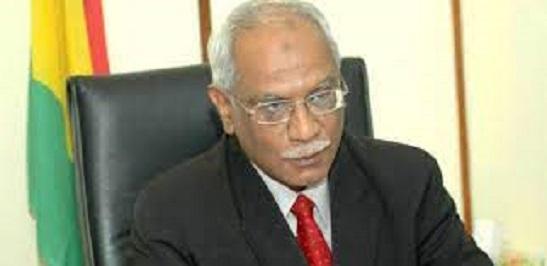
What is happening to the MMM, in your opinion? Cader Sayed-Hossen: This is a difficult question for me. I am not a journalist, analyst or political commentator.
But the question Danielle Selvon is asking is entirely justified. In fact, the MMM faces three problems. First, a loss of a considerable part of its electorate in the 2014 elections and in the wake of these elections, in short, an exponential loss of popularity.
Second, a questioning of either Paul Bérenger’s leadership or his style of leadership, followed by numerous departures of historical and important members of the MMM – practically a remake of what happened within the MMM in the years ‘ 70.
Thirdly, an inability (or would it be a refusal?) of Paul Bérenger to deal with the aforementioned findings. So, what becomes of the MMM? He will go to the next elections in alliance with the MSM and will find himself with his partner in the opposition with a dozen deputies.
The “coaltars” who unfortunately still believe in it will find themselves even more entangled in the “coaltar”. * There is therefore nothing to do: Paul Bérenger like other political leaders will remain in charge of their respective parties until the electorate decides to sanction them.
That’s it ? It is not the political commentators, nor the journalists, nor the opinion makers who decide the choice of the leader of a political party.
It is party members, activists, militants, etc. , who do so following institutionalized and well-established procedures. Indeed, there is a second test to pass, that of the electorate.
But as long as the members of the different parties choose, by following accepted and established procedures, the leader of their party, that leader is legitimate. Legitimacy: this is the most important thing in this matter, isn’t it? * Including the Labor Party? Especially in the Labor Party.
I remind you that after the 2014 defeat, Navin Ramgoolam submitted his resignation as leader of the party’s Political Bureau – which resignation was unanimously refused.
The position of the Political Bureau was supported by that of the Executive Committee. Arvin Boolell has publicly expressed his desire to become party leader – which is legitimate.
Otherwise, the questioning of the leadership of Navin Ramgoolam only came from a few minor elements of the party, which minor elements were very quickly silent, still hoping to be forgotten. Navin Ramgoolam’s leadership is therefore not only legitimate. It is almost unanimously recognized and accepted.
* But to see the last blow of Paul Bérenger with the installation of the new team that constitutes the Political Bureau of the MMM and the choice of the men occupying positions of responsibility in the party, it seems that the leader was able to reverse the situation in its favor to position the party as an essential ally of the MSM in view of the next legislative elections.
It is still the MMM that will provide the “minority guarantee”… What do you think? Given the composition of the new Political Bureau of the MMM, it is obvious that the strategy of the party is as you have described it.
This is the reading we have been doing in the Labor Party for a long time. Caution-minorities: which minorities? The MMM is still alive in the 1970s and 1980s – a time when the minorities actually rallied behind Paul Bérenger and the MMM.
That was 40 or 50 years ago! Even Berenger should know that things have changed and the political allegiances of minorities have changed. Moreover, at least a minority, the Muslim community, has long since abandoned the MMM and is massively positioning itself behind the Labor Party.
In any case, the electorate is no longer combined into majority and minorities. There is the majority with its different components, minorities, women, young people, special interest groups, among others.
This means that the composition as well as the discourse of political parties must be radically renewed in order to find the common denominators where these different well-defined categories of the electorate could find themselves.
Let’s wait and see how the Jugnauth-Berenger couple intends to go about it credibly. . . * You can no doubt imagine the disaffection of the public with regard to politics for lack of a credible alternative.
But “the biggest danger is indifference, isn’t it? In effect. But it is worse than indifference, we are witnessing an abdication of public conscience that is otherwise difficult to imagine in a stable and pluralist democracy like ours.
While the history of our country is punctuated with efforts to expand the democratic space to allow the population to express themselves, Mauritian society seems, since 2014, paralyzed in a passive acceptance of the situation: large-scale corruption , nepotism, blatant non-compliance with the law by elected representatives of the Alliance Lepep and those close to them, alleged proximity of certain elected representatives to drug sponsors, catastrophic economic policy resulting in massive increases in the cost of living, total opacity of all financial transactions of the Jugnauth government.
It is obviously a very pessimistic observation that I cannot explain to myself, that of the confiscation of power by the party in power, which confiscation seems to be consented to by the public.
Is it due to indifference, to fear of repression by a government that has shown itself to be a champion in repression, or to a decline in our ability to claim? Perhaps sociologists and specialists in social affairs could enlighten us.
Regarding what you call the “disaffection” of the public with regard to politics and electoral consultations, I must emphasize the fact that since December 2014 we have had only one possibility of electoral consultation – the partial one in Quatre-Bornes which we won hands down, crushing the MMM and the PMSD.
But it is not relevant to speak of a credible alternative which could ensure alternation: alternation can only take place within the framework of general elections, not in that of a partial one.
And the electorate agrees that the only credible alternative is Navin Ramgoolam and the Labor Party. * Yet the political conditions are met for the opposition to demonstrate vigorous initiatives to counter power.
What hinders protest and the mobilization of the opposition? I fully agree with your analysis of the political conditions, but not with the rest. The opposition – Labour, MMM and PMSD – is very active in the National Assembly, as everyone knows, and this despite numerous ‘I order you out’… from the President of the National Assembly.
The Lepep majority has turned our National Assembly into a burlesque parody. And as far as the Labor Party is concerned, our action (what you call protest and mobilization) is complemented by diligent work on the ground, in all the constituencies and by regional events such as the congresses of Saint Pierre and Fond du Bag – both having garnered resounding attendance successes.
* Sir Anerood Jugnauth as Prime Minister and his ex-Minister for Good Governance have been the best agents of the opposition during the first three years of this term…Ex-minister Soodhun, who is now the best agent of the opposition, also provides good grounds for protest by the opposition with its real estate transactions or its ‘male-only’ dinner in honor of the Arab princes, right?
Yes, and there are others. Jugnauth father, Jugnauth son, the Bhadain disaster, Soodhun, Dayal, Lutchmeenaraidoo, Mrs. Jadoo, Gayan and others. But honestly, I would have preferred that this was not the case and that this government was more efficient, more patriotic, more decent.
We in the Labor Party never wanted the Jugnauth government to sink the country into such an economic abyss and sink itself into such a moral slump – even if we derive political capital from it.
We have never wanted nor do we want any political capital at the expense of the country and the Nation. And I repeat what I said earlier: the only credible alternative to this regime is Navin Ramgoolam and the Labor Party.
* As far as the economy is concerned, the budget – “irresponsible, but politically intelligent” according to Alan Ganoo – has been voted, and the government is investing to give itself the best chance in 2019-20.
The bet could be winnable in the absence of a formidable and credible challenger, right? I’m obviously skipping Alan Ganoo’s opinion, but a budget can’t be good or smart if you can’t afford (or maybe even intend) to put it into action.
This is clearly the case with the latest Pravind Jugnauth budget. You know as much as I do that an annual State budget is never a “stand alone” exercise, but that it is part of a continuum, with a before and an after. But let’s see the “before”, that is to say in what context this 2018-2019 Budget is located.
High unemployment rate, galloping inflation linked to the drift of the rupee, extremely low level of the private investment rate (except in smart cities to strengthen the rentier position of the sugar barons), the sinking of our global business sector (offshore) orchestrated by Bhadain when he was minister of Jugnauth, considerable loss of credibility of Mauritius as an investment destination, almost no investment in the industrial sector, an agricultural sector adrift with the gradual abandonment of cane for a rentier policy of the sugar barons through the development of shopping malls, residential developments and smart cities.
With such a record, how could Pravind Jugnauth give himself the best chance for 2019-2020? It is true that he massively indebted the country to finance major public infrastructure development programs.
The problem for Pravind Jugnauth is that these public infrastructure development programs do not bring short-term dividends and that their contribution to GNP will probably be substantial for the duration of the work and then will gradually decline. What we need is a mixed public-private investment program that creates businesses, jobs, and boosts exports.
* And what do you say of the latest initiative of the ICAC which would have initiated an investigation with the SBM on payments of Rs 35 million that the leader of the PTr would have made during his third term as Prime Minister? We are talking about offenses alleged under the provisions of the Financial Intelligence and Anti-Money Laundering Act.
And it is not known at this stage what the current government would hold in terms of political arguments in order to weaken the adversary. . . This case, like the dozen other provisional charges that the police had lodged against Navin Ramgoolam since February 2015, is only political, purely political.
The MSM knows very well that the only possible alternative to Pravind Jugnauth is Navin Ramgoolam. So it must be brought down politically at all costs.
The current government has precisely no political argument against the leader of the Labor Party – so they will use police repression to bring him down. This has been happening since 2015 and will continue to happen until the next election.
* Another hot topic these days is an unfavorable report for our financial center from the Eastern and Southern Africa Anti-Money Laundering Group, and there is also the move by a consortium of international banks that has placed Mauritius on a list of “high risk jurisdictions”.
How do you react to this? Obviously, there are as many threats to the global business sector (offshore), as many threats to 13% of our GNP and to approximately 18,000 high-level jobs.
Three factors contributed to create this situation. First, the pitiful performance of Bhadain, then minister of Anerood Jugnauth, when he sold off the DTAA between Mauritius and India.
It was then clear that this was the first breach in the structure of our financial sector and that the blows to destabilize this sector were going to happen sooner or later.
Secondly, the reputation of Mauritius under the present regime as a corrupt country at the highest level of the state has played a major role in discrediting Mauritius.
Third, the widespread use by the Jugnauth government of Special Purpose Vehicles, (SPVs), results in total opacity in state operations where vast amounts of money are involved – hence increased possibilities for theft, bribes and institutionalized corruption.
With all this, what is surprising that Mauritius is considered a high risk jurisdiction? * The report of the commission of inquiry into drug trafficking is expected in the coming days.
We are already talking about a “damning report” which will shed light on the various local and international ramifications, with the prison world, with politics and the authorities who are supposed to fight this abominable traffic.
But to win the fight against drug trafficking, we will have to act. Would you like to share with us some thoughts and concrete solutions? You said “with politics”.
It should be specified: with certain politicians of a specific political party. As Navin Ramgoolam said, whenever the MSM is in power, drug trafficking increases at all levels of society. Indeed the report of the Lam Shang Leen commission is expected shortly.
We all know how many MSM politicians have been heard by said commission, and how many names in the current government (or linked to the current government, such as Dewdanee and others) have been mentioned by confirmed traffickers – all most likely directly or indirectly involved. in drug trafficking.
The big question remains: what follow-up will the Jugnauth government take on the report of the Lam Shang Leen commission? Do not forget that the recent report on the Mauritius Turf Club simply got lost in the drawers or the corridors of the office of the same Prime Minister, Anerood Jugnauth.
I will answer your question more specifically. The institution that is supposed to fight against drugs is the police. There are elements of honesty and integrity within the police. There are also black sheep in the herd, rotten accomplices of the traffickers.
Clean up the police with quick and effective sanctions instead of the famous suspensions which ultimately lead to nothing, put the best elements of the police in the fight against drugs by giving them the appropriate means, considerably toughen the laws and sanctions for traffickers, big or small.
And probably the most effective way: to cut off traffickers by freezing all their bank accounts and other assets as soon as an investigation involving them begins. Without money, traffic may not die, but it will have serious difficulty growing.
For More News And Analysis About Mauritius Follow Africa-Press