
By Mehdi Zghdidi
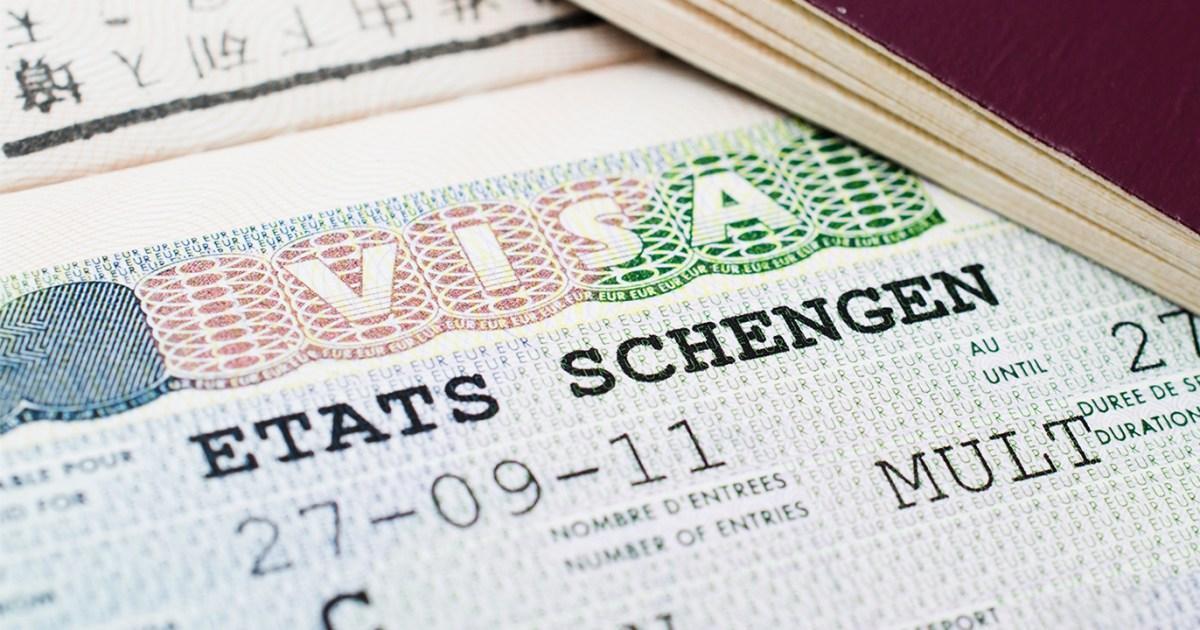
Africa-Press – Mauritius. With each round of tightening European visa policies, a question resurfaces regarding immigration policy in the European Union: Does the Schengen visa system reduce the number of Africans arriving in Europe, or does it merely redistribute them to other routes? Looking back at the official figures released for 2025 and 2026, we find a varied picture that does not allow for a single answer.
Rejection Rates
Data published by a local source indicates that EU consulates and countries associated with the Schengen Area received over 12 million short-term visa applications in 2025, an increase of 4.3% from 2024, with more than 10 million visas granted, although applications remained below the 2019 level of 17 million.
According to the local source, the global rejection rate slightly decreased to 14.6% from 14.8% in 2024, but the rejection rates for Africans remained significantly higher and moved in two directions. They increased in Senegal to 51.9% (from 46.8%), in Burundi to 53.4% (from 40%), in the Democratic Republic of the Congo to 40.1% (from 29.9%), and in Cape Verde to 21.4% (from 13.4%). Conversely, they decreased in Algeria to 31% (from 35%) and in Ethiopia to 34% (from 36.1%).
These rates carry a direct financial cost, as the application fee of 90 euros (about 97 dollars) is non-refundable upon rejection. The LAGO Collective, a UK-based non-governmental organization focused on immigration issues, estimated that Africans lost about 60 million euros (approximately 65 million dollars) in 2024 due to rejected applications, concluding that the rejection rate increases as per capita GDP decreases in the applicant’s country.
Border Figures
Regarding irregular flows, the European Border and Coast Guard Agency announced on January 15 that irregular crossings at the EU’s external borders decreased by 26% in 2025 to around 178,000, the lowest level since 2021.
The West Africa route to the Canary Islands saw the largest decline of 63%, which the agency attributed to reduced departures from Mauritania, Morocco, and Senegal, rather than visa policies. The central Mediterranean route remained the most active, accounting for 37% of total arrivals.
However, a local source reported in an analysis published in February that Guinea emerged as a new major departure point on the Atlantic route, partly due to enhanced EU-supported border surveillance around Senegal and Mauritania.
Visa as a Pressure Tool
The European Commission uses Article 25(a) of the Visa Code to restrict visa issuance to citizens of countries that do not cooperate sufficiently in accepting their nationals. This mechanism was applied to Gambia in 2021 and Ethiopia in 2024, and the Commission proposed on July 15, 2025, to apply it to Guinea, including the cancellation of multiple-entry visas and extending the processing time from 15 to 45 days.
A local source quoted a Commission official stating before the European Parliament in January that “the observed progress with most concerned countries shows that the mechanism is effective in enhancing cooperation on readmission,” while acknowledging that the threat alone has not achieved the desired effect in cases like Senegal, Somalia, and Guinea. The organization noted that sanctions on Guinea had not been effectively implemented by the time of its analysis, and Ethiopia was exempted from restrictions after a “substantial and sustainable improvement” in its cooperation.
In a study published in the International Migration Review, researchers Matthias Chaiyka and Hein de Haas concluded that visa requirements do indeed reduce the number of arrivals, but conversely decrease the number of departures from the same countries, resulting in a diminished net effect of the restrictions.
They explained that restrictions reduce back-and-forth mobility and push migrants toward permanent settlement instead of return, making their impact on net migration ambiguous.
Human Cost and Continental Context
The International Organization for Migration reported that at least 7,667 people died or went missing on migration routes worldwide in 2025, including 2,185 in the Mediterranean Sea and 1,214 on the West Africa Atlantic route to the Canary Islands, noting that the actual toll is likely higher.
This debate remains limited to part of the picture, as a report on African migration issued by the African Union and the International Organization for Migration indicates that about 80% of African migration occurs within the continent itself.