What You Need to Know
The Mauritius government, through its Ministry of Agro-Industry, is dedicated to sustainable fisheries development, enhancing food security, and fostering economic growth. At a recent ceremony, Minister Dr. Arvin Boolell highlighted the importance of training for local fishermen and the collaboration with Japan’s JICA to empower coastal communities.
Africa-Press – Mauritius. Government, through the Ministry of Agro-Industry, Food Security, Blue Economy and Fisheries, is committed to supporting sustainable fisheries development, enhancing food security, and creating pathways for inclusive economic growth.
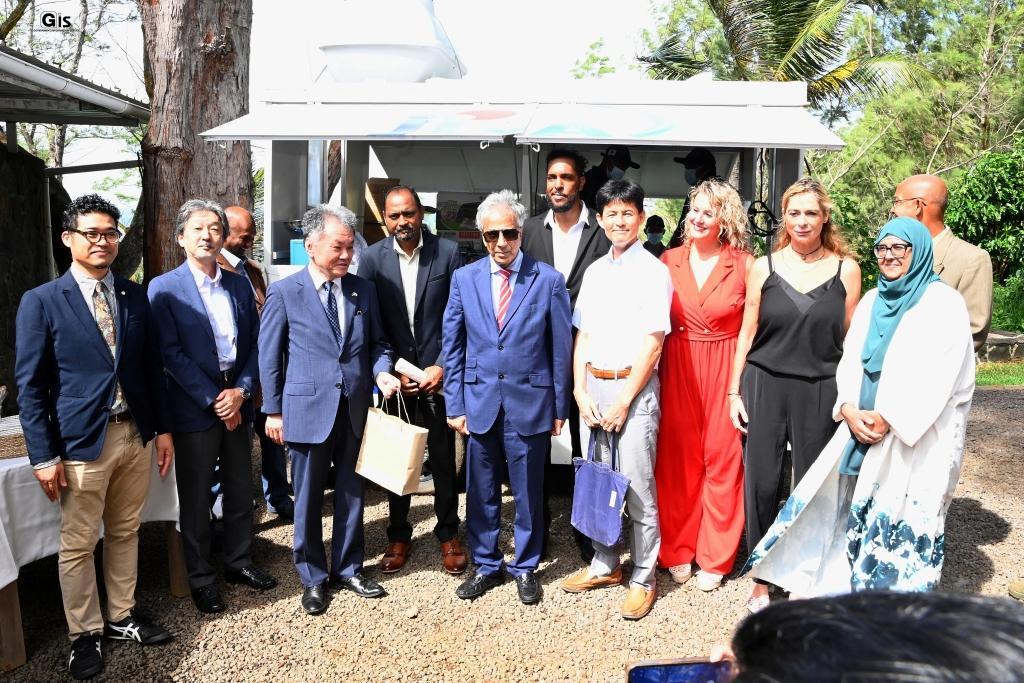
The Minister of Agro-Industry, Food Security, Blue Economy and Fisheries, Dr Arvin Boolell, made this statement yesterday at Andrea Lodges in Rivière des Anguilles during a Certificate Award Ceremony for participants of the Fish Processing Business Training (Blue Economy Business), under the Japan International Cooperation Agency (JICA) project ‘Improvement of Livelihood of Coastal Communities through the Sustainable Development of Blue Economy’ (ILICO).
The Ambassador of Japan to the Republic of Mauritius, Mr Kan Masahiro; the Ag. Divisional Scientific Officer, Albion Fisheries Research Centre, Dr Vikash Munbodhe; as well as members of the JICA were present at the event.
In his address, Minister Boolell highlighted that the event aimed to recognise the achievements of some 60 trained participants of fishermen communities of eastern and south eastern region of Mauritius and to share the outcomes of the project with relevant stakeholders, while strengthening collaboration for the promotion of Blue Economy business initiatives. He pointed out that the collaboration between national stakeholders and international partners, including the Government of Japan and JICA, stands as a strong example of effective partnership delivering tangible benefits to local communities.
Dr Boolell underpinned that the ILICO project aligns with Mauritius’ vision of a blue economy that is inclusive, sustainable and community-driven. By investing in skills development, entrepreneurship and the active participation of women and families, the initiative ensures broader socio-economic benefits and strengthens community resilience, he added.
For his part, Ambassador Kan dwelt on the Mauritius-Japan partnership, underlining the ILICO project’s success in supporting coastal communities and promoting a sustainable Blue Economy. He recalled that both countries have shared ocean values and reaffirmed Japan’s commitment to Mauritius’ development and future prosperity.
The ILICO project focused on empowering more than 150 fishermen and their families by promoting livelihood diversification and enhancing income-generating opportunities. Through targeted training programmes, beneficiaries have been equipped with practical and hands-on skills in kitchen gardening, fruit gardening, seaweed composting, and value addition to fisheries products, including filleting, processing and packaging of key species such as tuna and squid. Emphasis was also laid on improving hygienic fish handling and landing practices to preserve quality and freshness which are key factors in accessing higher-value markets and supporting tourism-related economic activities.
The Blue Economy concept has gained traction globally as nations seek to balance economic growth with environmental sustainability. In Mauritius, the government has recognized the potential of its marine resources to support local livelihoods while ensuring ecological preservation. The partnership with Japan through JICA exemplifies international collaboration aimed at enhancing the resilience of coastal communities and promoting sustainable practices in fisheries management. This initiative reflects a broader commitment to sustainable development goals and the importance of community involvement in economic initiatives.