
Interview conducted by
Jean-Denis PERMAL
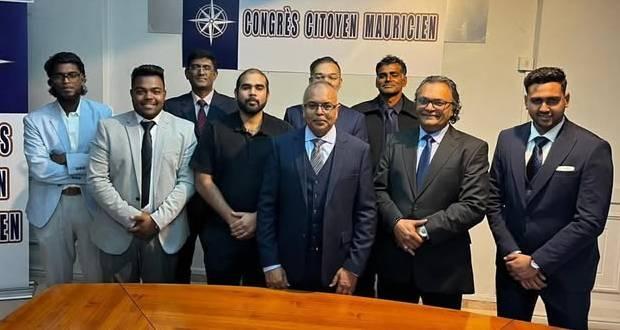
Africa-Press – Mauritius. Faced with what he considers a failing governance model, Sanjeev Teeluckdharry has founded the Mauritian Citizen’s Congress (CCM). In this exclusive interview, the leader of the new political movement explains that this initiative stems from a profound sense of democratic and social urgency: the gradual erosion of institutions, economic stagnation, the soaring cost of living, and the loss of hope among Mauritius’s youth have convinced him that action is imperative. Between authoritarian drifts, unfulfilled electoral promises, and a moral crisis within traditional politics, he paints an alarming picture of the nation’s current state. According to him, the CCM aims to be a civic alternative—free from entrenched political dynasties—to rebuild a state that truly serves all Mauritians.
What motivated you to create the Mauritian Citizen’s Congress (CCM), and why now?
The Mauritian Citizen’s Congress was born from a rupture with the existing political system and an outright refusal to resign ourselves to the status quo. A large segment of the population had pinned great hopes on the current government, believing sincerely in a change of course, structural reforms, and fairer governance. Yet those hopes were quickly dashed.
Instead of strengthening the welfare state, we’ve witnessed its gradual dismantling. Raising the pension age to 65 came as a shock—particularly for workers in physically demanding jobs. To this were added cuts or reductions in several social allowances and the decision to make part-time university courses fee-based, shutting the door on thousands of Mauritians who counted on education to improve their lives.
Meanwhile, inflation keeps climbing. The cost of living has become unbearable for many families. Grocery shopping has turned into an ordeal—prices keep rising while wages remain stagnant. The middle class is sliding into poverty, and the most vulnerable are sinking into precarity.
The situation facing our youth is especially alarming. Many cannot envision starting a family because buying or building a home now requires an astronomical sum. Rents are skyrocketing, land is out of reach, and access to credit is increasingly difficult.
But beyond these economic hardships, it is a deep-seated, systemic sense of injustice—now utterly intolerable—that made the creation of the CCM inevitable.
Almost weekly, we see controversial appointments: allies, relatives, and political associates of those in power are placed in strategic positions, often with no demonstrable competence. Nepotism has become the norm, summed up by the popular saying: “nominasion zan, belfi, belser partou” (“appointments for sons, sons-in-law, and sisters-in-law everywhere”).
Some ministries now operate like private kitchens—run without rigor or institutional respect, or even as de facto party headquarters, blatantly disregarding the rule of law. One minister in particular has transformed his ministry into a partisan machine, completely blurring the line between state and party.
Compounding this is the flagrant breach of electoral promises. Take, for example, the pledge to reduce fuel prices by Rs 30 the day after elections. A year later, the actual reduction was only Rs 2.75. Such betrayals erode public trust and breed cynicism.
If nothing changes, we are headed for a democratic, social, and economic catastrophe, and the current leadership bears heavy responsibility for this perilous drift. It is precisely in response to this authoritarian slide—this contempt for democracy, human rights, and the separation of powers—that the idea for the CCM emerged. What we need now is a team of citizen-soldiers ready to stand up and defend the public interest.
We have a choice: either complain and suffer in silence under successive regimes, or take a stand. That’s why, when a group of friends—including Sacheen Boodhoo, Yousouf Jan Mohammed, and others—approached me, we collectively decided that if the corrupt and dishonest have long united to deceive and plunder us, we must unite and organize to counter them and liberate our country from the political dynasties and cartels that have ruled us for decades.
What are the three top priorities your new party aims to address from its inception?
First, there’s an economic and structural challenge: the country is mired in stagnation caused by incompetence and a lack of vision. Mauritius must urgently implement deep reforms in key sectors—agriculture, fisheries, tourism, and manufacturing. These pillars have been neglected or mismanaged, yet they hold immense potential to drive job creation and economic growth.
We must guarantee equal opportunity, especially for young people. Today, too many talents are stifled by a closed system where political or family connections outweigh merit.
Second is a moral and institutional imperative: ending the normalization of corruption, overt nepotism, and favoritism as governance tools. These scourges have been institutionalized by traditional parties—especially through opaque political financing that facilitates large-scale corruption and money laundering, both locally and internationally.
Third is a social and human priority: halting the brain drain of young professionals and intellectuals who leave the country due to lack of prospects, and tackling—without compromise—the drug crisis, whether involving synthetic or hard drugs.
Drugs appear to be central to your concerns. What concrete steps should be taken?
The government’s anti-drug strategy has been an outright failure. There are far more drug users and dealers today—numbers have surged dramatically over the past 13 months. Many young people, frustrated by unemployment, are turning to drugs. The nation is gripped by insecurity due to this proliferation.
Drug proliferation is a ticking time bomb devastating our society—often under the passive, if not complicit, gaze of certain authorities. It destroys thousands of families, ruins lives, and jeopardizes an entire generation’s future. Let’s be clear: some of those tasked with fighting this scourge are either overwhelmed—or complicit through inaction.
The solution must be rooted in prevention, treatment, and reintegration, not just repression. We need a coherent, independent, transparent, and evidence-based national strategy.
Young people fall into depression and despair when, after years of study and earning university degrees, they find no job prospects. This frustration worsens when they see key positions handed to the well-connected. This perceived injustice fuels destructive behaviors—including drug use.
What about purchasing power—a major concern for Mauritians today?
We need a clear break and bold measures, even if they disrupt entrenched interests and privileges.
First, restore the real value of the rupee and rebuild consumer purchasing power. Second, move toward greater food self-sufficiency. Mauritius should produce more essentials—like potatoes, onions, and various fruits—at scale.
The fishing sector must be strategically developed. It’s absurd that we import massive amounts of fish while sitting atop vast marine resources around Agalega, Saint-Brandon, and our Exclusive Economic Zone. Foreign vessels should not be allowed to plunder our waters under the guise of lenient permits.
Instead of taking loans from major powers like India or China, we should encourage them to set up high-tech industries here—electric vehicles, smartphones, industrial processing. If Mauritius starts producing electric cars or mobile phones, we’ll generate sustainable foreign exchange earnings.
The tourism sector also needs reinvention. When a cruise ship docks, 5,000 to 7,000 visitors may disembark. With proper infrastructure and services, they could significantly boost the local economy. We must ask: why do the Maldives or Singapore attract more tourists than Mauritius, despite our beautiful beaches and immense potential?
Has Mauritian politics become nothing more than a financial game? How does the CCM differ from traditional parties?
For over 40 years, the political scene has been monopolized by the same parties and figures, passing power among themselves like a family inheritance. Alliances shift, but practices remain unchanged. For many citizens, politics has become a closed system controlled by a few families and dynasties.
Around power hover networks of influence, nepotism, pressure groups, and opaque financial interests. Suspicion of money laundering through political financing is recurrent. State lands are allocated to insiders; public contracts worth hundreds of millions of rupees are awarded under dubious conditions; and public funds are squandered.
Politics increasingly resembles a family-run business, sometimes used to launder questionable money. Party financing remains largely opaque, distorting the democratic process. Some invest in politics like a business venture—expecting returns once in office.
The CCM positions itself as a civic alternative of rupture: independent of financial lobbies, committed to cleaning up public life, and determined to break the cycle of corruption and nepotism once and for all.
Are we witnessing a genuine institutional crisis in Mauritius?
Yes—and we must have the courage to name it. Mauritius is experiencing a deep, insidious, and dangerous institutional crisis. Institutions that should safeguard democracy are being gradually weakened, instrumentalized, or bypassed. The separation of powers—a cornerstone of any democracy—is undermined by repeated political interference.
Parliament has been reduced to a rubber-stamp chamber, where debate is stifled, tough questions avoided, and major decisions made without genuine consultation. Independent institutions meant to serve as checks on power are often led by regime loyalists or individuals beholden to political leaders. This excessive concentration of power breeds fear, self-censorship, and resignation.
Democracy doesn’t always die with a bang. It erodes slowly, piece by piece—when rules are bent, norms trivialized, and arbitrariness normalized. That is exactly what’s happening today.
You emphasize youth issues repeatedly. Why are they, in your view, the greatest victims of the current system?
Mauritian youth are being sacrificed—by a political system that offers them neither clear prospects, merit-based opportunity, nor social justice. Thousands invest time, energy, and family resources into education, earn degrees—sometimes at great sacrifice—only to hit a wall.
The job market is locked. Hiring too often depends on political, familial, or communal connections. The message to young people is devastating: hard work, effort, and competence are no longer enough. You must belong to the “right” network.
This breeds frustration, anger, and despair. Many choose exile—depriving the country of its brightest minds. Others sink into depression, the informal economy, or social ills like drug addiction. A nation that abandons its youth irreparably compromises its future.
Are we seeing a deliberate blurring of the line between the State and the ruling party?
Absolutely. We are drifting toward a party-state, where public resources, institutions, and even ministries serve a political apparatus. The boundaries between state, government, and party are intentionally blurred.
Ministries are used as political platforms. Public funds indirectly reinforce electoral bases. Strategic appointments are made not for public service—but to consolidate partisan power. This confusion is extremely dangerous: it strips the state of its neutrality and turns the civil service into a tool of political domination.
A party-state does not serve the nation—it serves those who control it. History shows such drifts always weaken democracies and fracture societies.
Is there a democratic emergency in Mauritius today?
Yes—without hesitation. We stand at a pivotal moment in our democratic history. If citizens continue to look away, we risk losing hard-won gains achieved through decades of struggle.
This democratic emergency demands peaceful, responsible, and determined civic mobilization. This is not about chaos—it’s about vigilance. We must demand accountability, insist on transparency, defend institutional independence, and reject the normalization of the unacceptable.
The CCM aims to be a catalyst for this awakening. We call on Mauritians to overcome fear and fatalism. History teaches us: when good people stay silent, the corrupt thrive—but when they rise, change becomes possible.
Have you already begun developing a strategy for the 2029 general elections?
We’re still in the embryonic stage. For now, we’re inviting citizens of goodwill—and professionals from all fields—to join us. Our ambition is to build a team of young entrepreneurs, executives, experts, and activists capable of steering Mauritius toward a more prosperous and just future.
Before focusing on electoral timelines, the CCM wants to build a strong, grassroots foundation rooted in civil society.