What You Need to Know
Mauritius has officially received 90 electric buses from India, completing a grant initiative aimed at enhancing sustainable transport. The handover ceremony, attended by key officials, marks a significant milestone in reducing carbon emissions and improving air quality. This initiative supports the country’s transition to a modern public transport system.
Africa-Press – Mauritius. Mauritius has taken a significant step toward sustainable transport with the official handover of 90 additional electric buses to the National Transport Corporation (NTC), thereby completing a major grant initiative supported by India.
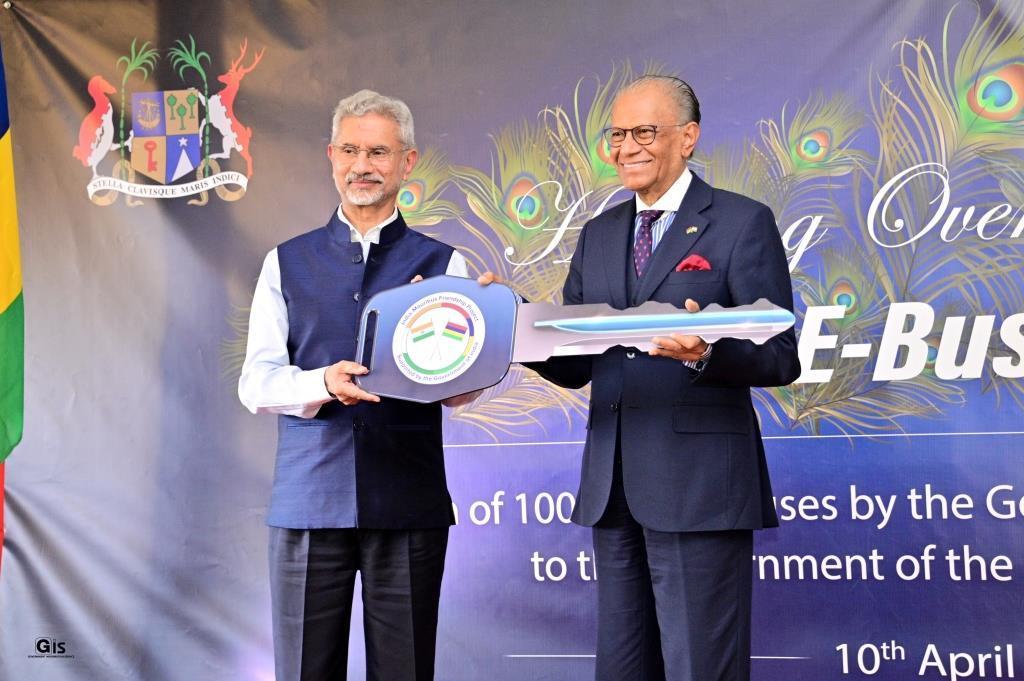
At a ceremony held this afternoon at the Rose Belle Market Fair, the Minister of External Affairs of India, Dr Subrahmanyam Jaishankar, symbolically presented a key to the Prime Minister, Dr Navinchandra Ramgoolam, officially marking the transfer of the buses. The event was attended by the Minister of Land Transport, Mr Mahomed Osman Cassam Mahomed, along with other Ministers, Members of Parliament, and distinguished guests.
This delivery completes India’s commitment to provide a total of 100 electric buses to Mauritius. The first batch of 10 buses, handed over in August 2025, has already been integrated into the NTC’s fleet.
The initiative highlights the strong and enduring partnership between Mauritius and India, as well as their shared commitment to a greener and more sustainable future. The introduction of electric buses represents a major milestone in efforts to reduce carbon emissions and improve air quality across the country.
Furthermore, the project supports Mauritius’ transition toward a modern, efficient, and environmentally responsible public transport system, while reaffirming India’s continued support for the country’s development objectives.
In a statement, Minister Mahomed noted that the NTC has long operated an ageing fleet, and that the addition of 100 electric buses represents a significant boost for the Corporation. He described this development as a paradigm shift in the bus industry, moving from conventional diesel-powered vehicles to electric mobility.
He highlighted the necessity of transitioning toward solar energy in response to rising fuel costs as well as to reducing carbon emissions and dependence on fossil fuels, adding that engagement with international partners is ongoing to accelerate progress in this area.
The Minister further pointed out that the electric buses will be recharged after peak hours, from nine p.m. onwards, thereby minimising pressure on the national electricity grid.
Amid ongoing tensions in the Middle East affecting global fuel markets, Minister Mahomed encouraged citizens to make greater use of public transport and to adopt carpooling practices in support of national fuel conservation efforts. He also announced the implementation of a Fleet Management System, which will enable real-time monitoring of bus operations, including trip frequency, distance travelled, and service performance, with the aim of improving efficiency and reliability across the network.
The partnership between Mauritius and India has been pivotal in advancing sustainable development initiatives. The introduction of electric buses is part of a broader strategy to modernize public transport and reduce reliance on fossil fuels. This initiative not only aims to improve air quality but also reflects the commitment of both nations to combat climate change through innovative solutions. The shift to electric mobility is seen as a crucial step in addressing the challenges posed by rising fuel costs and environmental concerns.