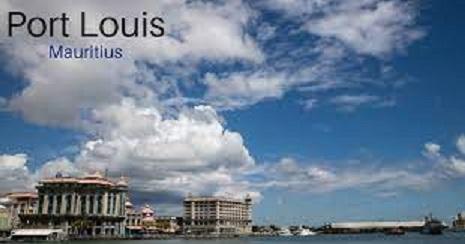
Africa-Press – Mauritius. During my leisure time, I use to ponder and speculate on an existential question: “Why does Mauritius exist?”. This may surprise many or make a few joke “What a silly question?”.
To me it seems that this island of ours was designed – its size, its location, its geography and all that it contains as natural gifts – especially for us, born here, with a purpose.
History has also planned the coming of different people to this abode because it has a mission to fulfil in the world despite its area and its being isolated. For example, its strategic role as Isle de France in the conflicts between England and France in the early 19th century.
In an article published in l’express (7.01.04), the subscriber wrote the following: “Far from being an island as the geographical definition goes, Mauritius is a continent by its intellectual dimension”. The intellectual mind of its people started to evolve as from the first day French colonizers set foot here.
The process had continued and had been enriched incidentally by the arrival of slaves and, later, indentured labourers and immigrants from India and China, making the island a conglomeration of cultures, traditions, creeds, religious beliefs – evergreen social instruments and polishing tools to build Mauritius and to make it shine.
To me, that the British did not ban the use, nor forbid the teaching of French when they conquered the island is an overwhelming gift from History. Besides other assets – traditions, customs, religions – the French language, together with English, has graced the intellect and character formation of the nation.
Un exemple comparatif : Haïti devint indépendante en1804 (bientôt 220 banané) et c’est un des pays les plus pauvres de la planète (à comparer avec NOTRE petite île Maurice).
«Depuis l’indépendance et jusqu’à nos jours, le principal souci des classes dirigeantes a été d’accaparer la totalité du pouvoir.
Pour maintenir le reste de la population dans l’ignorance, dans la dépendance et l’impuissance, elle s’arrange pour lui interdire l’accès au français écrit et même au français tout court.
Cette remarque est du Haïtien Léon-François Hoffmann, professeur émérite au département des littératures française et italienne de l’université de Princeton (USA), parue dans Médium no. 3 page 111. Aren’t we, in some way, favoured by destiny?
In Mauritius, since independence, the people, more than before, have become closer through friendlier and more intimate accumulations of goodwill and national objectives and the country has not withered in its blossoming.
Everybody from top to bottom is doing his best to make Mauritius a better place, a model nation. And so it is in many aspects. It is now imperative to project it as a great nation.
A nation is or becomes great by its endeavour and hard work to create wealth, its achievements in arts, architecture, its liberty of conscience, its literature, writers and philosophers and through a cognizant diffusion of these in its history which is generally a record of gradual changes and accretions.
The inter-relations of these exploits and the survey of these privileges create a sort of momentum which encourages the endeavouring and intellectual minds and Mauritius has covered a reasonable distance in some of these fields. But to some ambitious people much more must be done. That’s why, it is believed, when Mr.
Cassam Uteem was President, he had the laudable initiative to invite many personalities of the literary world (in 1993) to a “symposium of ideas, scope and outlook of writers” to a meeting entitled «Traditions et Modernité» at the State House, Réduit. En gros, he wished to see traditions, natural liberty permeate modern writing and fiction. (. . . )
By values is meant the traditional concepts and positive attitudes about life, culture, customs, a specific historical period or situation and the perceptions and expectations of the wise as those of the layman, because «se moquer de la philosophie, c’est vraiment philosopher».
And the most important aspect of this mode of transmission is that it will lead the participant to know himself, to combat prejudices and tribal feelings and, via the sharing of ideas, consolidate respect, tolerance and what John Dewey called “practical morality” to become a better human being.
Every individual has his personal philosophy as part of his cultural heritage. But here it is question of one which will shove off the self-centered bias and in the long run create and brighten the Personality of Mauritius in the realm of thinking.
Through our origins, our past, our inheritance (social and historical) and out of our growing knowledge will emerge great thinkers. A new wind will blow into the sails of our future generations.
Perhaps a Kant, a Hegel or a Rousseau is trolling on his way to college or to a center of learning. And it won’t handicap our youth to simultaneously keep pace with modernity.
Any pragmatic educational system must follow modern trends to keep abreast with time, scientific and technological progress, but it would not be wise to stick to prevailing tendencies only .
It should not deviate from the classical object of education which is to harmonize body, soul and mind. Abstract matters also make a great impact on the mind and the intellect.
Surely more than technology. Of everything that a little enriches the mind, the intellect and the heart, much is to be used and shared. So no war between education and technology.
The country should also aim at higher forms of ideals, which by liberal devices, will meander through fixed peculiarities without discarding them. But changes can affect learning.
As says Bacon: “The multitude is ready to give passage to that which is popular and superficial than to that which is substantial and profound”. The dimension of profound is very.
profound icw the title of our subject.
It means to establish right standards for oneself and for the nation as responsible citizen and to do so, one has to have recourse to conservative knowledge and freewill.
Freewill is the God given liberty, courage and honesty to assess one’s actions and behaviour, to identify one’s mistakes and to amend. An ontological choice: to accept the good and to reject the bad in oneself first.
Basically, it is self-introspection and criticism. “Make yourself an honest man, then you will be sure there is one rascal less in the world”. An unrestraint rephrasing of this saying of Emerson can be as follows: Make yourself an altruist or a tolerant man, then you will be sure there is an egoist or an intolerant man less in the world.
A good-natured nation-loving Mauritian will free himself from traditional prejudices, impulsive hatred, loose self-willed attitudes which trespass morals and ethics. This can be achieved through freewill, goodwill and humane studies.
Responsible parties – ministries concerned, cultural authorities, teachers and parents – are partners and like arboculturists have, through combined efforts, to protect the different growing fruit trees of the Mauritian orchard from pests, weeds etc.
and use fertilizers to have a “Good Harvest” (from the name of a champion horse in the eighties) of future open-minded citizens and figure heads of the republic.
If it wins the “race between education and catastrophe” (H. G. Wells), Mauritius will become a champion, the Key and the Star of nationhood. It will rise from communal or religious glory to national glory. Or to universal glory.
For More News And Analysis About Mauritius Follow Africa-Press