
Africa-Press – Mauritius. To be successful, Mauritius Inc. must be a great team where everyone stays in their place…” * ‘The health crisis was a rare opportunity for Mauritians to roll up their sleeves… Nothing happened: we relied on the nanny state’
* ‘Does the population know, or do they want, to show discernment? No one asks the question of whether an old-age pension of Rs 13,500… will be financially sustainable’
* ‘Machiavelli said: “Never waste the opportunity offered by a good crisis”. The government was content to give public aid here and there’
The war in Ukraine has destabilized the global economy which is struggling to recover from the Covid-19 pandemic, with an ubiquitous super mutant virus resurfacing just when everyone thinks they can finally breathe.
Prices are rising with fear of serious fallout for some countries. Citizens everywhere are starting to think because it is above all a question of having enough resources to live decently and take good care of their loved ones.
The Republic of Mauritius is particularly fragile being an island island, dependent on foreign countries for most of its needs, on the one hand, and without any control for years on the waste of public funds, on the other hand.
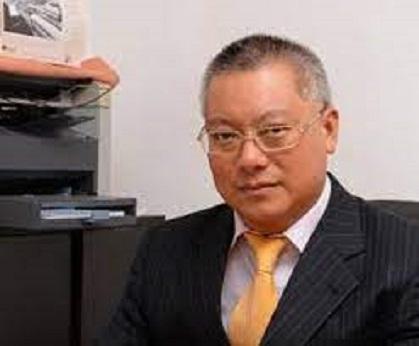
Eric Ng Ping Cheun, economist and director of PluriConseil, explains this new situation and the difficulties that arise for us. Mauritius Times: After two years of pandemic, we are faced with a new crisis: the war between Ukraine and Russia.
The economic consequences of this war – renewed inflation, destabilized economic sectors – worry small and large economies. Things are looking bad for the Mauritian economy too, in your opinion? Eric Ng: Of course. Things are looking bad for every economy in the world. It cannot be otherwise.
It takes intellectual dishonesty to make people believe that the Mauritian economy will be immune to the economic consequences of the war in Ukraine, including the sharp rise in oil, gas and food prices.
We are also threatened by food shortages, knowing that Ukraine and Russia are major exporters of sunflower oil and cereals, among others. The Russian-Ukrainian conflict threatens global food security.
I fully understand the suffering of households hard hit by rising prices, but to say, like this radio listener, that “this is not normal” is to deny the economic reality of war.
Admittedly, we cannot blame everything on the war, but we are currently not in a normal situation. This war comes at the wrong time when Mauritius is not yet completely out of the health crisis.
The Covid-19 pandemic had brought its economy to its knees, causing a severe economic contraction of almost 15% in 2020. The Mauritian economy recovered somewhat in 2021 with growth of 4.8%.
With the borders completely open, the absence of a new national confinement and the exit of the country from the blacklist of the European Union, we can hope for an acceleration in growth this year, despite the Omicron variant which came hamper the recovery in the tourism sector. However, the war changed the situation.
For More News And Analysis About Mauritius Follow Africa-Press