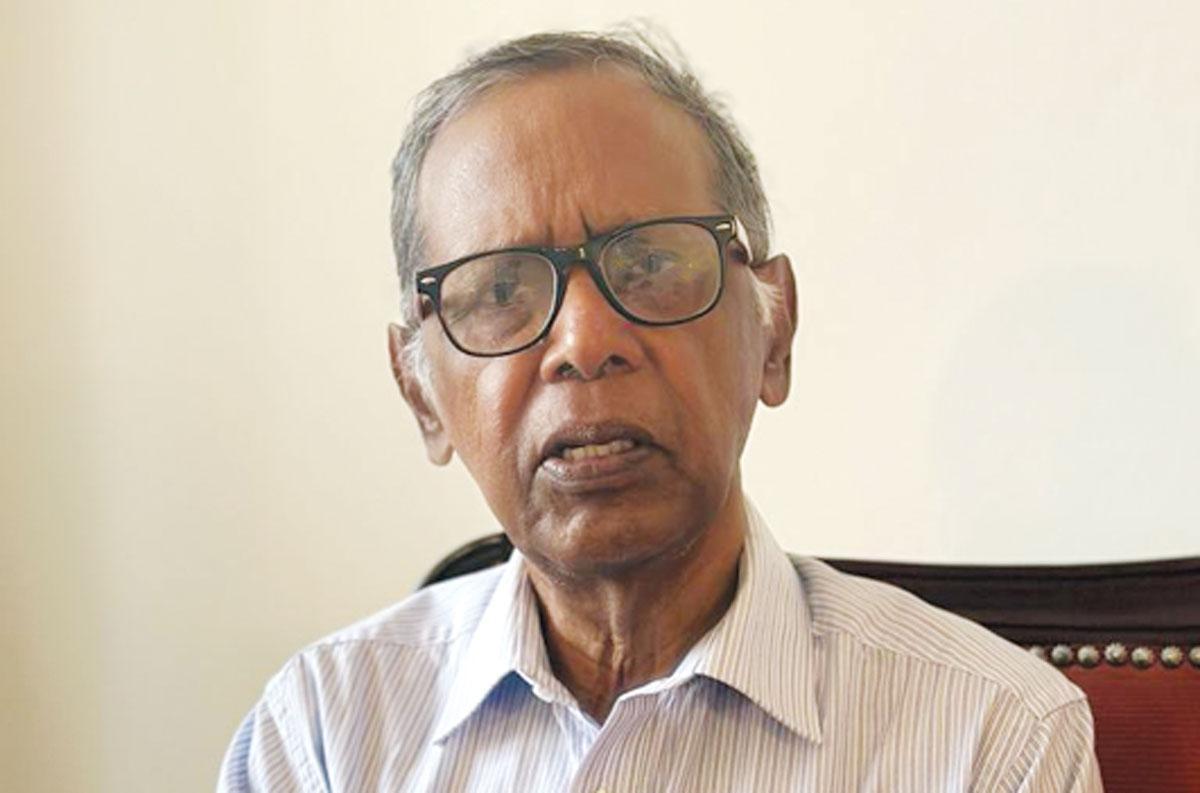
Africa-Press – Mauritius. Historian Sadda Reddi shares his perspectives on our difficulties often brought about by government interference where it should not have, its actions and inactions and poor implementation. Lack of research on underlying complex social issues, from poverty to education, leads to poor short-term fix-it solutions and the inability to stem the spread of social scourges, while “brain drain” is preoccupying. However, despite the overbearing political forces, he believes the population has acquired the resilience and wisdom to negate downward pull tendencies of the body politic.
Mauritius Times: One of the recommendations of the Truth and Justice Commission (TJC) has been implemented, last Friday, with the inauguration of the Intercontinental Slavery Museum. What do you see as the significance of this museum, which is located alongside the Aapravasi Ghat, in 2023?
Sada Reddi: The setting up of the intercontinental Slavery Museum was long overdue and is to be welcomed as it will allow the public in general, both local and foreign visitors, to discover a very important part of Mauritian and world history.
First, there is no national historical museum which depicts the history of the country. So, it is a welcome addition to existing museums such as the MGI’s folk Museum or the museum on the sugar industry and will enrich the heritage infrastructure of the country. Moreover, the museum is organised in the perspective of history from below and enables us to know more about the victims of the cruellest form of exploitation here and worldwide.
As to the intercontinental Slavery Museum’s relationship in being located near Aapravasi Ghat, there are different ways to look at it. Some will view the proximity as bringing together the unity of two major labouring classes who are at the foundation and development of Mauritius and many other countries; others like many historians, can see two distinct ways of capitalist exploitation or even two unrelated pasts.
Though every visitor will have his own perspective, however given that the heritage sites are close to each other people will feel a sense of connection between the themes of the two historical sites and develop greater empathy and understanding after visiting one after the other.
* The setting up of the Intercontinental Slavery Museum is to help us understand “the history of our past, slavery in Mauritius and the impact of the international slave trade”. This has come at a time when the debate about slavery, wokism as well as legitimate social grievances has been very much revived in many parts of the world. What’s your take on these issues?
Wokism has become a ubiquitous issue in many debates in today’s society, and there are many definitions and dimensions of wokism that it is difficult for me to make sense of what it means.
Basically, what I see is that there are many people in many countries have suffered all kinds of injustices in the past and there is a need to redress these injustices. Some people on the right have used the word to denigrate those who genuinely seek to redress legitimate injustices. Another dimension is the use of correct words, which taken to extremes, result in limiting somebody’s freedom of speech and even some honest differences repudiated without taking into consideration either the context or intention.
* In the United States of America, teaching about slavery and the experiences of other minorities was the cause of more disputes. It would seem we also in Mauritius have not been able to agree with the teaching of our common history or that what is being taught might not be adequate. What are your views on this matter?
At the University of Mauritius, I have never come across any criticism that history teaching was biased, and we did teach Mauritian history and history of several other countries like China, Europe, India, and Africa.
At primary and secondary level, we must make a distinction between academic and school history. Where the bias may creep in could be in the content that we teach and that we leave out from the primary and lower secondary curriculums. Since we cannot teach all the history that we want at these levels, we have to be selective, but we can do so without being biased. That depends a lot on the curriculum developers and the curriculum team and often on the political regime in place. Having been a member of the curriculum team in the 1980s, I can tell you there was indeed political interference.
However, whatever is taught has to be selective, which many will consider inadequate, ignoring the fact that school hours are limited, and many subjects compete for curriculum time in the timetable. As for teaching, a teacher has all the tools to teach correctly and professionally.
One of the most important skills to develop in history teaching is critical thinking; others such as empathy and also language skills irrespective of the official curriculum are also required. In the 1980s the Curriculum Development centre operated professionally and autonomously but I do not know how it’s doing presently.
Source: Mauritius Times
For More News And Analysis About Mauritius Follow Africa-Press