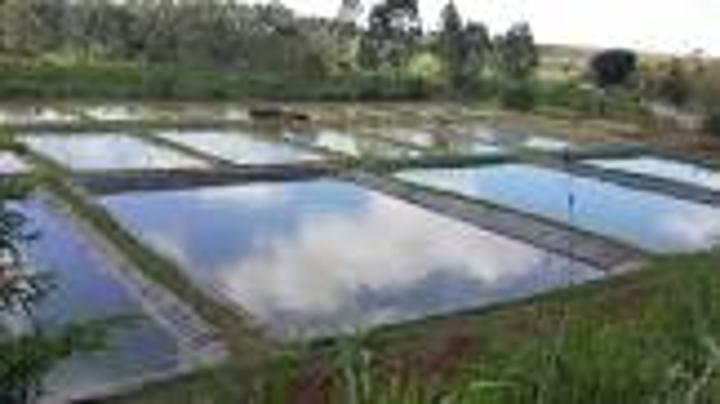
Africa-Press – Mozambique. Africa’s fishing industry can unlock $17 billion (Sh2.2 trillion) in economic benefits, employ an extra 3.3 million people, and cut the protein gap, according to a new study.
To attain this, the study calls for improved investments and innovation in the industry.
The World Economic Forum (WEF) report released on Tuesday identifies five areas where innovation can deliver step-change improvements in productivity, sustainability and value creation.
It proposes investments in new feed solutions such as black soldier fly larvae and methane-fermented protein to reduce dependence on costly imports
The report dubbed: Investing in Blue Foods: Innovation and Partnerships for Impact, recommends the adoption of AI-powered tools for real-time fish monitoring and precision feeding to help smallholder farmers reduce waste and improve survival rates.
It recommends affordable solar dryers and AI-based grading systems to improve the quality and shelf life, especially for women-led processors.
Others are supply chain Innovations such as solar-powered cold rooms and digital control towers to help cut spoilage and improve logistics, enabling smallholders to access premium markets.
Africa’s protein deficit stands at -20 per cent, well below the global average of 5.3 per cent.
While sub-Saharan Africa has 14 per cent of the world’s population, it represents only four per cent of global meat, five per cent of global dairy, and six per cent of global fish consumption.
It says this can be achieved if Africa doubles production of fish , shellfish, crustaceans and aquatic plants.
“Targeted investment and innovation could transform one of the continent’s most underdeveloped, high-potential food sectors into a driver of inclusive and sustainable economic growth,’’ the report reads.
Africa currently produces 13.1 million tonnes of blue foods annually, yet the sector faces significant losses and constraints.
According to the report released in collaboration with Boston Consulting Group (BCG), the region loses up to one-third of its output post-harvest, and feed accounts for 70-80 per cent of production costs (compared with about 60 per cent globally).
The global economic think tank warns that without strategic intervention, the continent risks falling further behind.
“By 2032, Africa may be the only continent where per capita blue food consumption declines, as production growth is expected to lag population growth.”
Boston Consulting Group managing director, Tolu Oyekan, says that Africa has the resources, talent, and demand to build a world‐class blue foods sector.
“Fragmented value chains and underinvestment continue to constrain growth. This report outlines a practical, investible roadmap to unlock productivity, scale and competitiveness through innovation and coordinated action across public and private sectors,’’ he said.
The report also emphasises alignment on policy and partnership, saying that interventions require coordinated action from regulators, financiers, development partners and the private sector, particularly in designing derisking mechanisms that attract long-term capital.
By bringing together government, private sector, academia, and civil society, the World Economic Forum is proud to help catalyse innovation that benefits communities, economies, and ecosystems,’’ said Tania Strauss, member of the executive committee, World Economic Forum.
According to the report, lessons from Indonesia, China and New Zealand show that large-scale transformation is possible with the right alignment of policy, finance, and innovation ecosystems.
“To realise the full potential of Africa’s blue food economy, we must treat it as core infrastructure, not a niche,” Oyekan said.
This means embedding blue foods into national food strategies, investing in cold chains and rural logistics, and partnering with the private sector to scale what works.