Africa-Press – Mozambique. The tropical cyclone hitting southern Mozambique on Friday will worsen the country’s food security situation, Mozambique’s prime minister warned today, calling for widespread nutrition education to curb malnutrition.
“At this exact moment we are facing a serious threat. Everything indicates that today we will see the arrival of another cyclone that will devastate areas that were not affected by the initial floods. This will certainly worsen our food and nutritional security,” admitted the Prime Minister, Maria Benvinda Levi.
Speaking at the opening of the 7th Ordinary Session of the National Council for Food and Nutritional Security (CONSAN), in Maputo, she said that the January floods affected agricultural production, noting that the consequences are “quite severe” for communities.
In this context, she stressed that the populations directly affected, particularly those who produce food for their own consumption, will suffer from food insecurity.
The country is still recovering from the January floods, which caused at least 27 deaths and affected nearly 725,000 people.
According to the Prime Minister, the government has found that food production areas face “serious problems of undernutrition”, meaning that products are not being used as part of people’s diets, and she therefore defended a stronger focus on nutritional education to curb such cases.
“It is therefore important to scale up nutritional education from the grassroots level, while also involving schools and the health sector, which are places with which people have daily contact — children with schools, and mothers in almost constant contact with health services,” said Maria Benvinda Levi.
Mozambique is advancing with the operationalisation of a national food security information system that will improve the quality of data on food security in the country.
“The challenges we face are enormous and, if we do not stand together, we will continue to have high production in some areas, while at the same time many undernourished people in places where adequate food products are available,” she added.
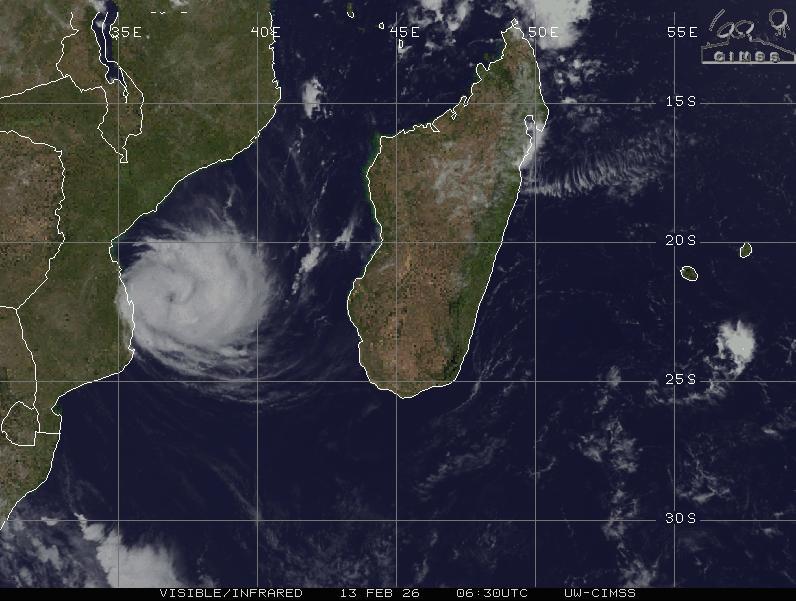
Meanwhile, Mozambique’s National Institute of Meteorology (INAM) issued a red alert on Thursday after Tropical Storm Gezani intensified into a tropical cyclone, and is expected to affect southern Mozambican provinces.
“Tropical Storm Gezani has intensified into a tropical cyclone over the Mozambique Channel,” INAM said in a statement, highlighting that it is accompanied by sustained winds of 120 kilometres per hour, with gusts of up to 165 kilometres per hour, heavy rainfall and thunderstorms, which may agitate the sea and generate waves of up to 12 metres in height.
INAM had previously indicated that the system continues to move towards the Mozambican province of Inhambane, in the south of the country, with authorities calling for precautionary measures in light of strong winds and heavy rainfall.
Mozambican authorities on Thursday called for the preventive evacuation of populations from coastal areas in the provinces of Inhambane and Gaza, in the south, and Sofala, in the centre.
At least 36 people died in Madagascar during the passage of Cyclone Gezani, which struck the country’s second-largest city, Toamasina, late on Tuesday night, according to an updated toll from Malagasy authorities.
According to INAM, Gezani may cause rainfall exceeding 200 millimetres, accompanied by thunderstorms and strong winds, in Inhambane province, in the south of the country, particularly in the districts of Govuro, Inhassoro, Vilankulo, Massinga, Morrumbene, Homoíne, Panda, Inharrime, Jangamo and Zavala, as well as the city of Maxixe and the city of Inhambane, the provincial capital.
Rainfall of between 50 and 100 millimetres, accompanied by thunderstorms and strong winds, is also forecast for the province of Sofala (centre) – particularly in the districts of Machanga, Búzi and Nhamatanda, and the cities of Dondo and Beira – and for the province of Gaza (south), in the districts of Mandlakazi, Chongoene, Chibuto and Chigubo. The districts of Mabote and Funhalouro in Inhambane province are also expected to be affected, according to INAM.