What You Need to Know
Mozambique’s Attorney General, Americo Letela, addressed corruption in his annual report, highlighting its pervasive nature and the urgent need for societal change. He emphasized that combating corruption requires collective responsibility and a rejection of impunity, urging both state agents and citizens to actively participate in fostering integrity and justice.
Africa-Press – Mozambique. Mozambique’s Attorney General, Americo Letela, declared in Maputo on Wednesday that “Corruption in its many forms and expressions is today a widely recognised reality”
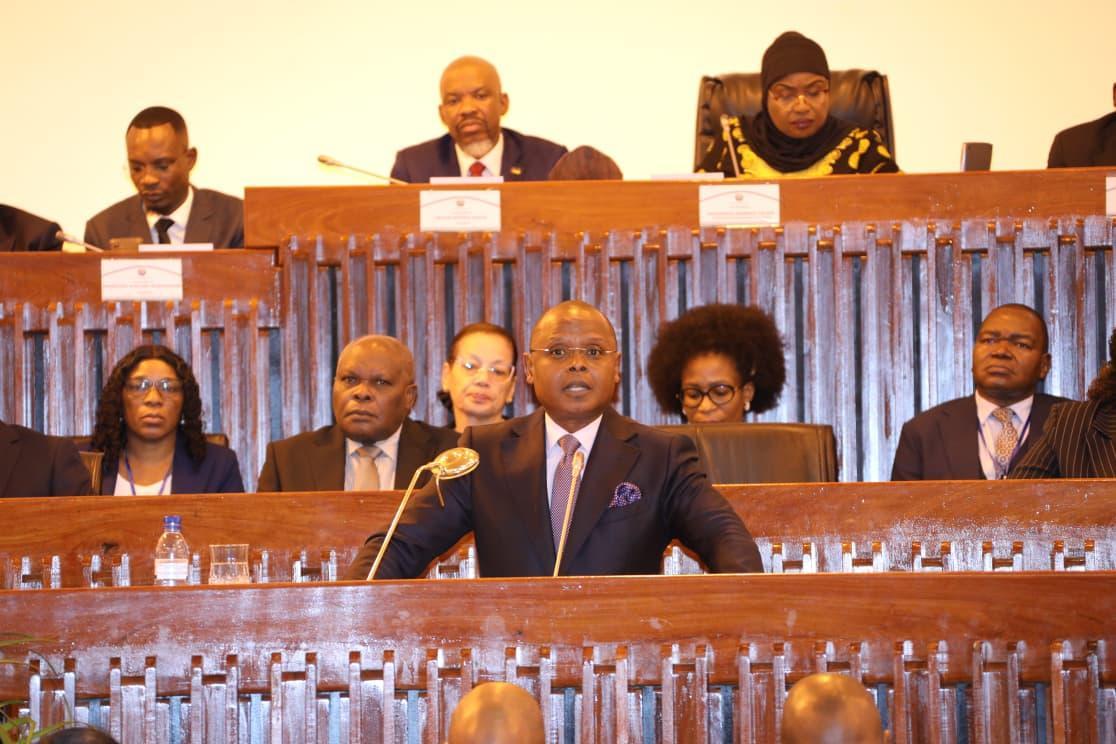
“It is not an isolated or residual phenomenon, restricted to only certain sectors”, he said, as he delivered his annual report on the state of the administration of justice to the country’s parliament, the Assembly of the Republic.
Letela warned that “the normalisation of corruption generates a culture of tolerating what is illicit, in which corruption comes to be viewed as a legitimate means for achieving individual goals”.
Recognising the existence of corruption, he said, “is the first and indispensable step to a serious, effective and lasting response, aware that no society can defeat corruption while its treats it as a distant and abstract problem”.
“Every corrupt act, regardless of its scale, damages collective interests, diverts public resources and weakens the rule of law”, Letela added.
Tolerating corruption “eats away at essential values such as integrity, honesty, responsibility, solidarity and respect for the law, and compromises the future of the coming generations”.
Fighting corruption, Letela stressed, “is not just a penal or institutional matter. It is, above all, a question of collective mentality, of public ethics and of social choice. It demands a far-reaching change in attitudes among state agents, and among citizens. It demands clear rejection of the idea that corruption is inevitable, necessary and culturally acceptable”.
The State, Letela added, “cannot defeat corruption without the active involvement of society, just as society cannot demand integrity without taking responsibility for rejecting corrupt practices in daily ife”.
This meant that the fight against corruption must be viewed “as a national imperative”, which requires “political leadership, strong institutions, independent justice, civic education, and a culture that is absolutely intolerant towards impunity”.
Giving examples of how damaging corruption can be to state and society, Letela noted the huge social, economic and human costs of corruption in the traffic police. Traffic accidents, he said, were not merely the result of technical or human failings, but “are associated with a road control system weakened by corrupt practices”.
It was these practices which allowed unqualified people to drive vehicles, and unroadworthy vehicles to circulate on Mozambican roads.
The culture of impunity, Letela added, “encourages risky behaviour and weakens respect for the law”.
Letela attacked corruption inside the Mozambican justice system, which undermines the credibility of justice. As instances of corruption in the courts, Letela pointed to the slowness with which court decisions are often taken, the manipulation of court decisions, and the granting of illicit favours.
Lack of trust in the justice system “weakens social cohesion and undermines the social contract that supports the State”.
Corruption in the courts transmitted the message that “access to justice depends on money and not on the law”.
Justice, he added, “thus ceases to be an instrument of equity and becomes a factor of exclusion”.
Corruption has been a significant issue in Mozambique, affecting various sectors and undermining public trust in institutions. The Attorney General’s remarks reflect a growing recognition of the need for comprehensive reforms to address this challenge. Historical instances of corruption have often led to social unrest and diminished public confidence in governance, necessitating a robust response from both the government and civil society to restore integrity and accountability in public service.