What You Need to Know
Mozambique’s Finance Minister Carla Loveira indicated that the country may need to review its budget if the Gulf War escalates, leading to increased oil prices. With 80% of fuel imports passing through the Strait of Hormuz, the government is preparing for various economic scenarios, including a potential negative growth if oil prices soar.
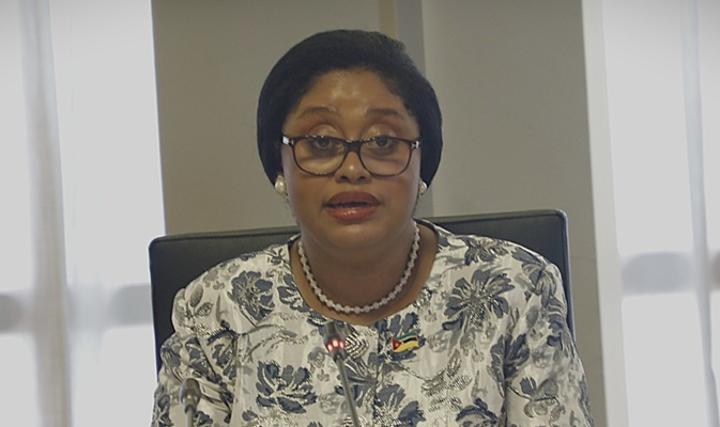
Africa-Press – Mozambique. Mozambique is open to a budget review in an extreme scenario, if the Gulf War escalates and triggers a widespread rise in oil prices, Mozambique’s Finance Minister Carla Loveira told Lusa.
Minister Loveira said on Thursday during an interview at the Mozambican Embassy in Brasília, amid a five-day official visit to Brazil, that “In a most extreme, adverse scenario, a budget review may indeed be necessary”.
“The full impact [of the war], and these effects on the economy, through imported inflation, the rise in fuel prices and their impact on cost increases, particularly for the basic food basket, could lead to a rise in public expenditure.”
Approximately 80% of Mozambique’s fuel imports pass through the Strait of Hormuz from the Middle East, but according to the finance minister, the country currently holds sufficient fuel reserves to last until May.
Nevertheless, the government has conducted a multi-scenario analysis of fuel supply and pricing: a baseline, a current and favourable scenario, and an adverse scenario that assumes further deterioration in the geopolitical situation.
The minister said that Mozambique has fuel procurement agreements in place with “contracts signed until the end of the year,” and that the government is working to ensure these terms remain valid.
“Our exercise is to try, as far as possible, to maintain agreed prices. But we are facing an uncertain outlook, which is why we have alternative scenarios”.
The government had projected Gross Domestic Product (GDP) growth of 2.8% and inflation of 4.8% in the 2026 Social and Economic Plan and State Budget, but these figures are now contingent on developments in the Middle East.
The government warned that if the conflict persists, the pace of economic recovery could slow significantly, predicting that, in an extreme scenario where the price of a barrel of oil exceeds $140, the country’s economy could record negative growth.
The government is considering activating the stabilisation fund to address social and corporate impacts of the war, promising to monitor the situation closely to mitigate the shock to the national economy.
Israel and the United States launched a large-scale military offensive against Iran on 28 February, which responded by closing the Strait of Hormuz, launching strikes against targets in Israel, US bases, infrastructure in neighbouring countries, including Saudi Arabia, Bahrain, the UAE (United Arab Emirates), Qatar, Kuwait, Lebanon, Jordan, Oman and Iraq.
Incidents involving Iranian projectiles have also been recorded in Cyprus, Turkey and Azerbaijan.
Iran reported that, since the beginning of the conflict, at least 1,348 deaths and over 10,000 civilians have been injured.
The Gulf War has historically impacted global oil prices, affecting economies reliant on fuel imports. Mozambique, which imports a significant portion of its fuel through the Strait of Hormuz, is particularly vulnerable to fluctuations in oil prices. The current geopolitical tensions have prompted the Mozambican government to analyze potential economic scenarios to safeguard its financial stability and public welfare. The country has been proactive in securing fuel procurement agreements to mitigate the risks associated with rising costs and supply disruptions.