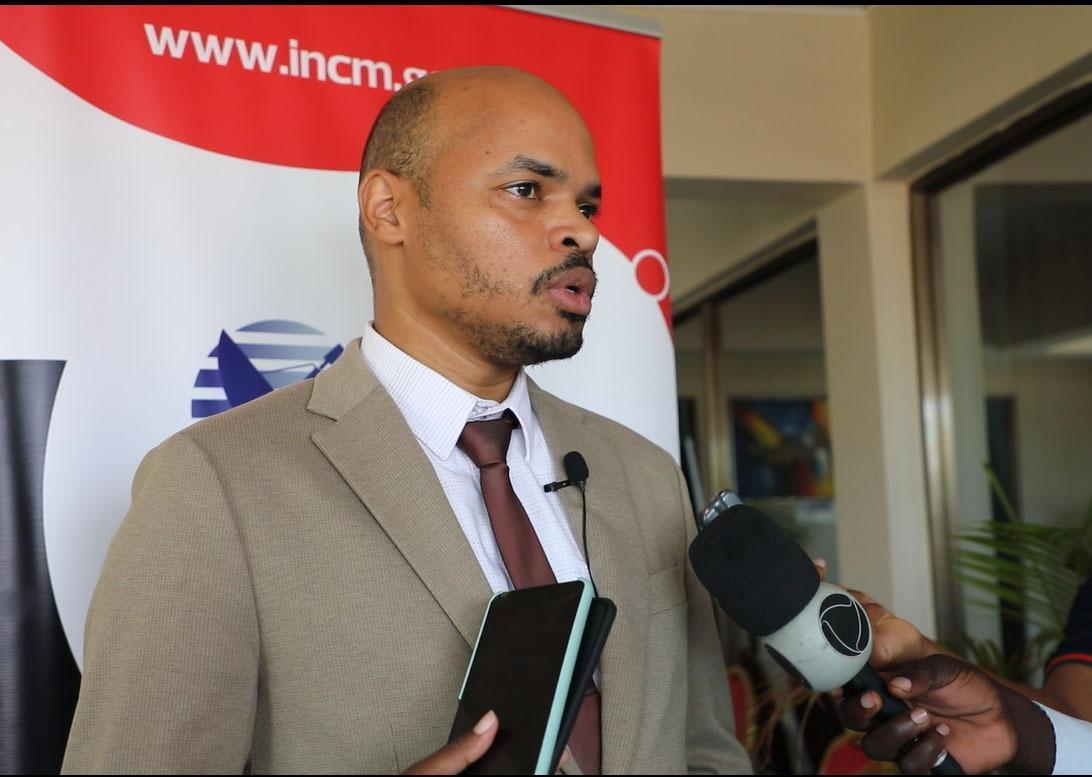
Africa-Press – Mozambique. Adilson dos Santos Cousin Gomes has been appointed Chairman of the Board of Directors of the newly created Digital Transformation and Innovation Agency (ATDI). The appointment was made through a Resolution approved this Tuesday at a meeting of the Council of Ministers (Cabinet), in a decision that reinforces the Mozambican State’s commitment to consolidating digital governance and modernising public administration, the Ministry of Communications and Digital Transformation said in a statement.
Adilson Gomes has more than two decades of experience in the fields of information technology, telecommunications and digital transformation, with a career marked by participation in major national initiatives, adds the same source.
A computer engineer by training, Gomes built much of his career at the National Communications Institute of Mozambique (INCM), where he held leadership roles in critical areas related to regulation and technological operations. Throughout this period, he distinguished himself by leading projects associated with telecommunications traffic control, subscriber registration, and strengthening the security and integrity of national networks.
At INCM, Adilson Gomes was responsible for defining and implementing information systems strategies, ensuring the management of technological infrastructure and the digitalisation of processes, with a direct impact on operational efficiency and service delivery.
Among the most notable milestones of Adilson Gomes’ professional trajectory is his participation in drafting the proposal for the National Cybersecurity Strategy, a key instrument for protecting the country’s digital infrastructure, the statement said.
Gomes’s involvement in the migration from analogue to digital broadcasting is also noteworthy, as is his coordination of technological inclusion initiatives, particularly the “1000 Villages with Satellite TV” project.
His career also includes the implementation of critical systems supporting communications regulation, the development of technological infrastructure, and participation in digitalisation projects across various sectors of the State, including health, transport, public works and agriculture.
Adilson Gomes holds a Master’s degree in Business Management, specialising in Information and Communication Technologies, obtained from the Polytechnic University of Madrid, and has postgraduate qualifications in information systems management, data analysis and cybersecurity. He also holds relevant international certifications in data protection, information systems security and Internet governance.
In parallel with his technical and managerial work, he has developed experience in university teaching, lecturing in subjects related to computer networks, operating systems, programming and security, contributing to the training of professionals in the technology field.
His appointment as Chairman of the Digital Transformation and Innovation Agency (ATDI) comes at a time when Mozambique is intensifying efforts to accelerate digital transformation, strengthen cybersecurity and promote the interoperability of State systems—factors considered crucial for the efficiency of public services and for economic development.
Citizen Portal
Two weeks ago, following the usual Tuesday Cabinet meeting, the Mozambican government announced the creation of the Digital Transformation and Innovation Agency (Agência de Transformação Digital e Inovação – ATDI).
ATDI will be responsible for coordinating and driving the country’s digital transformation, as well as for modernising public administration and improving the provision of services. According to the government spokesperson and Minister of State Administration, Inocêncio Impissa, speaking to reporters on 10 March after the Council of Ministers meeting, the new agency will promote interoperability between state digital platforms, data centres, procurement processes, and public service delivery systems.
“The creation of ATDI will accelerate the digitalisation of public services, including the creation of a Citizen Portal that will bring together various state services on a single platform,” Impissa said.
“The state institution will be unified, in the sense that when citizens need public services, they will no longer need to go, for example, to the INATRO [National Institute of Road Transport] or the National Immigration Service,” he said.
According to Impissa, the Citizen Portal will concentrate the main public services in a single digital space. “The citizen will only go to a specific point called, for example, the Citizen Portal; all the information is there. Currently, each sector or department of the ministries has its own computer systems and databases, which operate in isolation from other sectors of the public administration,” he said.
With the creation of the new agency, the government intends to integrate these platforms, aggregating the different state databases into a common digital infrastructure.
“It will aggregate all the databases that exist in the public administration and will organise them in more suitable locations. We will have a single database,” Inocêncio Impissa said on 10 March.