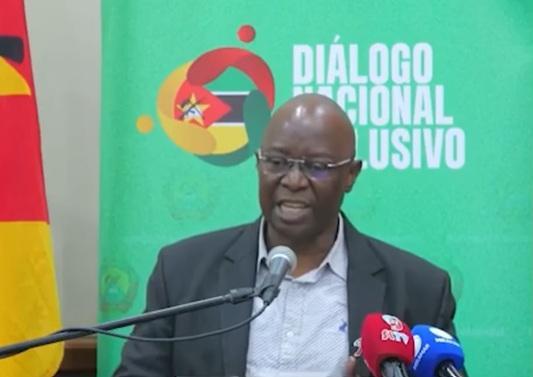
Africa-Press – Mozambique. Mozambique continues to invest little in its own defence, despite being a country rich in natural resources and increasingly exposed to internal and external threats. The warning was issued directly by the former deputy chief of the General Staff of the Armed Forces, Bertolino Capiitine, during the defence and security debate within the framework of the National and Inclusive Dialogue.
Drawing on his experience in designing the country’s military strategies, the retired general painted a critical picture of the sector, pointing to structural weaknesses, inconsistent strategic decisions and what he considers an insufficient response to terrorism in Cabo Delgado, in a context in which security, the economy and national sovereignty remain deeply interconnected.
It was within the National Inclusive Dialogue, in a panel dedicated to defence and security issues, that the retired general Bertolino Capitine, former deputy chief of the General Staff of the Armed Forces, once again spoke bluntly about terrorism in Cabo Delgado and what he considers to be profound structural weaknesses of the Mozambican state in matters of national defence.
Even before addressing the dossier of the north of the country, Capitine focused his intervention on a direct criticism of the low level of investment from the State Budget in the defence sector, in a country he describes as rich in natural resources but vulnerable from a security perspective. For the general, the projection that by 2029 defence could represent around one per cent of the budget is a worrying sign that compromises the State’s ability to protect its territory and its citizens.
Using simple but striking metaphors, Capitine compared the country to a house full of goods but without fencing, where anyone can enter. For the former military official, defence and the economy are two inseparable pillars, and the fragility of one inevitably compromises the other. In his view, there is no serious investor willing to commit resources to a country that does not convey security or predictability. In this context, he referred to the temporary withdrawal of major energy projects as a concrete example of how instability affects strategic investment decisions and generates high costs for the country.
Capitine argued that the direct consequence of weak financial commitment to national defence is the use of inadequate means by the Defence and Security Forces, which limits the State’s capacity to respond to internal and external threats. He questioned choices made in the recent past, particularly in the naval and land domains, arguing that certain equipment acquired does not meet the country’s real operational needs. By way of illustration, he noted that some assets lack autonomy and range compatible with the size of Mozambique’s exclusive economic zone, weakening maritime surveillance in a country with an extensive coastline and strategic interests at sea.
With years of direct involvement in defining defence strategies, the general went further, pointing to what he considers a lack of seriousness in strategic decision-making at the highest level. He recounted episodes from regional meetings within the framework of security cooperation, in which, according to his account, Mozambique presented overly optimistic reports on the internal situation, contrasting with harsher information brought by neighbouring countries. For Capitine, this discrepancy undermines the country’s credibility and hinders an effective regional response to the phenomenon of terrorism.