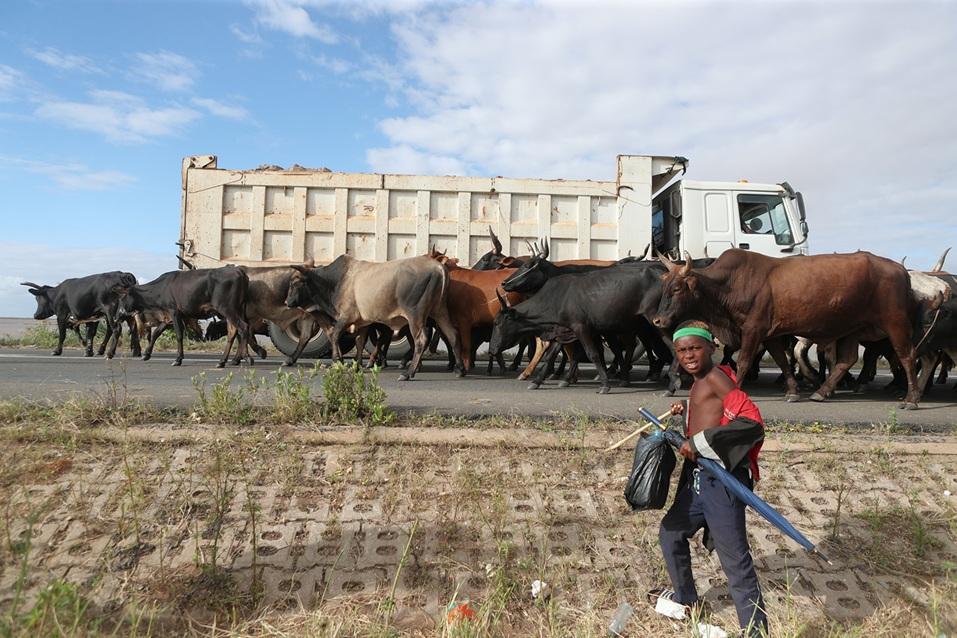
Africa-Press – Mozambique. Mozambican cattle farmers on Thursday called for an animal restocking programme to be promoted by the government after losing more than 412,000 head of cattle due to January’s floods, warning of the risk of famine.
“If they bring back the kind of support we had years ago, maybe things will improve. The government helped during other floods, giving a number of head of cattle for the farmer to raise, and when they began to reproduce, they came to take back their head of cattle and the farmer kept the calves,” farmer Nehemia Ntila, from the Moamba Cattle Farmers’ Association in the southern province of Maputo, told Lusa.
A breeder for several years, Ntila alone lost 49 head of cattle, swept away after the Incomáti River overflowed. Sixty-four remain, two of which show symptoms of disease due to consumption of stagnant water and inappropriate grass, and local breeders do not have medicines to treat the animals.
“What we are asking for is help. We don’t know how the government can do this, but we are asking for help because what we want is cattle, which we no longer have, and things are going to get increasingly difficult because it is through farming that we support our families and ensure our children’s education,” said Ntila.
He added that it was not possible to save most of the animals because they were in grazing areas that were flooded when the heavy rains began, a situation that worsened after the rivers overflowed, in addition to others that died in flooded cattle pens.
“Some animals escaped, but most of the cattle that remained are sick, and we are trying to buy vaccines. Right now, I have two sick cattle, which I can’t even sell because they are so thin,” he lamented.
The Moamba Breeders and Producers Association also reported heavy losses to Lusa.
“The situation was really bad because we didn’t think the floods would be of this magnitude. These floods were sudden and caught us off guard, considering that floods usually start in February,” said the organisation’s leader, Joshua Sitoe.
“Many animals were swept away by the water and disappeared, and many families lost their livestock,” he added, without giving specific figures, noting that he had managed to keep his 21 head of cattle safe.
The farmer also warned of stagnant water causing livestock to fall ill, calling for a programme to promote development. “We are going to help the animals recover because we have a lot of grass now after the rain,” he said.
According to the National Institute for Disaster Management and Risk Reduction (INGD), at least 412,446 head of cattle, goats and poultry died due to the January floods.
Farmers point to the regions of Guijá, Chókwè, Mapai and Manjakaze, all in Gaza province, as the most affected.
The National Union of Farmers of Mozambique, which also brings together livestock farmers, said that the late evacuation of people and goods to safe areas led to the loss of animals, calling for a government restocking programme to help farmers.
“We have to mobilise as a country to see how we can mobilise animal replacement programmes. I am talking about programmes that can enable farmers to start farming again. There are several programmes such as animal repopulation, where you arrive in an area and introduce cattle to help people get back on their feet,” said the Union’s executive leader, Luís Muchanga.
This type of programme, he argued, would allow for a rapid recovery from losses. For the Union, the loss of cattle affects the wealth of farmers, meaning a “setback” in their development process, and also suggests solidarity among producers through “loans” of animals for breeding.