What You Need to Know
The Ministry of Finance in Mozambique has launched an Independent Evaluation Mission for IFAD projects, focusing on the period from 2017 to 2025. This evaluation, involving multiple ministries and stakeholders, aims to assess the impact of a $522 million portfolio on rural and coastal communities, guiding future cooperation strategies with IFAD.
Africa-Press – Mozambique. The Ministry of Finance (MF) launched on 21 April in Maputo the Independent Evaluation Mission of the portfolio of co-financed projects by the International Fund for Agricultural Development (IFAD) for the period 2017–2025, with the participation of representatives from the Ministry of Finance (MF), the Ministry of Agriculture, Environment and Fisheries (MAAP), the Ministry of Economy and Planning (MPD), the Bank of Mozambique (central bank), the National Institute for the Development of Fisheries and Aquaculture (IDEPA), the Agricultural Development and Rural Extension Fund (FAR), the Fund for the Rehabilitation of the Economy (FARE), implementing units, and IFAD.
The mission is being conducted by IFAD’s Independent Office of Evaluation (IOE) and focuses on the portfolio of projects implemented in the southern, central and northern regions of Mozambique, with a budget of US$522 million.
Given the importance of the evaluation for the definition of IFAD’s next strategy for Mozambique (COSOP), the mission will include the distinguished presence of the Director of IFAD’s Independent Office of Evaluation, Dr Indran Naidoo.
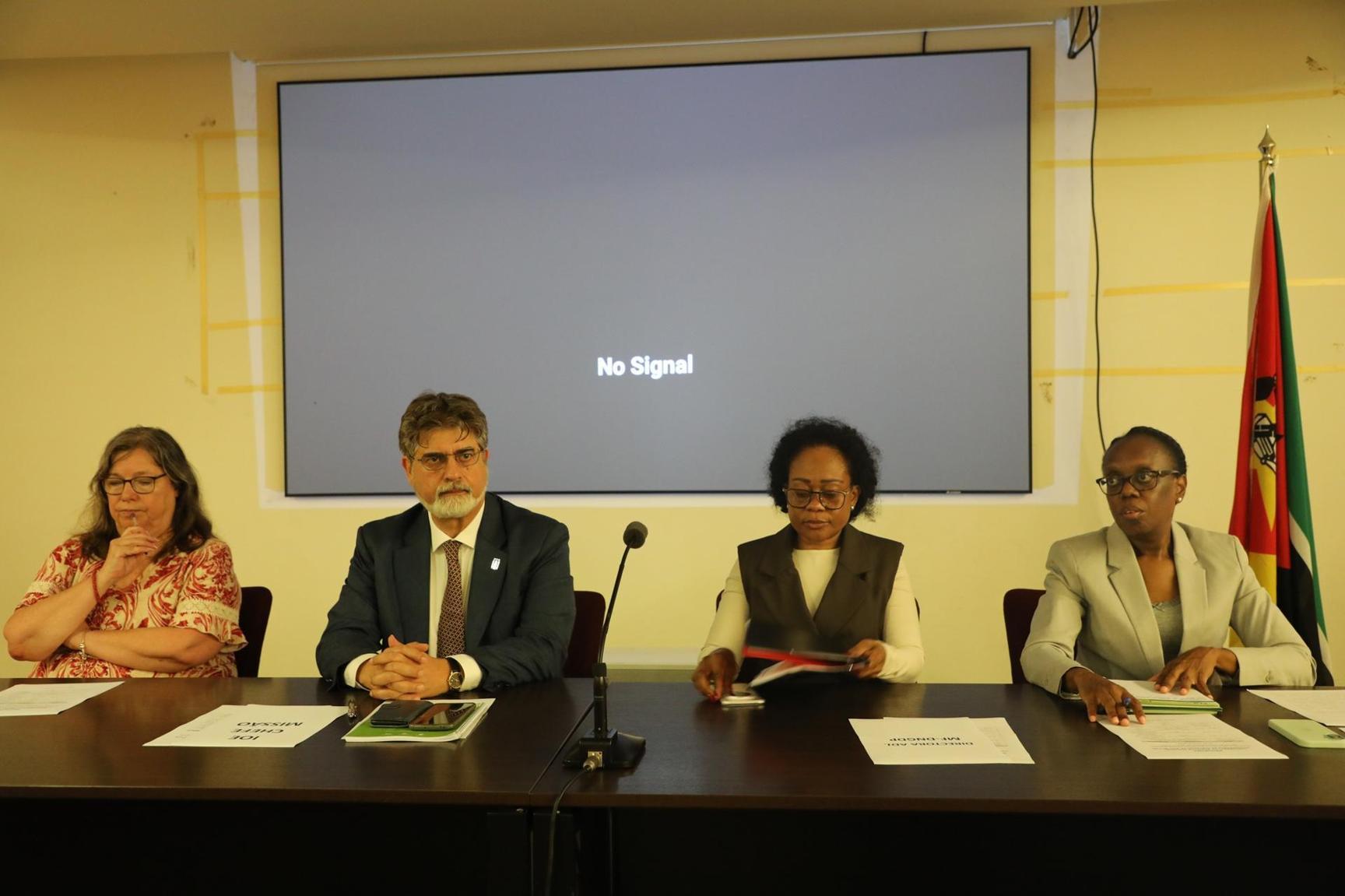
Speaking at the opening session, the Deputy National Director for Public Debt Management, Ruth Cangela, said the evaluation is a strategic exercise of guidance for the future, as its results will decisively influence the formulation of the next cooperation strategy with IFAD under the Country Strategic Opportunities Programme (COSOP) shaping interventions that directly impact the lives of rural and coastal populations in key sectors such as agriculture, fisheries and climate resilience.
She emphasised that the partnership between the Government and IFAD is a solid example of cooperation guided by alignment with national priorities, respect for institutional systems, and a focus on the sustainable transformation of rural communities.
For her part, Licínia Cossa, representing the Ministry of Agriculture, Environment and Fisheries (MAAP), highlighted that the evaluation is an opportunity to reflect on results achieved, lessons learned and challenges faced during the implementation of IFAD-supported programmes.
Representing IFAD’s country office, Jaana Keitaanranta outlined the main areas of IFAD’s interventions in the country and stressed the importance of this exercise for future cooperation.
Speaking on behalf of IFAD’s Independent Office of Evaluation (IOE), Mission Leader Paolo Silveri clarified the scope of activities and reiterated that the exercise aims to capture lessons learned from IFAD interventions in Mozambique, with a view to guiding the content of the next strategy.
The International Fund for Agricultural Development (IFAD) has been active in Mozambique since the 1980s, focusing on rural development and poverty alleviation. Over the years, IFAD has co-financed numerous projects aimed at enhancing agricultural productivity, improving food security, and fostering sustainable development in rural areas. The current evaluation mission is crucial for assessing the effectiveness of these initiatives and shaping future strategies to better serve the needs of Mozambique’s rural populations.