What You Need to Know
The Mafalala neighborhood in Maputo is celebrating the centenary of poet Noémia de Sousa with a series of cultural events aimed at reviving her legacy. The initiative, led by the Mafalala Museum, includes film screenings, literary gatherings, and exhibitions to engage younger generations and strengthen the community’s cultural identity.
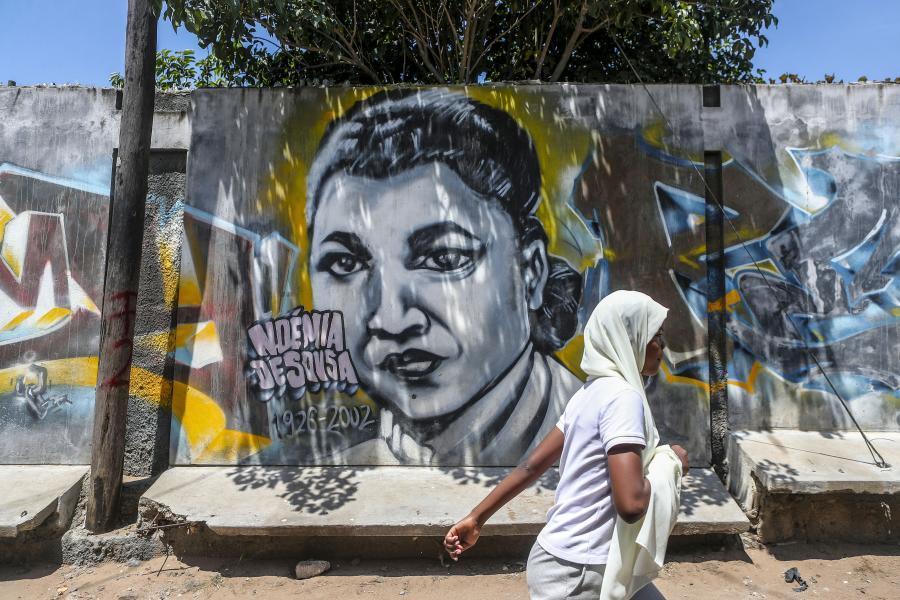
Africa-Press – Mozambique. The Mafalala neighbourhood in Maputo aims to revive the legacy of Noémia de Sousa on the centenary of the poet’s birth, strengthening collective memory and introducing the younger generations to the “mother of Mozambican poets.”
“We have planned a series of events to mark Noémia de Sousa’s 100th birthday, encompassing various cultural activities,” said Ivan Laranjeira, Director of the Mafalala Museum, in an interview with Lusa. He emphasised that the aim is to restore the poet to the public space of the neighbourhood where she lived and wrote some of her most emblematic poems.
Another objective is to reinforce Mafalala’s cultural identity, recovering the memory of a generation of young intellectuals who, during the 1940s and 1950s, transformed the neighbourhood into one of the country’s main hubs of cultural and political expression.
Among the memories to be revived is that of Noémia de Sousa (20 September 1926 – 4 December 2002), a writer “little known,” especially among younger audiences, but who had a significant impact on affirming African identity and the anti-colonial cultural struggle, according to Laranjeira.
The initiative, which promotes a series of cultural activities to celebrate the centenary, is coordinated by the Mafalala Museum, which has prepared a monthly programme throughout 2026, culminating in September, the month in which the poet would have celebrated her 100th birthday.
The programme began with a screening of the film Mafalala Blues, directed by the poet’s great-niece Camila de Sousa, filmed in the neighbourhood and centred on the life and work of the poet. The event involved family members and local residents. Literary gatherings, cultural soirees, thematic exhibitions, and the renovation of the Mozambican poets’ mural, where Noémia de Sousa occupies a prominent place alongside José Craveirinha, are scheduled to follow.
“We have two of her poems featured in our exhibition, Magaíça and Súplica, which are also extremely rich and reflective of who Noémia is,” said the museum director, expressing hope for “very satisfactory” public engagement, particularly among children.
At the Mafalala Museum, the preservation of the poet’s legacy, name, and work has already begun with the establishment of the Noémia de Sousa Library, which hosts educational activities for children and adolescents, as well as events linked to Mozambique’s symbolic dates.
“Featuring Noémia prominently in our programme, speaking more about her, giving interviews about her, undoubtedly encourages people to awaken their curiosity, to want to read her poetry, to visit the place where she was born and see what inspired her,” said Ivan Laranjeira, who regards her as the “mother of Mozambican poets.”
In the 1940s, Noémia de Sousa lived in a wooden and corrugated iron house in Mafalala, where she wrote poems such as Deixa passar o meu povo, becoming a reference for African cultural nationalism. She left the neighbourhood in 1949 for political reasons and spent much of her life in exile.
She began her journalism career in 1956 and, after independence, returned to Lisbon in 1975, where she worked in news media, including the Lusa news agency. She passed away on 4 December 2002 in Cascais, Portugal, leaving Sangue Negro as a reference work.
The house in Mafalala where she lived continues to attract interest. Mommed Saulo, a 30-year-old carpenter, lives there with his partner and two children.
He told Lusa that visitors “often wait at the gate” to take photographs and view the space, although access inside is restricted. He admits not to know the figure of “Noémia de Sousa” in depth, a reality that the museum considers indicative of the continuing lack of awareness in the neighbourhood, which the centenary hopes to address.
For the family, the centenary has a particular significance. Aguida Caliano da Silva, 86, who married the poet’s brother, recalls a childhood in the same neighbourhood marked by literary gatherings and the political climate of the colonial era, but laments that the country rarely remembers her sister-in-law.
“When I first heard on television that they were celebrating Noémia’s centenary, I was very happy. They remembered her—something they seldom do,” she said, arguing that recognising the poet should serve to strengthen education and civic awareness in the country, as Noémia herself had done.
“Noémia, through her literature, also helped us develop our own consciousness,” she added, recalling meetings of young writers in Mafalala homes, attended by José Craveirinha and other intellectuals.
The family home remains preserved by the heirs, despite a fire between 2003 and 2004 that destroyed a significant part of a library containing rare books, some dating back to the 19th century. Some of the burnt volumes are still kept, and the family intends to consult specialists for possible restoration.
Amid memories of a neighbourhood that hosted figures such as the historic Mozambican President Samora Machel (1933–1986) and former President Joaquim Chissano, of family libraries destroyed by fire, and of houses and streets that remain as silent markers of history, Mafalala seeks to assert itself as a living space of memory.
On the centenary of Noémia de Sousa, the neighbourhood not only celebrates a poet but revisits a decisive part of its own cultural and political identity, in a historical preservation effort aimed at projecting the author as a symbol of resistance, education, and national awareness.
“With the founding of the Mafalala Museum, things may have taken a different course because it now promotes the history and issues of the neighbourhood, and people are a little more aware of what the neighbourhood is and was. Noémia is one of those who is always celebrated by the museum, alongside Craveirinha and many others,” concluded the poet’s sister-in-law, with a smile.
Noémia de Sousa, born on September 20, 1926, is regarded as a pivotal figure in Mozambican literature and cultural nationalism. Living in Mafalala during the 1940s, she became a voice for anti-colonial sentiment through her poetry. After leaving for political reasons in 1949, she spent much of her life in exile, returning to Mozambique post-independence. Her work continues to inspire discussions on identity and resistance in Mozambique’s cultural landscape. The centenary celebrations aim to restore her memory and educate the public about her contributions.