Jerry Fisayo-Bambi
What You Need to Know
The Africa Political Outlook report reveals a mixed picture of governance and political trends across Africa, emphasizing the need for credible electoral processes and reforms. With 15 elections scheduled this year, the report highlights the importance of transparency and public trust in electoral institutions. Leaders stress the necessity of unity and reform to enhance Africa’s global influence.
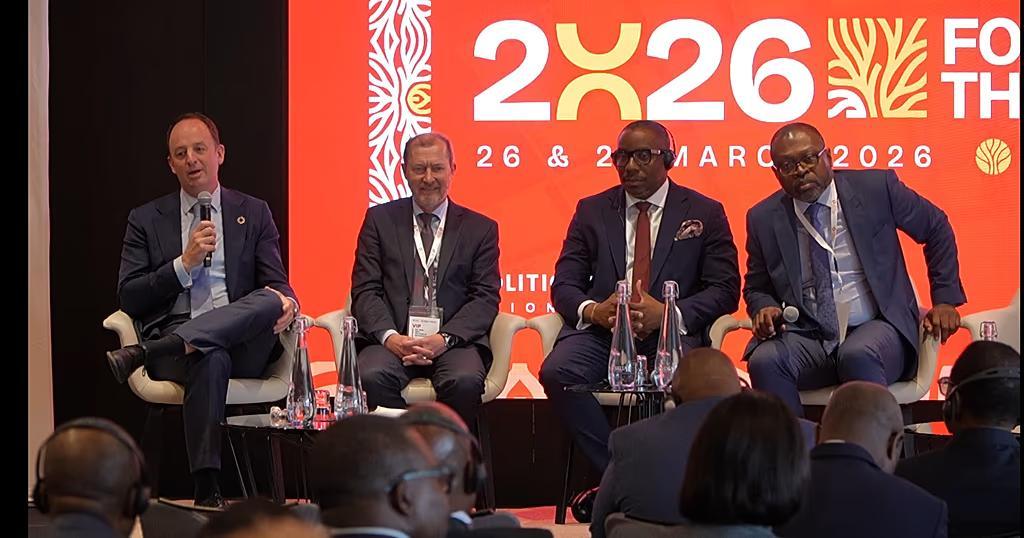
Africa-Press – Mozambique. Governance, legitimacy, partnerships and global influence are set to shape Africa’s political outlook in 2026, according to a new flagship report released after a two-day high-level forum in Brussels.
The Africa Political Outlook (APO) report, titled “Report on the State of African Governance: Forces of the Future,” examines political trends, governance challenges and stability prospects across the continent, presenting a forward-looking but fragile picture.
“We think there are positive trends in African governance, and we think we should expose it. We should talk about it,” said Viwanou Gnassounou, chair of APO’s Advisory Board.
“When we do our reports, we point our fingers at those aspects on the continent where we think we can do much, much better. Definitely elections,” according to Gnassounou.
“Yes, there have been fair elections on the day of voting. But if you look at the whole process, there is a way of kicking out some of the candidates relatively legally, which does not make it a truly fair election,” he added. “If you want real legitimacy, and if you want your people to feel you represent them, make sure you don’t create frustration or a sense that you are not addressing their issues.”
The report notes that 15 elections are scheduled across Africa this year, posing a key test of whether countries can move toward more credible, peaceful and inclusive electoral processes.
According to the APO’s take, the credibility of the 2026 electoral cycle will depend largely on the ability of electoral institutions to strengthen transparency and public trust.
Geopolitical tensions: an opportunity for reform
During the forum’s Grand Dialogue, leaders and policymakers described a fragmented international environment in which geopolitical tensions are reshaping alliances and priorities. They stressed, however, that the current moment also offers opportunities for reform and progress as emphasized by ministers from Zambia and Guinea.
Zambian Foreign Minister Mulambo Haimbe said there is a need to put more and real effort into integration and investment. Haimbe said the AfCFTA and its principles have still not been fully embedded as regards trade, with pockets of barriers to trade still existing. This he says is not sustainable in the current geopolitical situation.
According to Haimbe, Africa must also “have skin in the game” by embracing reform. “For us to move away from business as usual and speak on governance issues and the management of affairs in our respective countries in a way that opens up to the ideas we are putting forward, we must speak with one voice,” he said.
“It doesn’t help for me in Zambia to say one thing and in Benin there is a different language being spoken. We have to speak with one voice, with one accord. And of course, we also have to understand that partnerships are crucial.”
For Guinea, while reports are important, the country’s recent experience shows how discipline, good governance and the rule of law can drive change, making it one of the emerging success stories on the continent.
“Guinea has developed a 15-year economic development blueprint built on five main pillars and a set of enabling measures,” according to Minister of Planning and International Cooperation, Ismael Nabe.
The $200 billion plan, called the Simandou 2040 project, aims at transforming Guinea into an industrialised economy using revenues from the world’s largest untapped iron ore deposits—with the first major phase running from 2025 to 2030.
Africa, ‘consequential on global stage than at any other time’
On Africa’s position in global affairs, the “Forces of the Future” report finds the continent is more consequential to international decision-making than at any time since independence.
However, it cautions that being consequential is not the same as being influential and urges governments and institutions to make choices firmly aligned with Africa’s own interests—”terms that preserve institutional legitimacy, fiscal sovereignty, and long-term development autonomy.”
When examining partnerships, the report concludes, China remains Africa’s most important economic partner, the continent’s largest bilateral trading partner, but notes the relationship is entering a qualitatively different phase.
According to Adebissi Djogan, founder and executive director, with the era of aid donors, over, “What comes next will be determined not by what the world offers Africa but by what Africa demands of itself and the forces capable of shaping its future.”
The APO’s report ultimately portrays the continent’s outlook in 2026 as neither marginal nor passive. “It is contested, courted and consequential,” it says.
Our journalist reports Forces of the Future depicts a continent under pressure but also in transition. Policy experts, analysts, and leaders at the Brussels forum argued that while governance challenges are intensifying, the demand for reform is also growing, particularly among younger populations who are increasingly vocal, driving change and reshaping political debates across Africa.
The Africa Political Outlook (APO) report is a significant document that assesses the political landscape of the continent, focusing on governance, legitimacy, and electoral processes. It emerges from a high-level forum in Brussels, where leaders discussed the challenges and opportunities facing African nations in the context of global geopolitical shifts. The report aims to provide insights into how Africa can navigate these complexities while striving for better governance and political stability.
Source: Africanews