What You Need to Know
Mozambican President Daniel Chapo has emphasized the severe impact of climate change on rural communities during a visit to flood-stricken Guija. He noted that recent floods have devastated crops and livestock, affecting hundreds of thousands of families. Chapo called for increased agricultural production and sustainable practices to build resilience against future climate challenges.
Africa-Press – Mozambique. Climate change is no longer a distant threat, warned Mozambican President Daniel Chapo on Monday.
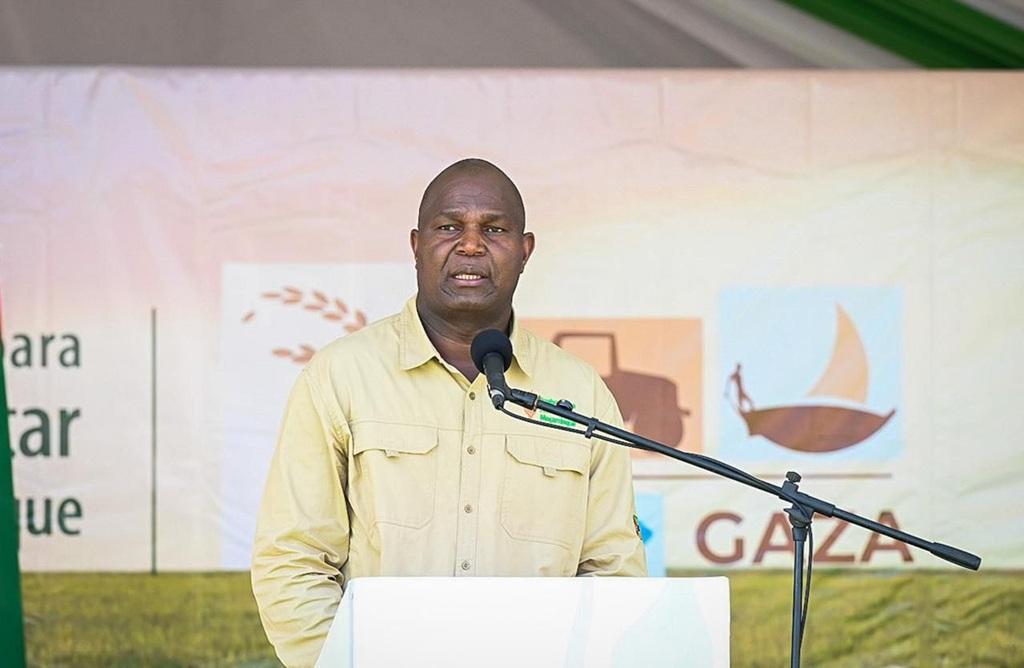
Speaking in the flood stricken district of Guija, in the southern province of Gaza, Chapo said climate change “is a reality worsening the vulnerability of our productive system and of our rural communities”.
Much of Mozambique, particularly the southern provinces, faced devastating flooding in January and again in March. The floods, said Chapo, “compromised harvests, affected livestock and fisheries and endangered the livelihoods of hundreds of thousands of families”.
But, “although we well know the force of the flood waters, we know still better the strength of our people – a people who never give up, who always stand up again and transform adversity into determination”.
Chapo insisted that the way out was to increase agricultural production, although he recognised that the 2025/2026 agricultural season “is one of the most demanding seasons in recent years. The torrential rains and severe flooding put to the test our productive capacity and the resilience of our communities”.
“The data are clear and demand from us responsibility and firm action”, he continued. “About 441,000 hectares of crops were affected with a direct impact on such strategic crops as maize and rice”,
The loss of pastures had affected over 428,000 head of livestock and there had been significant losses of fishing boats and gear. “The productive base of 335,000 households has been weakened”, said Chapo.
“It is not enough to respond to the emergency”, declared the President. “It is imperative that we transform the way in which we produce and prepare for the future. We must continue investing in agricultural technologies adapted to the climate, expand the rehabilitation of irrigation systems, manage our natural resources sustainably, and build resilient infrastructures”.
“Our response as a State must rise to the scale of the challenge, and that is why I am here”, said Chapo.
The government was far from indifferent to natural disasters, stressed Chapo. “We have acted, we have mobilised resources, and we have coordinated efforts, not only to guarantee immediate assistance, but above all to restore the productive capacity of our people”, said Chapo. “Our goal is not to return to the starting point, but to advance to a new level of production, resilience and food security”.
At the Guija ceremony, Chapo announced the delivery of 161,000 agricultural kits for small producers, 359 fishing boats, and various other inputs. These were “opportunities for starting a new stage. The waters are dropping, there is mud everywhere, and conditions are favourable for sowing and beginning to produce”.
Mozambique has faced significant climate challenges, particularly in its southern provinces, which are prone to flooding. The country has experienced a series of devastating floods in recent years, impacting agriculture and livelihoods. The government has been working to address these issues by promoting sustainable agricultural practices and investing in infrastructure to enhance resilience against climate change. President Chapo’s recent statements reflect a growing recognition of the need for urgent action to combat the effects of climate change on vulnerable communities.