What You Need to Know
Mozambique’s Finance Minister Carla Loveira has urged for enhanced domestic production to alleviate pressure on imports and foreign currency reserves. This call comes amid ongoing assessments to ensure sufficient foreign currency for fuel imports, as the country faces disruptions in fuel supply linked to the conflict in the Middle East.
Africa-Press – Mozambique. Mozambique’s Finance Minister, Carla Loveira, has called for stronger domestic production to reduce pressure on imports and foreign currency reserves, amid measures aimed at ensuring fuel supply and financial stability.
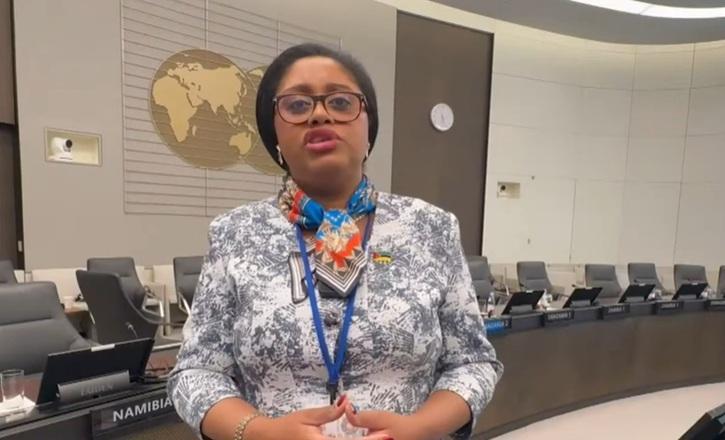
“It is about creating sufficient production capacity so as to reduce pressure on countries, on imports, and on the need for foreign currency to finance import bills. This is therefore one of the aspects we need to consider,” said Carla Loveira, quoted today by the media and who was speaking on the sidelines of the Spring Meetings of the International Monetary Fund (IMF) and the World Bank in Washington.
Still, according to the minister, the Mozambican government is carrying out a joint assessment involving the central bank, commercial banks and energy sector operators, with the aim of ensuring the availability of sufficient foreign currency to meet fuel import needs.
“Mozambique is also carrying out a detailed analysis, both with the central bank, commercial banks and fuel suppliers, in order to provide sufficient foreign exchange capacity to meet guarantee requirements and thus minimise (…) the payment of fuel bills,” she said.
Carla Loveira warned, however, of the need to safeguard the social and economic impact of the measures under consideration, particularly in the face of potential pressure on fuel and foreign currency, with direct effects on households and consumers.
The minister also stressed that the country should invest in strengthening productive sectors, particularly agriculture, as a way to reduce external dependence and ease pressure on the balance of payments.
Maputo is experiencing days of disruption across several streets, with widespread queues of motorists attempting to refuel. Most petrol stations remain closed, while others are operating under police supervision, although there have been slight improvements in the availability of petrol and diesel.
The situation, linked to the crisis triggered by the conflict in the Middle East, has been spreading to other provinces across the country.
The government acknowledged on Tuesday pressure on fuel stations, with long queues forming amid fears of shortages and price increases.
“The new prices will have to come,” said President Daniel Chapo, justifying the fuel situation with the war in the Middle East, which is affecting Mozambique, whose imports depend 80% on shipments through the Strait of Hormuz, blocked by Iran and now by the United States of America.
“As long as the war continues, we will not be able to keep stretching the limits [of current prices, still unchanged] for much longer,” he added.
Mozambique has long relied on imports for essential goods, particularly fuel, which has made it vulnerable to external shocks. The current crisis, exacerbated by geopolitical tensions, highlights the urgent need for the country to bolster its domestic production capabilities. By investing in local agriculture and other productive sectors, Mozambique aims to reduce its dependency on foreign imports and stabilize its economy.
Historically, Mozambique’s economy has been challenged by fluctuations in global markets and supply chain disruptions. The government’s recent initiatives reflect a strategic shift towards self-sufficiency, aiming to mitigate the impact of external crises on its economy.