What You Need to Know
Mozambique and Ethiopia have signed a Memorandum of Understanding to enhance cooperation in digital transformation, focusing on digital identity and public digital infrastructure. The agreement aims to develop secure digital identity ecosystems, promote knowledge exchange, and strengthen technical capacity, contributing to financial inclusion and improved access to public services.
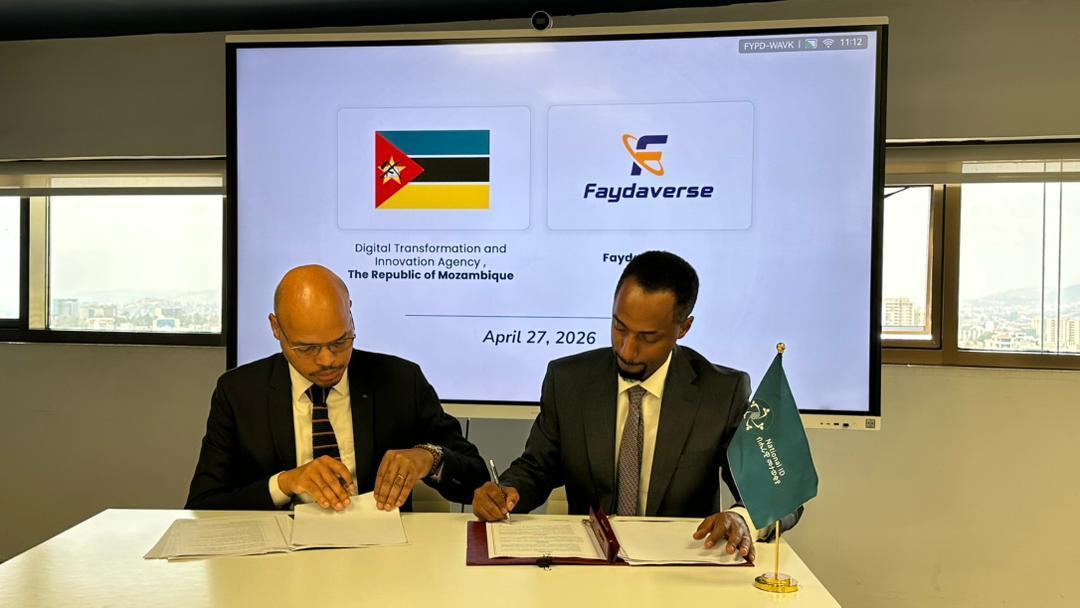
Africa-Press – Mozambique. The Digital Transformation and Innovation Agency, , representing Mozambique, and FaydaVerse Digital Solutions Enterprise, a public company of the Federal Democratic Republic of Ethiopia, today (27 April) in Addis Ababa signed a Memorandum of Understanding (MoU) to strengthen bilateral cooperation in the field of digital transformation, with a focus on digital identity and Public Digital Infrastructure.
The MoU establishes a framework for technical collaboration aimed at developing secure, inclusive and interoperable digital identity ecosystems, promoting the exchange of knowledge, capacity building for technical staff and the implementation of innovative solutions in the field of digital infrastructure.
According to the Chairman of the Board of Directors of Mozambique’s Digital Transformation and Innovation Agency. Adilson Gomes, digital identity is an essential tool for financial inclusion, access to public services and strengthening citizens’ trust in digital services. In this context, the parties commit to working towards the creation of robust digital identification platforms based on open standards, cybersecurity and data protection.
The official further explained that digital identity corresponds to the electronic version of a citizen’s identity. It is a system that allows each person to be uniquely identified in the digital environment through secure data such as name, identification number and other authentication elements. In practice, it allows citizens to prove their identity when using online services of the State or private entities, without the need for physical travel.
Public Digital Infrastructure (DPI) is understood as the technological base that supports State digital services. It consists of a set of interconnected systems and platforms that enable the functioning of digital identity, the provision of online public services and the secure and efficient sharing of information between institutions.
Priority areas of cooperation include the development of digital identity and authentication platforms; the implementation of Public Digital Infrastructure pilot projects; interoperability between government systems; technical capacity building for Mozambican experts; joint development of cybersecurity policies and solutions; as well as the promotion of technological sovereignty and the reduction of dependence on suppliers.
The MoU also emphasises the importance of technological sovereignty for African states, ensuring that digital identity systems are managed autonomously, securely and sustainably.
“The document also provides for the creation of a Joint Working Group to coordinate the implementation of the agreed activities,” said the PCA, Eng. Adilson Gomes.
According to the official, the Government of Mozambique, through ATDI, IP, will lead institutional coordination and resource mobilisation, while FaydaVerse Digital Solutions Enterprise will provide specialised technical assistance, including support in the architecture and implementation of digital infrastructure.
The Ethiopian entity will, in turn, support the development of technological solutions, the training of technical teams and systems integration, ensuring alignment with international best practices.
With a duration of three (3) years, the agreement may be extended by mutual consent. It represents a strengthening of South–South cooperation in the digital field, promoting the sharing of experiences among African countries and contributing to the building of a more integrated digital economy on the continent.
The agreement marks a deepening of pan-African cooperation in digital technologies, aligned with the objectives of the African Union’s Agenda 2063 and the continent’s Digital Transformation Strategy.
The collaboration between Mozambique and Ethiopia reflects a growing trend in African nations to enhance digital capabilities and infrastructure. As countries increasingly recognize the importance of digital identity for economic growth and public service access, initiatives like this MoU are crucial for fostering regional cooperation and technological advancement. This agreement aligns with broader continental strategies aimed at achieving digital transformation and economic integration across Africa.