What You Need to Know
Mozambican President Daniel Chapo announced plans to stabilize fuel prices amid a crisis caused by geopolitical tensions affecting oil supply. The government may implement measures in early May to protect domestic consumption and ensure fuel availability, while also introducing over 100 new public transport buses to improve mobility and reduce waiting times for citizens.
Africa-Press – Mozambique. Mozambican President Daniel Chapo has announced that the government may introduce measures in early May to ensure the stability of fuel supplies and protect domestic consumption in order to respond to the fuel crisis arising from the closure of the Strait of Hormuz because of the US-Israel war of aggression against Iran.
The Strait of Hormuz, which connects the Persian Gulf to the Gulf of Oman, is the transport route for around 20 per cent of globally traded oil and a significant portion of liquefied natural gas shipped by sea. However, the waterway is under Iranian control, and the Iranians are not allowing most shipping through. Mozambique also imports fertiliser via the Strait of Hormuz.
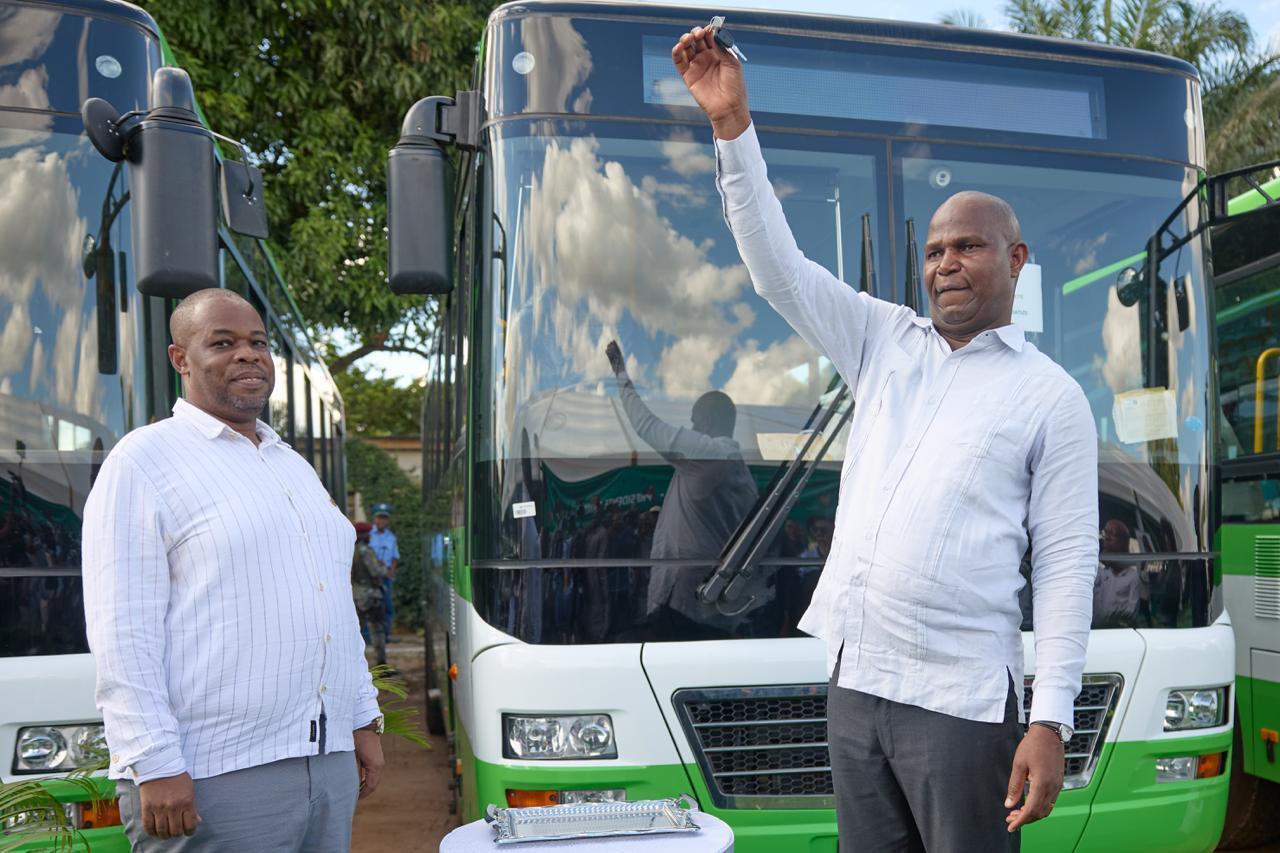
According to the President, speaking on Monday in the northern city of Nampula, at a ceremony in which he delivered over 100 public transport buses to 15 municipalities, “We are waiting for the war to end as quickly as possible so that fuel prices stabilize. But, if it doesn’t end, there will come a time when fuel will start arriving at new prices, and this may lead us to take action, just as happened during the COVID-19 pandemic”.
“When that moment arrives, we will take action. One such action is what we are anticipating with the introduction of these buses. Being public transport, even if the price increases, the State will have to subsidize it so that the people continue paying the same price”, he said.
The President explained that Mozambique still has fuel reserves acquired before the start of the US-Israeli attack against Iran, which will allow it to maintain stable prices until the end of April or the beginning of May.
“We have fuel in the ports of Maputo, Beira and Nacala, purchased before the war. In addition, there were ships already on their way to the country with fuel purchased at the old prices,” he said.
Chapo also condemned fake reports on alleged fuel shortages. “There are those who agitate our people, saying that tomorrow there will be no more fuel, creating a rush to the pumps. This is misinformation. The true information is what the government transmits regularly,” he said.
The 100 new buses will be distributed across 15 municipalities in the Central and Northern regions of the country, representing an investment of over 490 million meticais (about 7.6 million US dollars at the current exchange rate).
Chapo said that this measure “is not just an administrative act, but a specific step towards bringing Mozambicans closer to opportunities and improving the living conditions of our people”, he said.
According to the President, the introduction of the new buses will reduce waiting times at bus stops, increase transport capacity and improve safety levels in the beneficiary cities.
It is estimated that the buses will benefit approximately 780,000 passengers per month, equivalent to more than nine million trips per year.
Chapo also highlighted that many of the vehicles are powered by compressed natural gas, a solution that combines economic efficiency and environmental responsibility, aligning the country with global energy transition trends.
The initiative is part of a broader program that foresees the acquisition of 1,145 buses to strengthen urban and rural mobility throughout the country.
“The good management of these resources is a duty to the people we represent”, said Chapo. He urged his audience to “drive with respect and a sense of mission, because these buses transport citizens who trust in the safety of the public service”.
The buses, he added, were a concrete step in the construction of a more integrated, more productive country concerned with the welfare of its people.
The Strait of Hormuz is a critical maritime chokepoint for global oil and gas shipments, with around 20% of the world’s oil passing through it. Recent geopolitical tensions, particularly involving the US and Israel’s actions against Iran, have raised concerns about fuel supply disruptions. Mozambique, reliant on imports for fuel and fertilizer, is taking proactive steps to mitigate potential impacts on its economy and citizens.
In response to these challenges, the Mozambican government is focusing on maintaining fuel reserves and ensuring public transport remains affordable. The introduction of new buses is part of a broader strategy to enhance urban mobility and support the population’s, a