What You Need to Know
The Mozambique Grain Institute and the World Food Programme held a meeting to enhance food security through strategic cooperation. They discussed local procurement, food reserves, and the need for better coordination to address humanitarian needs, particularly in light of climate vulnerabilities and international financing challenges.
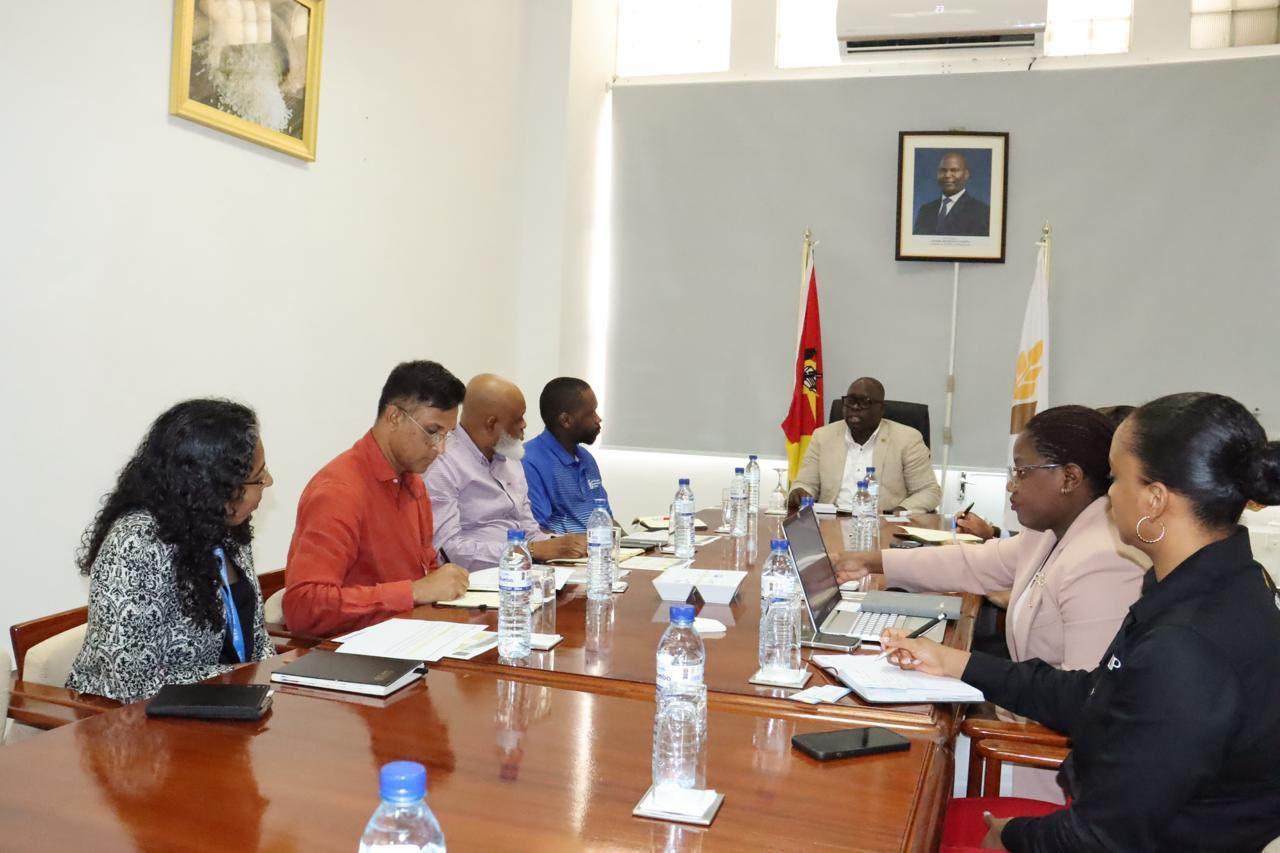
Africa-Press – Mozambique. The Director-General of the Mozambique Grain Institute / Instituto de Cereais de Moçambique – ICM, Luís Jobe Fazenda, received a delegation from the World Food Programme – WFP, on Thursday, 2 April 2026, for a working meeting focused on strengthening strategic cooperation in the area of food reserves to ensure the country’s food security, according to a press release by the ICM.
During the meeting, the Director-General of ICM highlighted the institution’s role as a central actor in regulating the cereal supply chain and in establishing strategic food reserves, which are essential for responding to emergency situations.
He also emphasised the need to promote local procurement and strengthen coordination with partners such as the WFP, aiming to increase national production so that surpluses can be purchased to build Mozambique’s strategic food reserves.
The WFP acknowledged the importance of this partnership, noting that for more than a decade it has sought to support the creation of strategic reserves in the country, in a context of high vulnerability to climate shocks and constraints in international financing, exacerbated by factors such as the war in Ukraine.
The organisation highlighted the importance of structural solutions that ensure rapid and effective responses to the population’s needs.
The two institutions identified specific areas of synergy, including the joint use of storage infrastructure, sharing technical expertise in logistics and food quality, and the optimisation of supply chains.
They also emphasised the need for greater institutional coordination to facilitate import processes and customs clearance of food intended for humanitarian assistance, such as rice.
The implementation of a joint approach to establishing strategic reserves within national territory was identified as a significant step forward, enabling a faster, more efficient, and sustainable response in emergency situations.
The meeting concluded with a commitment from both parties to deepen technical dialogue, align ongoing projects, and consolidate a strategic partnership aimed at strengthening food resilience in Mozambique.
The Mozambique Grain Institute plays a crucial role in managing the cereal supply chain and ensuring food security in the country. With increasing climate challenges and economic pressures, partnerships with organizations like the World Food Programme are vital for developing sustainable food reserves and improving local production capabilities. Over the years, Mozambique has faced numerous challenges, including climate shocks and geopolitical issues, which have heightened the need for effective food security strategies.