What You Need to Know
Mozambique’s Ministry of Health is training healthcare professionals on the use of Heberprot-P, a Cuban drug, to treat diabetic foot ulcers. This initiative aims to reduce the high rate of lower limb amputations caused by diabetes, which affects over three million people in the country. The training involves 30 specialists and seeks to improve treatment outcomes across Mozambique.
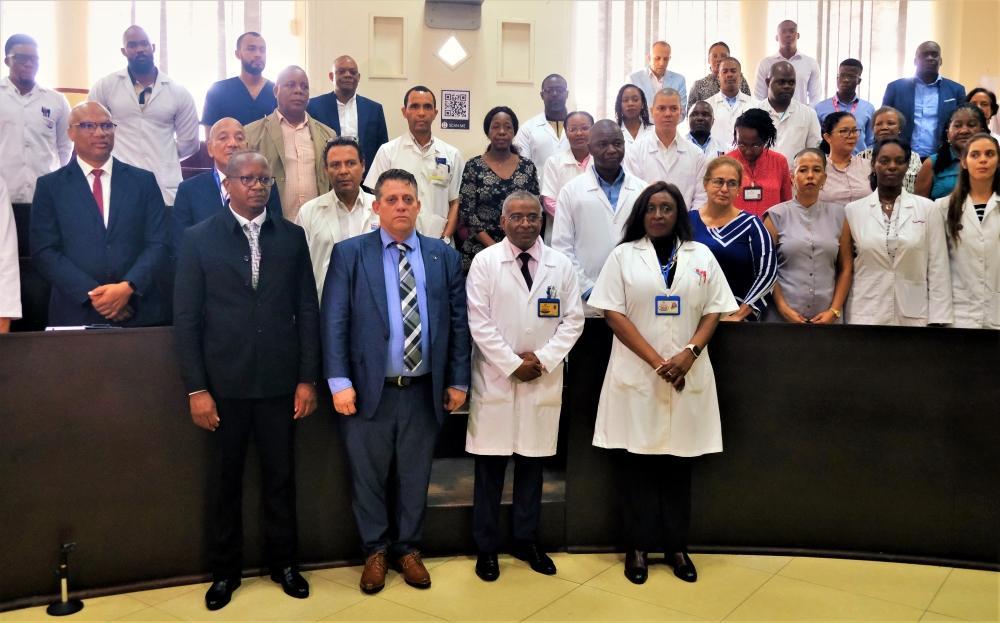
Africa-Press – Mozambique. MISAU, in partnership with the Marcelino dos Santos Clinic and Cuban Cooperation, has been promoting training since last week on diabetic foot treatment using Heberprot-P, a Cuban-developed drug for diabetic foot ulcers approved by Mozambique’s National Medicines Regulatory Authority (ANARME).
The National Health System (SNS) of Mozambique is implementing a new methodology for the treatment of diabetic foot, one of the main complications of diabetes mellitus, which affects more than three million Mozambicans, in order to minimise lower limb amputations.
According to the Ministry of Health (MISAU), the Maputo Central Hospital (HCM) performs six to seven lower limb amputations per week in patients with diabetes, due to the severity of ulcers, a situation worsened by difficult-to-treat infections and vascular insufficiency.
In this context, MISAU, in partnership with the Marcelino dos Santos Clinic and the Cuban Cooperation, has been promoting training since last week on diabetic foot treatment and the use of Heberprot-P, a Cuban-developed drug for diabetic foot ulcers approved by Mozambique’s National Medicines Regulatory Authority (ANARME). Clinical studies have reported high efficacy for Heberprot-P treatment, with reported effectiveness of over 70 per cent.
The course involves 30 professionals, including surgeons and orthopaedic specialists from HCM, the José Macamo and Mavalane General Hospitals, as well as the Matola Provincial Hospital. There are plans to expand the training to other regions of the country.
Speaking yesterday in Maputo at the launch of the new approach to diabetic foot treatment, the Minister of Health, Ussene Isse, highlighted that the drug Heberprot-P contains an epidermal growth factor that accelerates wound healing.
“Therefore, I want to issue a challenge to the colleagues who have led this process. We will begin operational research to determine the responses we will achieve with the introduction of this medicine, as its efficacy is already proven worldwide,” he said.
The Director of the Surgery Department at HCM, Atílio Morais, explained that the treatment consists of injecting the drug directly into the wounds, which aids tissue regeneration and promotes healing within four to six weeks, reducing infection and the risk of amputation.
Meanwhile, the Clinical Director of the Marcelino dos Santos Clinic, Adriano Tivane, acknowledged that diabetes treatment represents a high cost for the country and for patients.
In this context, Tivane assured that the institution he directs aims to find partners to subsidise care, so that there will be no direct costs for the patient.
For his part, Henry Jiménez, representative of Cuban Cooperation in Mozambique, pointed out that Heberprot-P, developed in Cuba, is used in the treatment of diabetes in 24 countries, including several in Africa.
According to Cuba’s Centre for Genetic Engineering and Biotechnology (Centro de Ingeniería Genética y Biotecnología, CIGB), Heberprot-P was officially introduced and registered in Cuba in 2006.
It is a Cuban-developed injectable medication used for the treatment of advanced diabetic foot ulcers (DFU). Developed by CIGB in Havana, Heberprot-P contains recombinant human epidermal growth factor (rhEGF) and is designed to accelerate the healing of deep, complex, and chronic wounds, significantly reducing the risk of amputation.
Diabetes is a growing health concern in Mozambique, with over three million affected individuals. The country faces significant challenges in managing diabetic complications, particularly foot ulcers, which can lead to amputations. The introduction of Heberprot-P, a Cuban-developed drug, represents a significant advancement in treatment options, aiming to improve patient outcomes and reduce healthcare costs associated with diabetes management. This training initiative is part of a broader effort to enhance healthcare delivery in Mozambique and address the pressing issue of diabetes-related amputations.