What You Need to Know
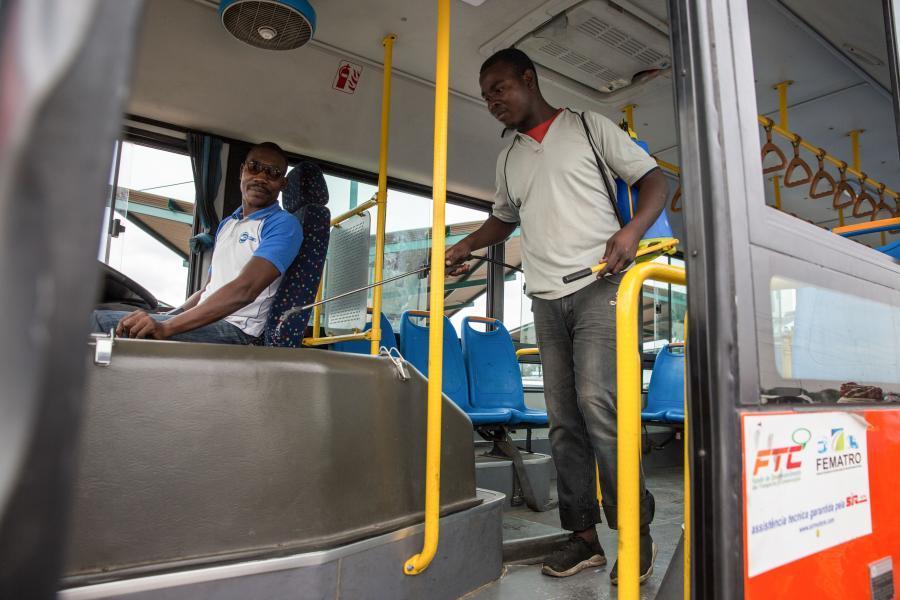
Mozambique is set to acquire 360 buses to improve public transport in urban areas and for schools. This initiative, launched by the Transport and Communications Development Fund, includes CNG-powered and diesel buses. The government aims to enhance transport sustainability amid rising fuel prices due to geopolitical tensions affecting supply chains.
Africa-Press – Mozambique. Mozambique plans to acquire 360 buses for public passenger transport in major urban centres and school transport, according to an international public tender launched by the Transport and Communications Development Fund (FTC) and consulted by Lusa on Tuesday.
According to the tender notice, which provides for the opening of bids for the four lots on 4 May, the acquisition of the 360 buses is part of the government programme to improve the public passenger transport system and “promote inclusive and modern public transport, ensuring the growing financial sustainability of the road sector and improving transport and logistics conditions”.
The first lot of the tender launched by the public fund provides for the supply of 50 vehicles powered by compressed natural gas (CNG) to strengthen public transport in the Maputo metropolitan area. The second lot provides for the supply of 70 diesel buses to expand school transport in the northern and central regions. The third involves a further 75 CNG-powered buses for municipalities in the southern part of the country.
The fourth lot covers the acquisition of 165 diesel buses for municipalities in central and northern Mozambique.
Mozambican President Daniel Chapo warned on 13 April in Maputo that the fuel crisis caused by the war in the Middle East could reach Mozambique at any time, calling for investment in public transport to mitigate its impact, noting that vehicles are being made available for public transport across the country.
“When we place vehicles in the 15 municipalities in the central and northern regions, and next month in May in the southern region, it is precisely to anticipate the fuel crisis that may arise at any time due to the war you are well aware of, between Iran, the United States and Israel. And with public transport we can minimise the impact of this crisis,” the head of state said.
Mozambican authorities last week announced they are preparing measures to mitigate the potential impact of fuel price increases, given the unpredictability of international prices due to the war in the Middle East.
“Regarding fuel prices on the international market, there is a lot of unpredictability. It is very difficult at this stage to make any forecasts, taking into account the geopolitical context,” said Felisbela Cunhete, director of the National Directorate of Hydrocarbons and Fuels (DNHC).
Speaking to journalists, she noted that between January and February the country observed some stability in fuel prices, a situation that changed this month with an increase in import prices and in the product itself.
“From April onwards there was an increase in import prices, I am referring to FOB [Free on Board] prices and the price of the product itself, resulting from the conflict in the Middle East, as most of the product supplying our market comes from that region,” added the DNHC director.
The disruption of navigation through the Strait of Hormuz, a transport route for around 20% of oil and a significant share of liquefied natural gas traded by sea, led fuel markets to react quickly and record a sharp rise in prices, she said.
In this context, she added, if the situation persists and countries begin importing products at higher costs, this is expected to be reflected in the domestic market, with the government preparing to mitigate the impact.
“At some point, we will naturally have to absorb that price, and the government is aware of this,” she acknowledged, noting that the executive is already preparing a set of measures to help mitigate the impact on retail prices, given that fuel prices have a multiplier effect across the entire economy.
The public transport system in Mozambique has faced numerous challenges, including inadequate infrastructure and rising fuel costs. Recent geopolitical events, particularly conflicts in the Middle East, have exacerbated these issues, leading to increased fuel prices and supply uncertainties. In response, the Mozambican government is investing in modernizing its public transport fleet to ensure better service and mitigate the impact of potential fuel crises on its citizens. This initiative reflects a broader strategy to enhance urban mobility and economic resilience in the face of global market fluctuations.