What You Need to Know
Mozambique has reiterated its commitment to the Voluntary Principles on Security and Human Rights during a recent plenary meeting in London. The country aims to align its national practices with international human rights standards, particularly in the extractive sector, by developing a National Action Plan to guide its implementation.
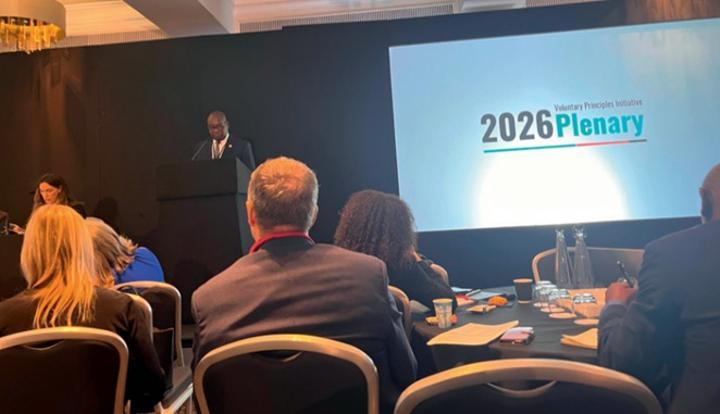
Africa-Press – Mozambique. The commitment was reinforced during the Initiative’s Plenary, held between March 24 and 26 in London, United Kingdom. The country’s participation in this international forum comes at a time when efforts are intensifying to align national practices with international human rights standards, particularly in contexts marked by extractive operations and security challenges.
The meeting brought together more than 150 participants, including representatives from governments, multinational companies, and civil society organizations, in a multi-sectoral dialogue about challenges and best practices in security management with respect for human rights. Mozambique was represented at the event by a delegation led by the Minister of Justice, Constitutional and Religious Affairs, Mateus Saize, and included representatives from various state institutions, namely the Ministry of Justice, the Ministry of National Defence, the Institutional Communication Office of the Presidency of the Republic, as well as the Centre for Democracy and Human Rights (CDD), which serves as the initiative’s secretariat in Mozambique.
During the meeting, Mozambique presented the progress made in recent years and outlined its strategic priorities for the implementation of the Voluntary Principles. Among the main priorities is the development of a specific National Action Plan on the Voluntary Principles on Security and Human Rights (VPSHR), an instrument that should guide, in a structured way, the actions of the State and other relevant actors in this area. This plan will be articulated with the National Action Plan on Business and Human Rights, already completed and with approval expected before May 2026, in an approach that the Government considers essential to ensure policy coherence and greater effectiveness in implementation.
According to the vision presented by the delegation, the Action Plan on Voluntary Principles should function as an operational complement to the Action Plan on Business and Human Rights, establishing concrete measures to prevent violations, clarify institutional roles, and strengthen monitoring and accountability mechanisms. This integrated approach seeks to avoid overlaps while reinforcing the State’s capacity to respond in a coordinated manner to complex challenges that emerge from the intersection of security and human rights.
In terms of priorities, the Mozambican delegation highlighted three main areas. In the short term, the aim is to advance the development and validation of the National Action Plan on Voluntary Principles, ensuring its articulation with existing instruments. In the medium term, the focus will be on the progressive integration of these principles into legislation and public policies, as well as strengthening institutional coordination between different sectors of the State. In the long term, the objective is to guarantee the sustainable implementation of the plan and the institutionalization of permanent mechanisms that ensure its continuity and effectiveness.
The Voluntary Principles on Security and Human Rights were created in 2000 as a multi-sectoral initiative bringing together governments, businesses, and civil society organizations. Its main objective is to guide companies, particularly in the extractive and energy sectors, in managing the security of their operations in a way that respects human rights. Over the years, the initiative has established itself as an international benchmark in promoting responsible practices in contexts often marked by social tensions, risks of conflict, and institutional weaknesses.
The efforts undertaken culminated in 2024 with Mozambique’s admission as an engaged member of the Voluntary Principles Initiative. This status represents recognition of the progress achieved, but also implies new commitments, namely the development and implementation of a National Action Plan that will allow the country to evolve into a full member.
Participation in the plenary meeting in London thus represented an opportunity for Mozambique to consolidate its position on this agenda, share experiences, and learn from other countries and international actors. In a global context where demands regarding human rights and corporate responsibility are increasingly high, strengthening national instruments and mechanisms becomes a central element to ensure that economic development, particularly in the extractive sector, takes place in an inclusive, sustainable, and rights-respecting manner.
In the case of Mozambique, the relevance of this agenda has been growing, especially in regions where the exploitation of natural resources coincides with security challenges. Since 2021, the country has made significant progress in promoting the Voluntary Principles, including the creation of working groups at the national and provincial levels and the implementation of various awareness-raising and capacity-building actions aimed at public, private, and community actors.
These initiatives have contributed to increasing awareness of the Voluntary Principles and promoting a culture of greater responsibility in security management, involving both state institutions, companies, and civil society organizations. At the same time, they have allowed the creation of spaces for dialogue and coordination between different actors, in a context where building trust is essential to prevent conflicts and promote respect for human rights.
The efforts undertaken culminated in 2024 with Mozambique’s admission as an engaged member of the Voluntary Principles Initiative. This status represents recognition of the progress achieved, but also implies new commitments, namely the development and implementation of a National Action Plan that will allow the country to evolve into a full member.
Participation in the plenary meeting in London thus represented an opportunity for Mozambique to consolidate its position on this agenda, share experiences, and learn from other countries and international actors. In a global context where demands regarding human rights and corporate responsibility are increasingly high, strengthening national instruments and mechanisms becomes a central element to ensure that economic development, particularly in the extractive sector, takes place in an inclusive, sustainable, and rights-respecting manner.
The Voluntary Principles on Security and Human Rights were established in 2000 to guide companies in managing security while respecting human rights, particularly in the extractive industries. Mozambique’s recent admission as an engaged member of this initiative highlights its commitment to improving human rights practices amid ongoing security challenges related to resource exploitation. The country has made strides in promoting these principles since 2021, including forming working groups and raising awareness among various stakeholders.