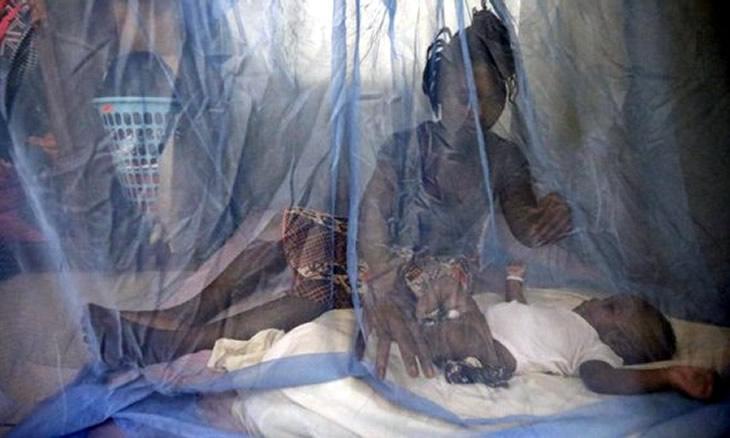
Africa-Press – Mozambique. At least 49 people have died from malaria in the first six weeks of this year in Mozambique, among 1,357,891 infected, the health authorities reported today, announcing that 1.8 million mosquito nets will be distributed this semester across two southern provinces.
According to data presented at a press conference on Thursday in Maputo by the National Director of Public Health, Quinhas Fernandes, malaria cases have risen by 55% compared with the same period last year, when 876,498 cases were recorded, but the number of deaths fell by 38%, with 79 fatalities in 2025.
“Almost all our provinces have seen an increase in cases, with the exception of Cabo Delgado province, which recorded a reduction of around 40%,” said Quinhas Fernandes.
Mozambique is currently in the peak of its rainy season, with health authorities reporting that, in response to the January floods, 59 health posts were established in temporary accommodation centres, treating 1,200 people with malaria.
“In response to the emergency situation, 26,616 mosquito nets were distributed, of which more than 17,000 went to Gaza province, over 3,000 to the city of Maputo, and more than 4,000 to Maputo province,” the official added, noting that 728 rooms in the accommodation centres were also sprayed.
In this context, authorities plan to bring forward the national mosquito net distribution campaign, originally scheduled for August, aiming to carry it out this semester in the provinces of Gaza and Inhambane.
The health sector will also conduct spraying campaigns in six districts of Maputo province — namely Manhiça, Boane, Magude, Marracuene, Moamba and Matutuine — and 11 districts of Gaza province, including Xai-Xai, Chókwè, Guijá, Bilene, Chigubo, Massingir, Chibuto, Mabalane, Chicualacuala, Mapai and Massangena.
Vector control will also be supplemented with larvicide application in the same districts of Maputo and Gaza provinces.
“The Ministry of Health urges the strengthening of preventive measures (…), the correct use of mosquito nets, meaning sleeping under the net every night, and seeking health services whenever experiencing fever, diarrhoea or vomiting, and above all, avoiding any form of misinformation,” said Quinhas Fernandes.
On 10 December, former Mozambican Minister of Health (2005–2010), Ivo Garrido, criticised the stagnation in malaria prevalence and incidence in Mozambique, pointing to shortcomings in disease prevention.
“We are failing especially in prevention. Certain maps showing the evolution of malaria prevalence and incidence over decades were presented, and what we see is that sometimes it drops slightly, but the trend is practically stagnation,” said Ivo Garrido during the Annual Malaria Forum in Nampula, northern Mozambique.
According to Ivo Garrido, malaria incidence and prevalence have “practically not changed” in Mozambique since independence in 1975, despite the country’s efforts to control the disease.
The Mozambican Ministry of Health noted that the country recorded around 10.3 million malaria cases between January and September, compared with nine million in the same period in 2024, a 14% increase in new cases.
In 2024, at least 358 people died from malaria in the country, which recorded over 11.5 million cases and approximately 67,000 hospitalisations, the Mozambican President reported on 25 April during World Malaria Day, calling for greater protection for children.
The R21/Matrix-M malaria vaccine, the second for children, developed by the University of Oxford in the United Kingdom, is already in use in Mozambique, following recommendations from the Strategic Advisory Group of Experts on Immunization (SAGE) and the Malaria Policy Advisory Group (MPAG).