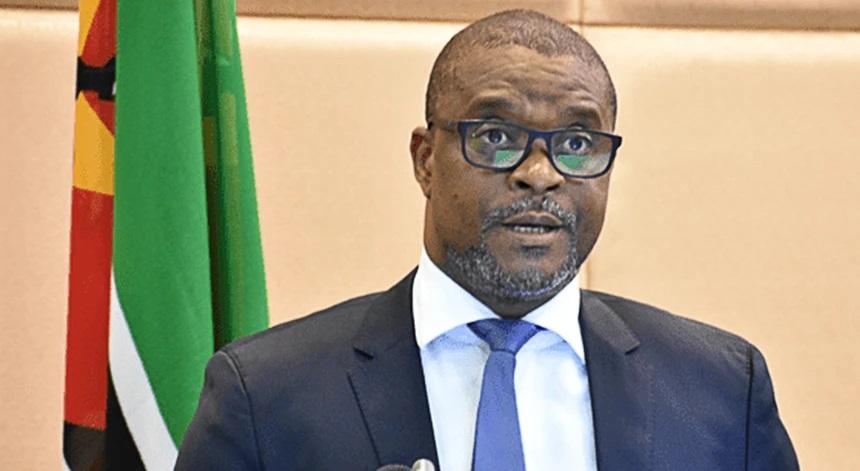
Africa-Press – Mozambique. Mozambique’s Minister of Economy and Finance, Max Tonela, has told Lusa that the lack of resolution in the so-called hidden debts trial in Maputo cannot condition the acceptance of loans for necessary reforms in the country.
“We are carrying out reforms that are necessary to improve the country’s macroeconomic framework and also to create conditions for the private sector to be better able to do business and invest in Mozambique, creating conditions for us to have a better capacity to mobilise financing, including financing for the private sector,” Minister Tonela said in an interview with Lusa at the Mozambican Embassy in Washington. D.C. United States.
According to the minister, the factors that justify these reforms “have nothing to do” with the fact that there is still no outcome to the ‘hidden debts’ trial in Maputo, nor to the disputes in London.
The International Monetary Fund (IMF) announced last month that it had reached an agreement with Mozambique to implement an Expanded Financing Program (PFA) extending until 2025, disbursing financial aid for the first time since the ‘hidden debts’ revelations first surfaced.
“The IMF team has reached staff-level agreement with the authorities of Mozambique on a three-year program supported by an arrangement under the ECF in the amount of about SDR341 million (Special Drawing Rights) or US$470 million (€428 million),” IMF mission head Alvaro Piris announced.
This is the first time that the IMF has financed Mozambique since the disclosure of the so-called ‘hidden debts’ scandal in 2016, although there has been occasional financial aid relating to specific crises such as the Covid-19 pandemic and cyclones Kenneth and Idai in 2019.
The IMF was one of several international partners that suspended financial aid to Mozambique following the disclosure of loans to public companies that had not been disclosed either to parliament or to international donors, a series of incidents known as ‘the hidden debt scandal’, which involved officials of the government then led by Armando Guebuza, in which the current president was Minister of Defence, the area in which the public companies that contracted the hidden loans operated.
Tonela travelled to Washington to participate in the IMF and World Bank Spring Meetings, stating that, in all the meetings, he had had the “opportunity to reiterate the path that his government intended to pursue to carry out reforms aimed at boosting the Mozambican economy, correct distortions and improve management capacity”.
Among the various meetings he had during the week, the minister highlighted those with representatives of the US Government, especially the Departments of the Treasury and of State.
“We are pleased to note that we have received very positive responses, very positive feedback in all these meetings, as well as our counterparts expressing their willingness to work with the government in the search for additional resources to finance our development programs,” the minister detailed.
According to Minister Tonela, the reforms that his executive is carrying out are aimed at promoting and improving good governance, whether globally by the state or at corporate level, to attract domestic and foreign investment, and also to bring debt within “more sustainable levels”.
Asked what had changed to prevent a scandal like the 2016 ‘hidden debts’ from happening again, Minister Tonela said that, among other measures, changes in the regulatory framework had been adopted allowing for better control and monitoring of issues such as conflicts of interest within state service providers, as well as the intensification of the fight against money laundering.
“The perspective of having checks and balances and counterbalancing mechanisms in our `governance` process has changed, to allow all decisions of this nature, which generate indebtedness, to go through the discretionary processes of entities such as the Attorney General’s Office, for example, before their approval or implementation,” he added.
In an assessment of this year’s IMF and World Bank Spring Meetings, the Mozambican minister stressed that his focus was on finding ways to mobilise resources for the country.
“Resources to allow the state to face challenges caused by various factors, some external, such as the effects of climate change, which have resulted in an increase in the regularity and intensity of cyclones that have destroyed infrastructure and caused fatalities and represent an additional pressure on the state budget,” he said, adding that managing and mobilising resources to face the terrorist action in Cabo Delgado was also one of his focuses.
For More News And Analysis About Mozambique Follow Africa-Press