What You Need to Know
The Government of Mozambique has signed financing agreements with Chinese firms for the Beira Port Access Road and Dondo Logistics Terminal. These projects aim to enhance the Beira logistics corridor, improve connectivity with Zimbabwe, Zambia, and Malawi, and create jobs through a $160 million investment under Public-Private Partnerships.
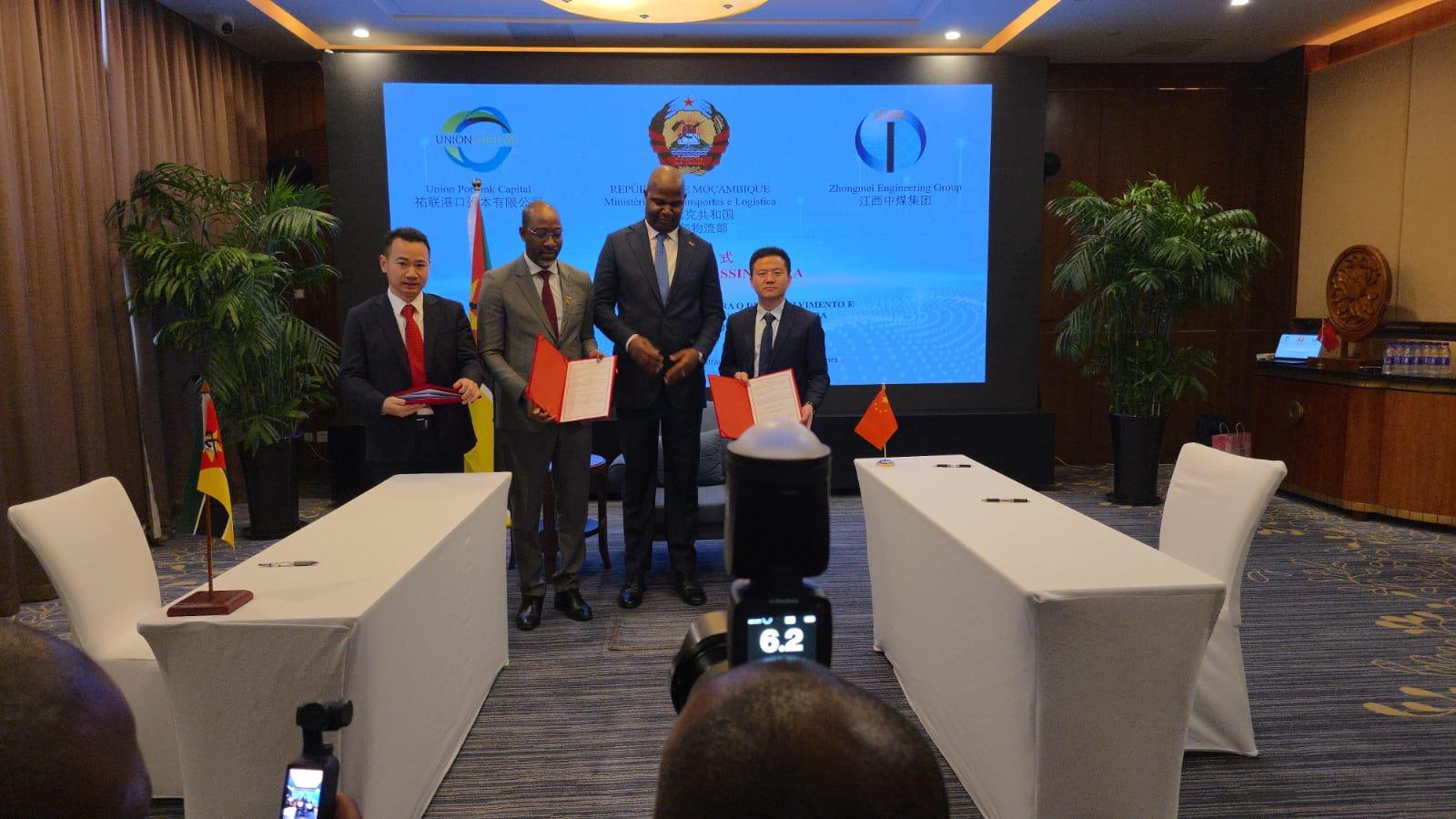
Africa-Press – Mozambique. The Government of Mozambique, through the Ministry of Transport and Logistics, signed on Wednesday (22 April) a memorandum of understanding with two Chinese companies, namely Zhongmei Engineering Group and Union Portlink Capital, for the implementation of the construction projects of the Beira Port Access Road and the Dondo Logistics Terminal, reads a statement issued by the Ministry under the headline “Logistics: Protagonism and Innovation in the Spotlight in China”.
The projects are strategic and aim to boost the development of the entire Beira logistics corridor, adds the same source.
“These are projects that are already under way, and the Beira corridor is among the priorities of our government as a way of maximising its potential to develop our economy and beyond, while also improving connectivity to neighbouring countries, namely Zimbabwe, Zambia and Malawi, which depend on the Port of Beira,” stated the Minister of Transport and Logistics, João Matlombe.
Under Public-Private Partnerships (PPPs), a consortium of private companies has been formed to invest around US$160 million, which, in addition to creating new jobs, will develop the logistics component in that part of the country.
The Beira Port Access Road will also decongest the entire city, as it will be an alternative route allowing heavy traffic to be diverted to a dedicated access road to the Port of Beira. As a result, the current road will serve only urban needs.
“This is a way of making a major contribution so that the city can function normally. This has been our concern as a Government and we have been working with the Beira Municipal Council, particularly due to the services and infrastructure that will be affected in the context of the construction of the new port access road,” said Minister Matllombe.
A road will also be built at the Dondo dry port, including a viaduct, in order to allow it to cross the N6 road without interfering with normal traffic flow, which will help optimise time.
At present, “the overall performance level of the N6 road, from the Machipanda border to the Port of Beira, is poor. We have long queues both at the border and at the Port of Beira, and to ensure efficiency it is necessary to intervene in infrastructure, which is what we are doing.”
Matlombe said the second phase will consist of interventions within the Port of Beira, work that will be carried out by Portos e Caminhos de Ferro de Moçambique (CFM), aimed at increasing the capacity of the fuel terminal.
In the same vein, the Government is working in coordination with the Mozambique-Zimbabwe Pipeline Company (CPMZ) on doubling the capacity of the pipeline linking Mozambique and Zimbabwe. “Later this year we will announce the start of works, so that we can maximise existing potential and increase the economic contribution to our country,” the Minister said.
He added: “We are aware of the challenges we have in the cargo and container terminals and we are working with all partners involved to see how we can maximise this.”
The Minister, Matlombe, said that in China during the visit, the Mozambican delegation visited a channel with a shallower draft than Beira’s, at around 6 metres deep, which handles more than 20 million tonnes per year, as a result of efficiency and investment across the entire chain.
“This is what we are trying to encourage at the Port of Beira, as we believe it is possible to meet demand, reduce waiting times, which currently reach over 60 days at the cargo terminal and around 90 days for fuel,” declared João Matlombe.
The Beira Corridor has historically been vital for Mozambique’s economy, serving as a key route for trade with neighboring countries. The government has prioritized infrastructure development to enhance logistics and connectivity, recognizing the corridor’s potential to boost economic growth and facilitate trade. Recent investments aim to address long-standing inefficiencies in transport and logistics, particularly at the Port of Beira, which is crucial for regional trade flows. Enhancing this infrastructure is seen as essential for Mozambique’s economic development and regional integration.