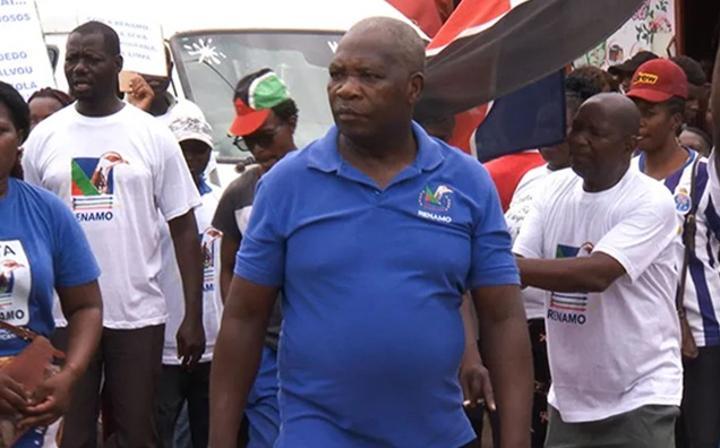
Africa-Press – Mozambique. Veteran member of the Mozambican National Resistance (Renamo) António Muchanga, suspended yesterday by the party, told Lusa that the decision “means nothing”, adding that the party’s contested leader, Ossufo Momade, “can keep the symbols” which he has now been barred from using.
“That announcement means nothing. What measures am I going to take? That announcement means nothing. What I can do is clarify matters to the people,” said António Muchanga, a former MP, when questioned by Lusa about the steps he would take in response to the decision announced yesterday by the party.
Renamo, which lost its historic status as the largest opposition party in the 2024 election, exacerbating internal dissent against leader Ossufo Momade, announced on Tuesday the immediate suspension of António Muchanga as a party member for violating the party’s statutes.
“Given the seriousness, repeated conduct and public impact of the infractions, the National Jurisdictional Council resolves to suspend Mr António Muchanga from membership of the Renamo party, with immediate effect until further decision to the contrary,” announced Edmundo Panguene, first member of the Renamo Jurisdictional Council, at a press conference in Maputo.
For António Muchanga, the Renamo Jurisdictional Council does not have the authority to suspend him. He considers the move an attempt to threaten those who challenge Ossufo Momade’s leadership and who recently met.
“If Ossufo wants to fight for party unity, this is not the path he should follow. Now, if he wants a split in the party, he should continue like this. He will keep the symbols and we will keep the members,” Muchanga declared, adding that his suspension will only strengthen the group.
Asked by Lusa about a possible departure from the party as a result of the suspension, the former MP said he remains firmly in Renamo, despite what he described as a “soured relationship” with the leadership.
“It was not Ossufo who brought me into Renamo, nor was it the person who read out the announcement. Renamo is in my heart, so I am firmly in Renamo, regardless of my soured relationship with the current leaders,” Muchanga stressed. He said he had not been notified in advance by the party and that he cannot be prevented from commenting on any matter, particularly as he is a “television commentator”.
“When television raises a question about Frelimo, I comment. When it raises a question about Anamola, I comment. So why should I refuse to comment on Renamo matters? What they wanted was that, when the subject turned to Renamo, because the (Renamo) president is ineffective and is destroying the party, I should remain silent? I cannot do that,” Muchanga concluded.
On Saturday, António Muchanga called for Ossufo Momade to step down as leader, accusing him of a “lack of ideas” and of failing to hold regular meetings as required by the party’s statutes. He called for unity to remove the party president from power.
According to Renamo, the suspension follows the former MP’s repeated statements in national media outlets, digital platforms and informal meetings, in which he “directly attacks the legitimately constituted leadership”, exposing internal matters and party conflicts to the public.
Muchanga has also been banned from using the party’s name, symbols, images, structures, political assets and headquarters. He is suspended from the right to vote and to stand for election to any Renamo body, for allegedly instrumentalising demobilised former combatants and encouraging narratives of confrontation, tension and violence for “purposes contrary to Renamo’s principles and to social peace”.
For months, former Renamo guerrillas have been calling for Ossufo Momade to resign, accusing him of “mismanagement”, failure to pay pensions and allowances, and “total incompetence” in handling the party’s crisis. They recently convened a two-day meeting in Maputo province, in the south of the country, to discuss the possible calling of an extraordinary congress and to present the Management Commission they created, citing the continued closure of party delegations.