What You Need to Know
The Mozambican parliament has approved a bill allowing the government to legislate on commercial activities, aiming to enhance the business environment and attract investment. The bill received support from the ruling Frelimo party and other parties, while the opposition Renamo expressed concerns about potential overreach and loss of legislative power.
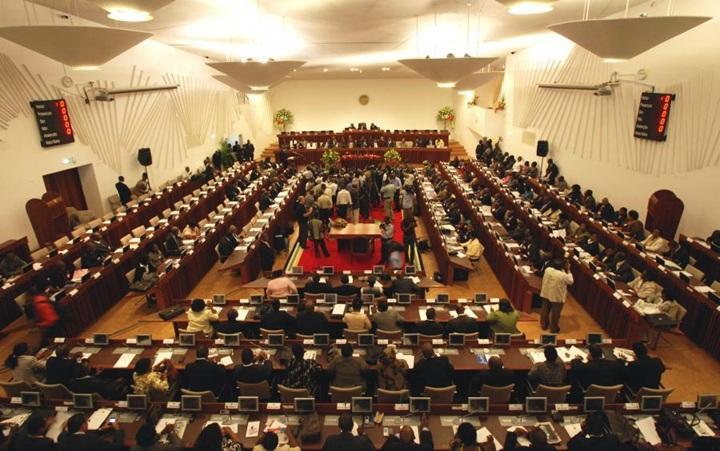
Africa-Press – Mozambique. The Mozambican parliament on Tuesday, 14 April, approved a draft bill authorising the government to establish the legal framework for commercial activity, regulating trade and the provision of commercial services, with the aim of improving the business environment and attracting investment.
The bill was approved in both general and detailed terms by parliamentary benches of the Mozambique Liberation Front (Frelimo, parliamentary majority), the Optimistic People for the Development of Mozambique (Podemos), and the Mozambican Democratic Movement (MDM), but was rejected by the Mozambican National Resistance (Renamo).
“There will be excesses, which is why we said it is a blank cheque, as it risks undermining the competencies and attributions of the Assembly of the Republic. By denying itself the power to legislate and delegating this competence to the government, the government will act at its own discretion,” said Renamo MP Arnaldo Chalaua.
In its justification for the proposal, the government argues that the authorisation is necessary to update existing legal instruments governing commercial activity and the provision of commercial services within the national legal framework.
“This is equivalent to saying that there is no legal framework in the national system that properly regulates commercial activity, resulting in a gap regarding, among other things, the classification of the commercial network and the provision of commercial services according to their size; the different activities carried out by traders; the various sales modalities of commercial activities; and the framework for post-sale guarantees for goods and services,” the government states.
The document also adds that “the polarisation of the sector by micro and small-scale traditional and mostly informal trade, coexisting with large commercial groups, contributes to the establishment of the legal regime applicable to the organisation of commercial activity”. This, it argues, makes it urgent to clearly define commercial agents, in order to improve the business environment, ensure the healthy development of the economic sector, and attract investment.
According to the government, the legislation will address shortcomings in the regulation of the establishment of commercial outlets in urban, suburban and rural areas, thereby regulating commercial activity and services in light of a market increasingly driven by technology and competitive change.
The MDM voted in favour of the bill, stating that the previous Commercial Code is outdated in light of current economic challenges.
“It will allow for the simplification and dynamisation of commercial activities in favour of the economic growth that the country has long been waiting for to boost the national economy,” said MP Francisco Sousa.
Podemos, the main opposition party, also voted in favour, arguing that the country faces “a worrying legal vacuum”.
“The legal framework does not clearly regulate where, how and under what classification commercial activity is carried out. This gap has fuelled corruption, fiscal arbitrariness, legal insecurity and the exclusion of thousands of economic operators,” said Elísio Muaquina.
Frelimo also voted in favour on constitutional grounds, arguing that this does not prevent parliament from overseeing its implementation.
“The granting of this legislative authorisation also constitutes the materialisation of the principles of sovereignty, legality and interdependence among sovereign bodies,” said Sulemane Fonseca.
Mozambique has faced challenges in regulating its commercial sector, with existing laws often deemed outdated. The new bill aims to address these issues by providing a clearer legal framework for commercial activities, which is essential for fostering economic growth and attracting foreign investment. The move reflects a broader trend in many developing nations to modernize legal structures to better support business operations and economic development.
The approval of this bill is seen as a crucial step towards improving the investment climate in Mozambique, which has been hindered by legal ambiguities and a lack of clear regulations governing trade. By empowering the government to legisla