What You Need to Know
The Rwandan government has confirmed a troop deployment of over 6,300 in northern Mozambique to combat terrorism, emphasizing the need for a sustainable financing framework. This increase in personnel is a response to the expanded operational scope and the security vacuum left by the withdrawal of the SADC Mission. Without guaranteed funding, Rwanda may withdraw its forces, impacting ongoing anti-
Africa-Press – Mozambique. The Rwandan government confirmed on Thursday that it has more than 6,300 troops deployed to combat terrorism in northern Mozambique, three times the number sent in 2021, reiterating that a “sustainable financing framework” is needed to continue.
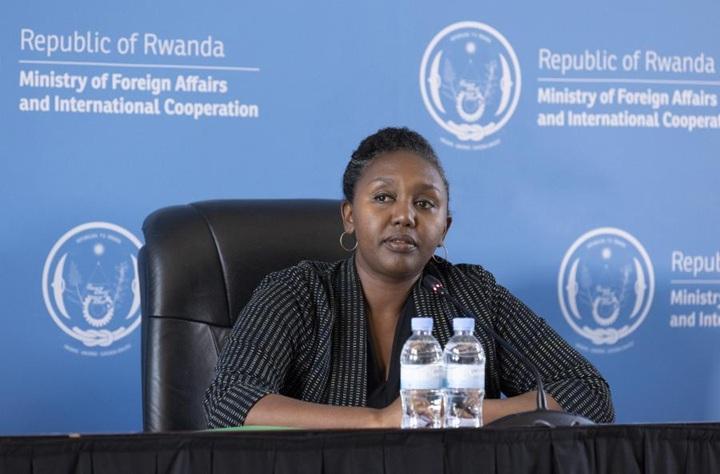
“Rwanda has consistently maintained that the long-term deployment of our security forces in joint counterterrorism operations in Mozambique requires a sustainable financing framework. Having so far shouldered the bulk of the financial burden of these operations, a transition to more equitable funding is a strategic necessity,” said Rwandan government spokesperson Yolande Makolo.
Reacting on her official X account to international media reports on negotiations between Rwanda and the United States and the European Union (EU), Makolo stated that it is up to the Mozambican government to provide this funding.
“Rwanda has not and will not seek additional funds from the European Peace Facility; that is a matter for Mozambique. Rwanda’s deployment requires sustainable financing, and it is up to the host government and its partners with major investments in Cabo Delgado to provide for that, as it has always been. Otherwise, Rwanda is satisfied to have been able to contribute together with our Mozambican allies in defeating the terrorists, securing the residents of Cabo Delgado and allowing for investments to roll out,” she added.
This position comes as EU financial support for the operation is set to end in May, after 36 months and €40 million in disbursements, while the United States — which funds the French TotalEnergies-led liquefied natural gas (LNG) megaproject in Cabo Delgado — has imposed sanctions on the Rwandan Defence Forces (RDF) due to the conflict in the Democratic Republic of the Congo.
Rwandan Foreign Minister Olivier Nduhungirehe had already warned on 14 March that the Rwandan deployment in Cabo Delgado would leave northern Mozambique if no guarantees of “sustainable funding” were provided.
“It’s not that “Rwanda could withdraw”, it’s that “Rwanda WILL withdraw” its troops from Mozambique, if sustainable funding is not secured for its counter-terrorism operations in Cabo Delgado.,” said the Rwandan diplomat in a post on his official X account, the second official government statement on the matter within 24 hours.
Meanwhile, Yolande Makolo added that in Cabo Delgado the “current personnel numbers stand at over 6,300,” significantly higher than the 2,000 initially deployed in 2021, in “a direct response to the expanded scope of operations and the necessity of filling the security vacuum left by the withdrawal of the SADC Mission in Mozambique (SAMIM) in 2024.”
“The bottom line is: ISIS attacks mainly victimized Mozambican civilians, and they have been the biggest beneficiaries of the joint security mission, having returned to their homes and resumed their lives. The gas investments benefit European and global energy security/interests, not Rwanda’s – Rwandan forces are present in Cabo Delgado in response to the request of the Government of Mozambique for support.,” said Makolo.
Support for Rwandan forces combating terrorism in Cabo Delgado ends in May, with no negotiations yet underway for its continuation, according to an EU delegation source in Mozambique queried by Lusa in March.
Since October 2017, the gas-rich province of Cabo Delgado has faced an armed rebellion with attacks claimed by groups linked to the Islamic State, which are estimated to have caused more than 6,500 deaths.
Rwandan troops collaborate with Mozambican forces, particularly around the TotalEnergies LNG megaproject, which resumed construction in January almost five years after suspension due to terrorist attacks, with the company emphasising the importance of agreements allowing the presence of Rwandan forces.
Since October 2017, Cabo Delgado has been plagued by an armed rebellion linked to ISIS, resulting in over 6,500 deaths. The region’s instability has drawn international attention, particularly due to its rich natural gas resources. Rwanda’s involvement began in 2021, aimed at supporting Mozambique in restoring security and enabling the resumption of vital gas projects, including the TotalEnergies LNG megaproject, which is crucial for global energy security. The situation remains precarious as funding for Rwandan forces is set to expire, raising concerns about the future of counterterrorism efforts in the region.