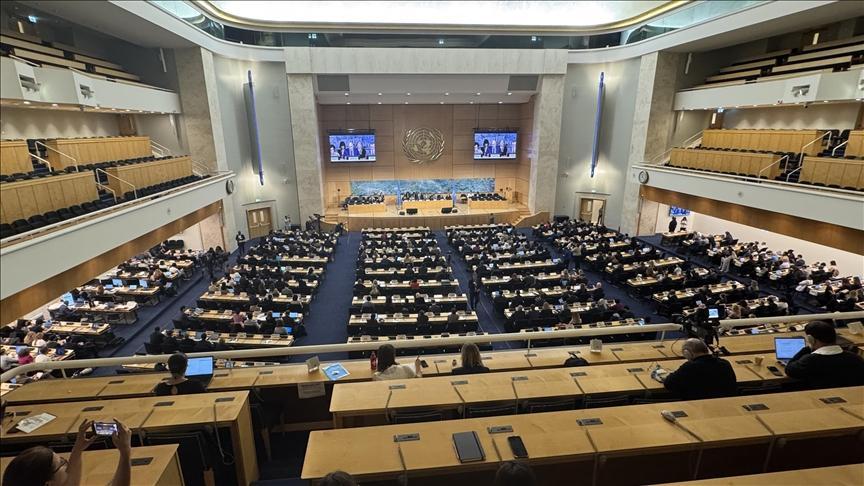
Africa-Press – Mozambique. The president of the UN Human Rights Council (HRC), Sidharto Reza Suryodipuro of Indonesia, said Monday the upcoming 61st session will unfold against a backdrop of geopolitical tension and financial uncertainty, testing the body’s ability to uphold its mandate.
The six-week session, running from Feb. 23 to March 31 in Geneva, comes at what he described as a “context of strain,” citing geopolitical developments, financial limitations, and diverging member state priorities.
“Members of the Human Rights Council would have different priorities. They will bring to the table, for the dialogue, various priorities,” Suryodipuro told reporters in Geneva. “I think that common interest is how we defend and strengthen the international architecture of human rights. So it will be a challenge in how to bridge these various perspectives while at the same time also dealing with financial limitations (and) increasing financial limitations.”
More than 100 high-level dignitaries are expected at the opening segment, including at least two heads of state, the presidents of Timor-Leste and Colombia, alongside the UN Secretary-General Antonio Guterres, General Assembly President Annalena Baerbock, and High Commissioner for Human Rights Volker Turk.
The council, according to the HRC president, will examine thematic issues such as the role of new technologies in preventing female genital mutilation, the 25th anniversary of the Durban Declaration, sustainable development financing, and the rights of persons with disabilities and children.
Country situations on the agenda include Afghanistan, Sudan, the occupied Palestinian territory (OPT), Ukraine, Myanmar, and others, he added.
“In closing, the 61st session will test the council’s ability to operate under constraints while remaining faithful to its mandate,” he said.
Addressing questions over complaints against a special rapporteur of the OPT, Francesca Albanese, Suryodipuro confirmed receiving “one” letter from a mission on the issue, without sharing further details. Any concerns, he said, would be conveyed to the Coordination Committee of special procedures, in line with established practice to safeguard mandate holders’ independence.
Last week, French Foreign Minister Jean-Noel Barrot called for the resignation of the UN rapporteur over comments she made allegedly targeting Israel at a conference on Gaza. Germany’s Foreign Minister Johann Wadephul echoed Barrot’s call.
Albanese has refused calls to resign and added that she will not accept “lessons from countries that violate international law and fail to condemn genocide.”