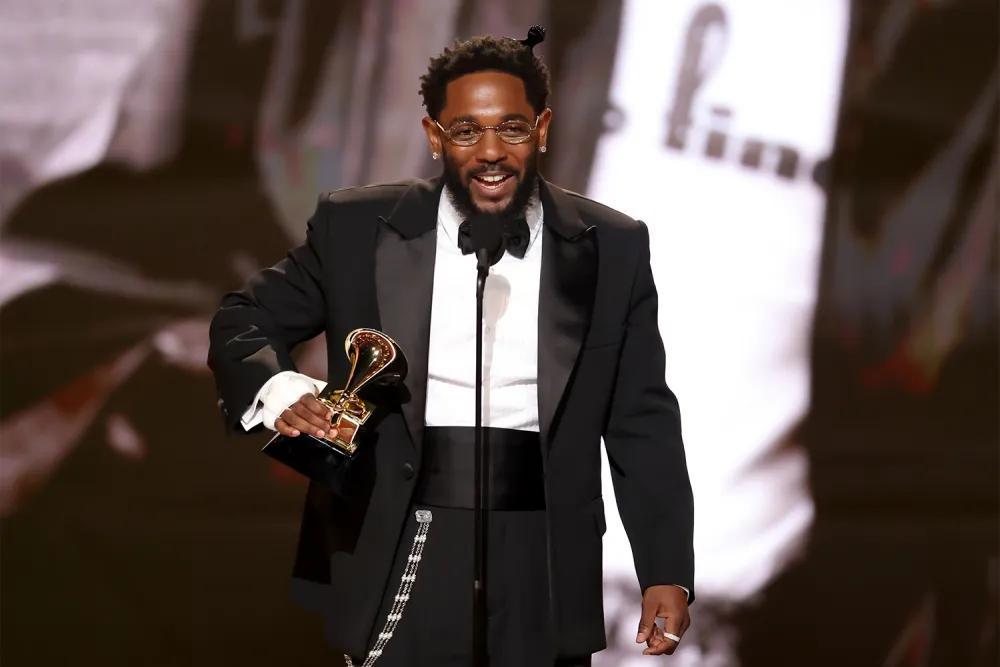
Africa-Press – Mozambique. The 68th Annual Grammy Awards unfolded as a night of historic milestones, powerful statements and genre defying triumphs on Sunday, February 1 at the Crypto.com Arena in Los Angeles.
Hosted for the sixth and final time by Trevor Noah, the ceremony celebrated outstanding music released between late 2024 and mid-2025.
From hip-hop and pop to global sounds and spoken word, the Grammys reflected an industry in motion increasingly diverse, globally connected and socially conscious.
More than just a roll call of winners, it stood out for the stories told through performances, acceptance speeches and landmark victories that signaled a broader transformation within the music world.
Bad Bunny makes Grammy history
In one of the most defining moments of the night, Bad Bunny won Album of the Year for Debí Tirar Más Fotos, becoming the first artist to take home the Grammys’ top honour with a Spanish language album.
The win marked a watershed moment for Latin music and underscored the growing influence of non-English artistry on the global stage.
Visibly emotional as he accepted the award, the Puerto Rican superstar dedicated the honor to immigrants worldwide, drawing a standing ovation and setting a powerful tone for the evening.
Kendrick Lamar: A record-breaking reign
Kendrick Lamar emerged as one of the night’s most celebrated figures, further cementing his legacy in hip-hop history.
His album GNX earned Best Rap Album, while “Luther,” his collaboration with SZA, won Record of the Year.
With these wins, Lamar surpassed Jay-Z to become the most decorated rapper in Grammy history.
Beyond the statistics, his acceptance speeches emphasised hip-hop’s cultural weight and its continued evolution as a global force.
Billie Eilish’s songwriting triumph
The fiercely competitive Song of the Year category went to Billie Eilish and her longtime collaborator and brother, Finneas, for “Wildflower”.
The win reaffirmed Eilish’s reputation as one of her generation’s most distinctive and emotionally resonant songwriters, adding yet another accolade to her already formidable Grammy résumé.
Olivia Dean’s breakthrough moment
One of the night’s most heartfelt victories came from British singer and songwriter Olivia Dean, who claimed Best New Artist.
Her win spotlighted a rising voice known for soulful storytelling and authenticity.
In her acceptance speech, Dean reflected on her immigrant roots, turning her personal journey into a moment of shared cultural significance that resonated with audiences worldwide.
A celebration of genre and global diversity
This year’s Grammy winners reflected a wide spectrum of sounds and backgrounds.
Tyler, The Creator made history with Chromakopia, which won the inaugural Best Album Cover award, a new category honoring visual creativity in music packaging.
Rock band Turnstile secured Best Rock Album for Never Enough, while Leon Thomas dominated the R&B categories, winning both Best R&B Album and Best Traditional R&B Performance, a testament to his ability to bridge classic soul and modern sensibilities.
Lady Gaga added to her extensive Grammy collection, winning Best Pop Vocal Album for Mayhem and Best Dance-Pop Recording for “Abracadabra.”
Meanwhile, Jelly Roll’s Beautifully Broken earned Best Contemporary Country Album, highlighting his genre blending appeal and connection to country music’s evolving audience.
Trailblazing firsts and unexpected Wins
The 2026 Grammys also delivered several groundbreaking firsts.
A track from the global sensation KPop Demon Hunters became the first K-pop song to win a Grammy, taking Best Song Written for Visual Media and marking a major milestone for the genre’s global recognition.
In one of the night’s most surprising moments, the Dalai Lama received his first Grammy in the Audio Book, Narration and Storytelling Recording category, underscoring the Recording Academy’s expanding definition of artistic expression.
Steven Spielberg completes the Egot
Bridging music and film, Steven Spielberg achieved Egot (Emmy, Grammy, Oscar and Tony Awards) status after winning his first competitive Grammy as a producer on Music by John Williams, which claimed Best Music Film.
The victory completed the rare quartet of Emmy, Grammy, Oscar and Tony awards, placing Spielberg among a small group of cross-disciplinary legends.
The ceremony featured lighter moments as well, including a brief onstage mix up by music icon Cher, which momentarily caught viewers off guard before she presented an award, a reminder of the unpredictability of live television.
Several artists also used their platforms to address social and political issues, with themes of immigration, inclusion and diversity surfacing repeatedly throughout the night, reinforcing music’s role as a vehicle for cultural dialogue.
As the final awards were handed out, the 68th Grammy Awards stood as a defining chapter in the ceremony’s history.
From Bad Bunny’s groundbreaking Album of the Year win and Kendrick Lamar’s record-breaking achievements to Olivia Dean’s emergence and Spielberg’s Egot milestone, the night captured the spirit of a global, genre blending era.
For artists and audiences alike, the 2026 Grammys served as a reminder that music remains a universal language ever-evolving, boundary-breaking and deeply reflective of the world it inhabits.