Africa-Press – Namibia. Namibia is repositioning its foreign policy and trade strategy to survive a tougher, more competitive world where economic strength will define its place on the global stage.
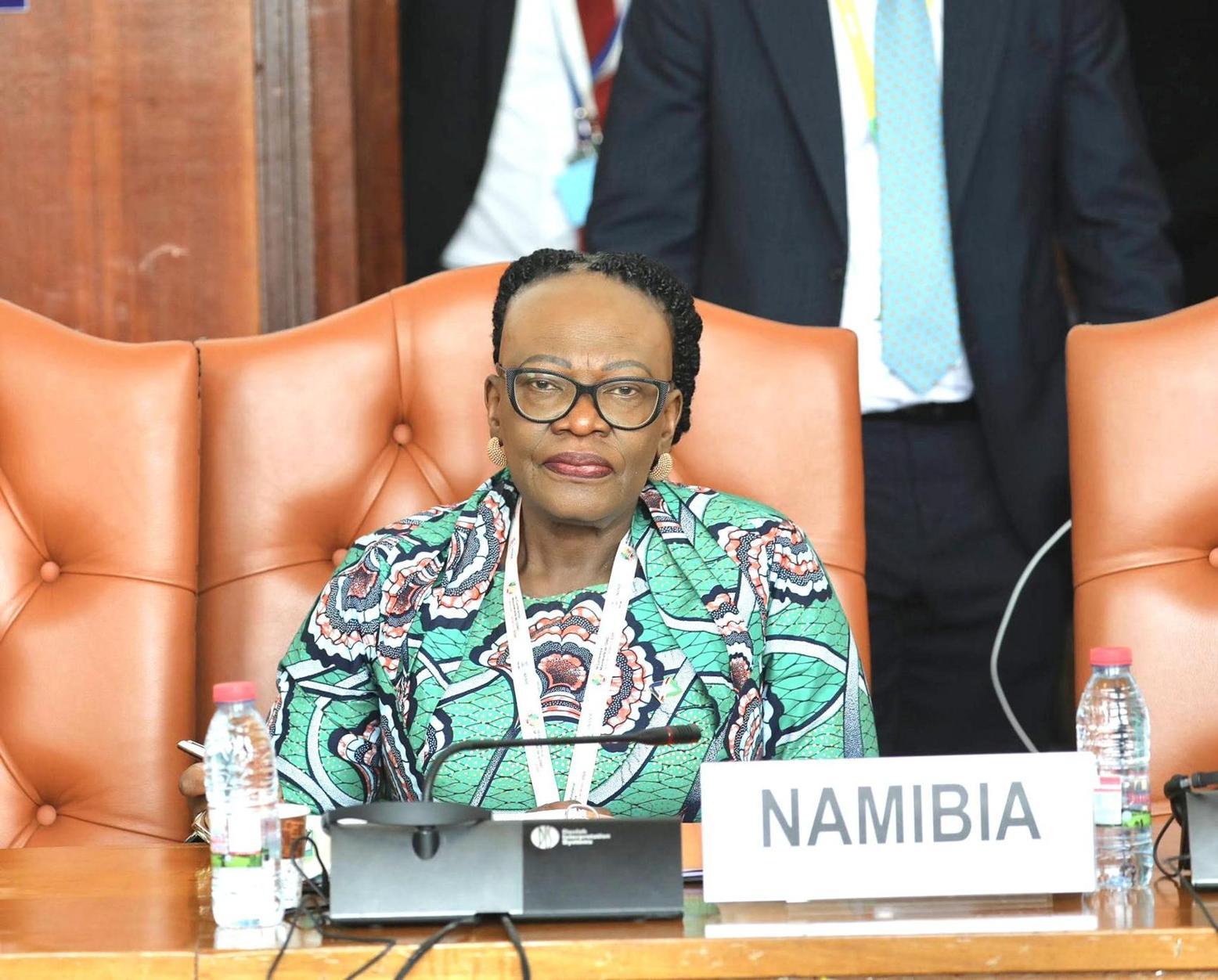
This the summation of International Relations and Trade Minister Selma Ashipala-Musavyi message when she delivered the ministry’s budget this week.
Motivating her ministry’s N$1.37 billion budget in Parliament on Tuesday, Ashipala-Musavyi painted a picture of a world no longer driven only by traditional diplomacy but by fierce competition over minerals, technology, and economic influence.
“In this shifting geopolitical landscape, global competition is no longer confined to oil but extends to critical minerals as well as key technological inputs,” she said.
One of the most striking elements of the speech was the minister’s warning about the emergence of what she called “electro state nations” – countries gaining power through control of digital infrastructure and green technologies.
“We are also witnessing the emergence of what may be termed ‘electro state’ nations, whose influence is derived from their dominance in digital infrastructure and green technologies,” she said.
The minister made it clear that Namibia’s diplomatic missions are no longer just political outposts but economic engines.
“Namibian diplomatic missions serve as the first line of defence in identifying both opportunities and threats,” she said, adding that they must be “adequately equipped” to protect national interests.
A massive 69.5% of the ministry’s budget – over N$952 million – is allocated to foreign missions, underlining this shift toward economic diplomacy. This is one of the strongest indicators that government is prioritising trade, investment attraction and global positioning over traditional diplomacy.
Ashipala-Musavyi also directly linked Namibia’s strategy to rising global instability, including conflicts in Africa and the Middle East.
She warned that tensions such as those in Sudan, DRC and the Middle East are already disrupting global trade and undermining Africa’s economic integration goals.
“Instability knows no boundaries and can reach our region at any time,” she cautioned.
She further criticised the weakening of global cooperation, noting that some countries are turning inward, thereby undermining institutions like the United Nations.
However, she stressed Namibia’s commitment to multilateralism: “For Namibia, it is in our best interest to continue playing our part in strengthening multilateralism.”
While much attention is often given to large investment deals, the minister highlighted lesser known but potentially impactful trade gains.
Namibia has secured new export opportunities for products such as dates to Canada and India, pasta through regional trade fairs, and possible long-term exports of marula oil and baobab products to China.
According to her, a Namibian SME has already signed an agreement to supply organic oils for cosmetic production in China, with the potential to scale into continuous exports.
She said those developments point to a gradual diversification of Namibia’s export base beyond traditional sectors.
Despite these gains, the minister admitted that Namibia is not yet fully ready to benefit from trade agreements like the African Continental Free Trade Area (AfCFTA).
“Low awareness and limited technical understanding continue to hinder utilisation of trade agreements,” she said.
She added that many local businesses lack the capacity to meet export standards and rules of origin requirements, limiting their ability to turn opportunities into income.
Allocations
In a notable shift, the budget for international trade and investment promotion has jumped significantly from about N$42.8 million to N$139 million.
Out of the total N$1.4 billion allocation, 84% (about N$1.2 billion) has been set aside for operational expenditure, while the remaining 16% (N$218 million) will fund development projects, including property acquisition, feasibility studies and the construction of Namibia’s diplomatic mission in Abuja, Nigeria. The International Trade and Investment Promotion programme has been allocated N$139.1 million. Multilateral Relations and Cooperation will receive N$120.5 million to support Namibia’s participation in global platforms, while Policy Coordination and Support Services has been allocated N$110.4 million for administrative functions.
Meanwhile, bilateral relations and cooperation are set to receive N$24.9 million to facilitate state visits and cooperation agreements, and protocol and consular affairs have been allocated N$22 million to support services both at home and abroad.
This increase reflects the transfer of responsibilities linked to investment promotion and signals a stronger push to grow exports and attract foreign direct investment.
Key sectors targeted include agriculture, mining, renewable energy, tourism and logistics.
For More News And Analysis About Namibia Follow Africa-Press