Africa-Press – Namibia. Omaruru is facing several service delivery challenges, including water supply issues, ageing infrastructure, growing informal settlements, and rising municipal debt.
The town is also working on development projects, including relocating Single Quarter residents and constructing an open market.
New Era Journalist Eveline de Klerk (ED) recently interviewed Omaruru CEO Valentinus Sindongo (VS) regarding these challenges and the town’s future plans.
ED: We have seen in recent news that municipalities are transitioning to prepaid metres from the conventional water meters. We also know that Omaruru is one of the towns that does not receive water supply from NamWater. How is this affecting your water usage and revenue collection?
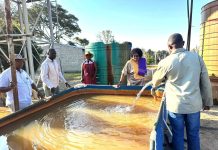
VS: The municipality is facing challenges with water usage and revenue collection due to illegal connections, non-payment and ageing infrastructure. One needs to understand that our water is sourced from boreholes, and we need to be constantly ready to ensure there is no interruption. However, non-payment remains a major challenge, as it delays service delivery and undermines the municipality’s ability to maintain infrastructure. Some residents were previously reluctant to transition to prepaid metres, but the situation has improved as they can see the benefits.
ED: How is the municipality managing water losses, leakages and illegal connections?
VS: So, we are trying to stay on top of our work in terms of identifying challenges, especially illegal connections. Some people are bypassing the system and making illegal connections to the main pipeline to access water. We have been trying to minimise this since 2023 and are happy with the work we are doing.
ED: The town is also experiencing challenges with ageing water infrastructure. Can you explain this?
VS: The issue of ageing infrastructure is something we are still battling with. As I have said, we also have the challenge of non-payment for services. One thing people do not consider is that, while the municipality is trying to provide services, the infrastructure is ageing. The question is, how do we sustain or improve infrastructure if residents are not paying?
We are also facing the challenges posed by informal settlements that are continually emerging. People need land, but they still must connect to the same old existing infrastructure to receive services. We are therefore challenged on many fronts. However, we are implementing mitigation measures. When a pipe bursts, we do immediate joint repairs to ensure the water supply continues.
ED: You have talked about financial constraints and ageing infrastructure. Can you elaborate more?
VS: Yes, we are lobbying for support from the central government. We also understand that the central government is facing challenges nationwide because many towns are requesting assistance. Coming to the point, our infrastructure is old, and many pipelines are made of asbestos. Asbestos has been declared unsuitable for pipelines. But replacing them is extremely expensive, and the money is not available. We have been engaging the central government on some solutions. However, we are trying to address them step by step.
ED: Do you have an estimate of how much it would cost to replace asbestos pipes?
VS: We have not yet done a full costing for the entire town. It is something we are still working on. However, we have a segment focused on informal settlements. For that area alone, it will cost about N$28 million to upgrade infrastructure and bring proper water services. That is only for informal settlement areas. If we move into town, the cost becomes much higher because we have main lines in central streets, smaller suburbs and larger suburbs.
ED: Let’s talk about your current water debt?
VS: Our income heavily depends on rates and taxes. Currently, our outstanding debt is N$92 million. If we break it down, the Build Together programme debt is about N$10 million, property-related debt is about N$40 million, and service debt is about N$38 million.
ED: Do residents struggle to pay their debts?
VS: From the assessment we conducted, our 30-day accounts are very low, it’s a little over N$1 million. Most of our debts are sitting in the 120-day category. When we apply the eighty-twenty principle, we are behind because the majority of debt falls into long overdue categories. About 80% of the debt is more than 120 days old, which is not ideal.
ED: This could also be linked to generational debt. How does the municipality deal with it? Especially when parents pass on, and children take over these homes?
VS: Yes, we do have such cases. In some instances, parents pass on and their children remain in the house. People come to us and say their parents have died, and therefore, the debt should be written off.
But from the municipality’s side, we look at who is currently occupying the property. There are exceptions, especially for vulnerable pensioners living alone without income or family support. Those cases are assessed differently.
ED: Let’s move on to the open market project. Can you update us on the status of the single quarter relocation and the open market project?
VS: In terms of the single quarters, we have relocated the communities that were staying there at the time.
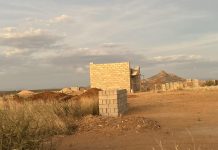
With assistance from the central government and the Local Economic Development Directorate, we have constructed the open market.
As we speak, we are in the second phase of the project and progress is going very well.
ED: How and where were residents of the single quarters relocated?
VS: The residents were relocated to Build Together houses. There was an approved list from 2010 that had not been implemented. In 2023, the council decided to engage the community and address the backlog.
We explained the situation and the living conditions in the single quarter, which were not suitable. People were living in overcrowded and undignified conditions. In total, there are forty houses in this phase, and with additional units, the total reaches about forty-nine. All allocations were prioritised based on the 2010 approved list.
ED: Does Omaruru have a housing backlog, and what are the challenges?
VS: Yes, we do have a housing backlog. One of the biggest challenges is that the entire town operates largely on septic tank systems.
This limits land servicing and housing development. However, we continue to allocate land, but residents are required to use septic tanks until full services are available.
For More News And Analysis About Namibia Follow Africa-Press