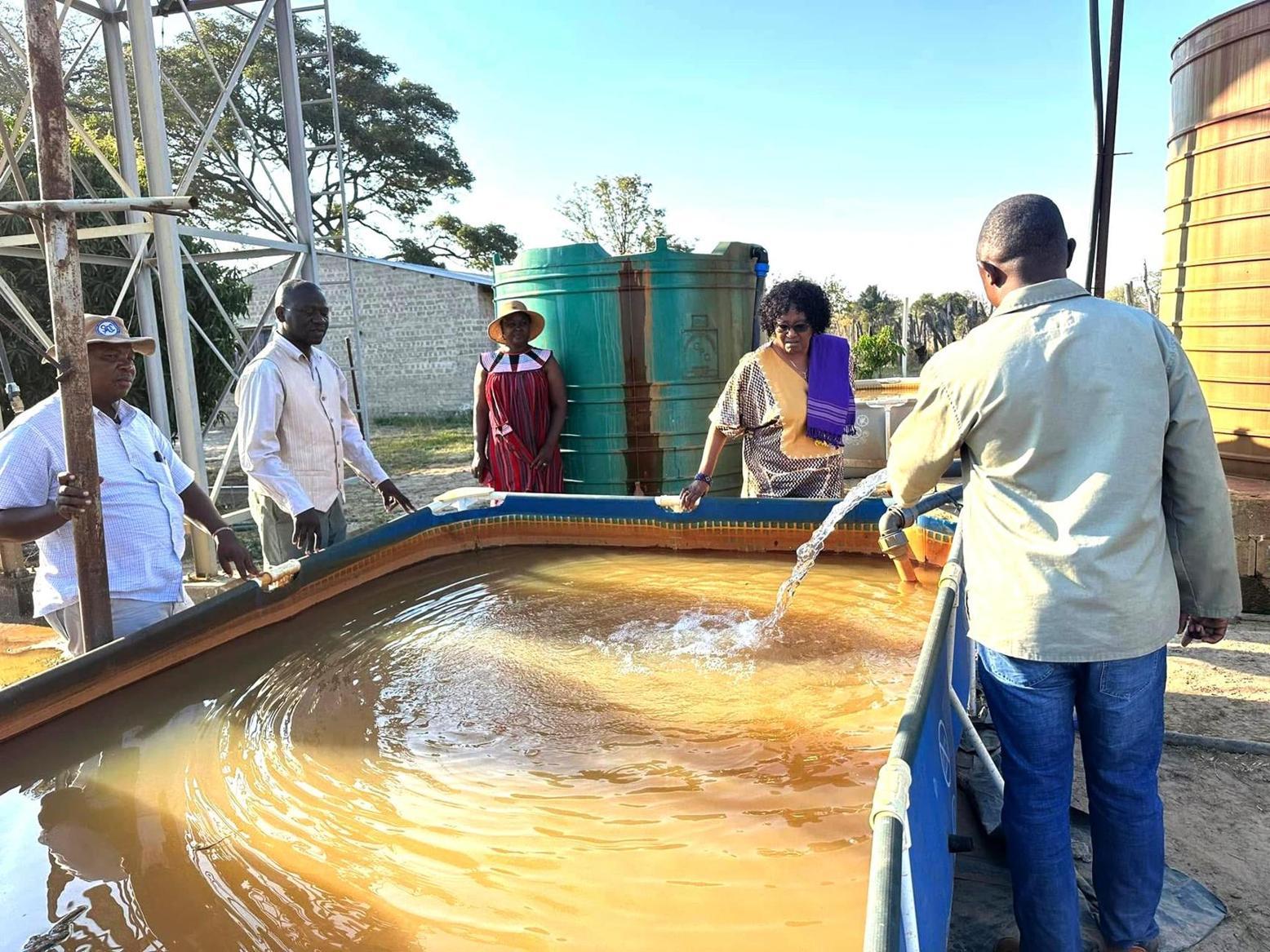
Africa-Press – Namibia. The water ministry has made significant strides in improving water supply and sanitation services across the country, with notable gains recorded in rural areas over the past year.
The spokesperson of the ministry, Romeo Muyunda, said the progress reflects the government’s continued commitment to strengthening water security for human consumption, agriculture and industrial development.
Muyunda highlighted the expansion of rural water infrastructure as a key achievement, noting that the ministry drilled 94 new boreholes and installed 137 water supply units across all 14 regions. “The Kunene, Zambezi and Omaheke regions received the highest number of installations, which has greatly improved access to water in underserved communities,” Muyunda said.
He added that 51 boreholes were rehabilitated, while 21 were cleaned and restored to improve water yield and ensure a reliable supply. Efforts to bring water closer to households also gained momentum, with the construction of 55 short pipelines and the installation of 2 886 private water connections, particularly in the Oshikoto, Ohangwena and Omusati regions.
“These investments have reduced the long distances that rural communities travel to access water and have improved their living conditions,” he noted.
To support livestock farming and enhance drought resilience, the ministry completed three earth dams during the current financial year. These include Mbone and Hameyi in Kavango West and Oshekaka in the Oshana region. Muyunda said the dams play a critical role in harvesting and storing surface water, especially during dry periods.
The ministry revealed that the government has also accelerated bulk water development projects under the Namibia Water Support Programme, which is funded by the African Development Bank. A major highlight was the inauguration of the Ohangwena II Wellfield in 2025, which is expected to serve as a key water source for north-central Namibia.
Progress is also being made in increasing water treatment capacity. The Rundu Water Treatment Plant extension is now 76% complete and is expected to be finalised by November 2026, while the Oshakati Water Purification Plant upgrade stands at 18% completion.
Sanitation
Muyunda said the ministry continues to improve hygiene and reduce open defecation, which has slightly declined from 40% to 39.4%. Access to basic sanitation services has increased to 36.2% nationwide.
At least 1 676 sanitation facilities were constructed for vulnerable rural households while 90 communities were mobilised under the Community-Led Total Sanitation programme. In addition, 181 awareness campaigns were conducted to promote hygiene and behavioural change. “These efforts are critical for a country like Namibia, where water remains a scarce resource and essential for both livelihoods and economic growth,” Muyunda said.
The seasoned communicator added that rural access to safe drinking water has improved from 83.5% to 84.9%, marking a steady increase driven by both local infrastructure development and large-scale water projects. The progress, he hastened noting, aligns with Namibia’s commitment to achieving SDG6, which focuses on clean water and sanitation for all.
For More News And Analysis About Namibia Follow Africa-Press