Africa-Press – Namibia. Auleria Wakudumo
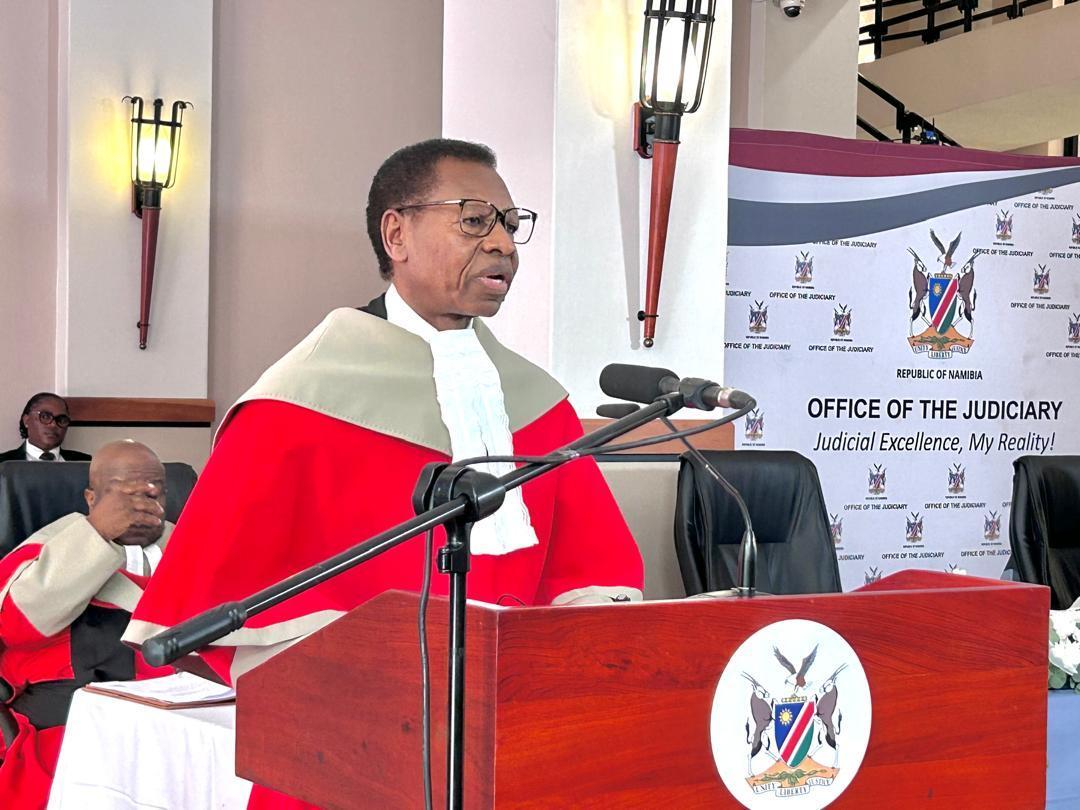
The government has allocated a total of N$512 million to the Office of the Judiciary for the 2026/2027 financial year. Of this, N$497 million is directed towards operational expenditure and N$15 million is earmarked for development projects, including the construction of
two magistrates courts.
The minister of justice and labour relations, Fillemon Wise Immanuel, said this while motivating the budget in the National Assembly last week. The statement was delivered on his behalf by Prime Minister Elijah Ngurare.
Immanuel stated that the allocation reflects the government’s ongoing commitment to strengthening the justice system, enhancing court capacity, and ensuring the efficient administration of justice in line with constitutional obligations.
“Judiciary remains a cornerstone of Namibia’s democracy, tasked with upholding the rule of law and ensuring that justice is administered fairly, independently, and without undue delay,” he said.
Capital projects
Immanuel said that during the 2025/2026 financial year, the judiciary was allocated N$66.1 million for capital projects intended to strengthen court infrastructure and improve working conditions for judicial officers.
“Although not all planned projects progressed as initially scheduled, measurable progress has been recorded across several construction and renovation sites,” the minister noted. Immanuel emphasised that the construction of magistrates’ courts underway in Oshakati, Walvis Bay and Omega 1 Periodical Court.
The Oshakati Magistrate’s Court is 39% complete, Walvis Bay stands at 64% completion, and Omega 1 Periodical Court is 37% complete.
In addition, the minister stated that renovation works on magistrates’ residential accommodation have also advanced. The Khorixas project is almost complete at 95%, while Eenhana stands at 57% and Keetmanshoop at 52% completion.
“The government remains committed to the completion of these projects. Adequate court infrastructure and proper accommodation for judicial officers are essential for effective service delivery,” he said.
He further noted that improving infrastructure is critical to strengthening access to justice, particularly in rural and underserved areas where communities often travel long distances to access court services.
In addition, N$15 million has been allocated for development expenditure under the judiciary budget. The funds will be directed towards the construction of magistrates’ courts in Nkurenkuru and Katima Mulilo.
The minister explained that the Nkurenkuru project, which was deferred in the previous financial year pending cost verification, will now proceed after funding has been secured.
Meanwhile, Judiciary spokesperson Vikitoria Hango, said the Nkurenkuru project is aimed at establishing a fully operational magistrate’s court to better serve the Kavango West region.
“There is a periodical court in Kahenga, but we are looking towards a fully operational court in Nkurenkuru,” she said.
The minister added that both projects are expected to expand court capacity and bring justice services closer to the people, reducing delays and improving access to the justice system.
The minister further said that construction of a new magistrates’ court in Katima Mulilo is expected to commence during the same period. The project aims to strengthen judicial infrastructure in the Zambezi region, where demand for court services continues to grow.
“There is a magistrates court in Katima, and the project is geared towards ensuring that the current infrastructure meets the needs of the community,” Hango added.
The two developments are expected to expand court capacity and reduce the burden on existing facilities, while bringing judicial services closer to communities, particularly in remote areas.
The move comes as the judiciary continues to face increasing caseloads, particularly in lower courts, which serve as the primary entry point into the justice system for most Namibians.
Immanuel noted that investment in infrastructure remains critical to maintaining efficiency in the administration of justice, alongside the need to fill vacancies within the magistracy and the High Court bench.
The planned construction projects are part of broader efforts by the Judiciary to strengthen its institutional capacity and ensure timely delivery of justice.
For More News And Analysis About Namibia Follow Africa-Press