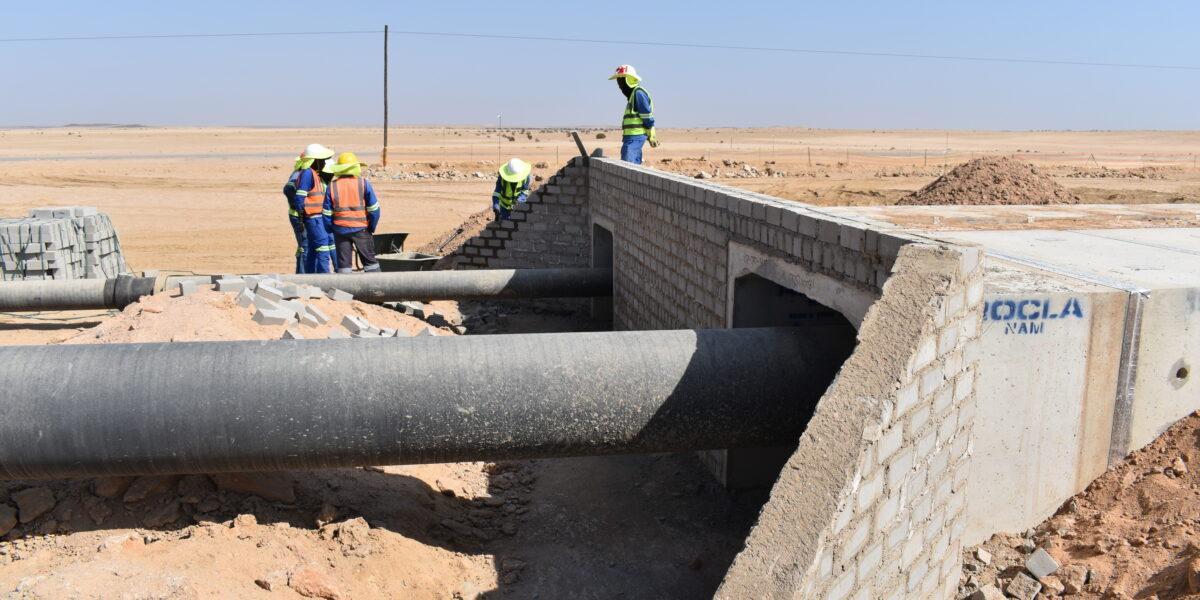
Africa-Press – Namibia. Namibia’s construction sector, which has long been regarded as a critical engine of economic growth and a significant contributor to national GDP, is facing renewed uncertainty, as the Construction Industries Federation of Namibia (CIF) warns that current infrastructure procurement models risk sidelining local contractors in the domestic market.
At the centre of the controversy is the recent Expression of Interest (EOI) issued by the Roads Contractor Company (RCC), a State-owned entity that has become a dominant player in public infrastructure delivery. While the government, led by Works and Transport Minister Veikko Nekundi, has publicly committed to increasing Namibian participation in major projects, CIF argues that the structure of the RCC model tells a different story.
The construction industry has historically played an outsized role in Namibia’s GDP, driving employment, supporting small and medium enterprises, and anchoring supply chains across sectors, from cement and steel to transport and logistics. Any disruption to fair participation, industry leaders warn, has ripple effects far beyond construction sites.
CIF’s primary concern lies in the financial thresholds embedded in the RCC’s categorisation system. While contractors are grouped according to technical capacity, many Namibian firms, despite having adequate expertise and track records, are effectively excluded due to stringent financial requirements that do not reflect local market realities.
In practice, the RCC model requires contractors not only to execute projects but also to secure or provide financing. This shifts the competitive advantage toward firms with stronger balance sheets and access to cheaper capital; conditions more commonly associated with foreign-linked companies or entities backed by external funding.
“This creates a clear disconnect between the stated intention to support Namibian contractors and the actual conditions being created in the market,” said CIF chief executive officer, Bärbel Kirchner.
“What we are seeing is that technically capable Namibian contractors are being excluded not because they cannot deliver, but because they cannot meet financial requirements that do not reflect local realities,” she added.
The CIF further stated that by concentrating project allocation through a single entity, such as RCC, and allowing participation to be determined internally, the system risks undermining open competition, distorting market access, and marginalising domestic firms.
The CIF warns that for an industry that contributes substantially to GDP and employment, such exclusionary dynamics could stall growth, weaken local capacity, and increase reliance on external players. Economists caution that this may ultimately dilute the multiplier effect that construction spending typically generates within the domestic economy.
Meanwhile, CIF has formally engaged both RCC and the government, calling for an extension of submission deadlines and a comprehensive review of the model.
The federation insists this is not merely a procurement issue, but a broader policy challenge tied to how public infrastructure projects are structured and distributed.
The CIF leadership further cautioned that without recalibrating the domestic procurement system to ensure fair access, the very industry meant to build the nation risks being pushed to the margins and thereby taking a vital share of GDP growth with it.
For More News And Analysis About Namibia Follow Africa-Press