Africa-Press – Namibia. THE exact economic losses in the Namibian fishing sector as a result of Covid-19 are yet to be tallied.
This was found in a study by marine researcher Victoria Erasmus titled ‘Impacts of Covid-19 on at-sea data collection and regulatory activities and fisheries catches off Namibia’, which was published last week.
The study found that there was a reduction in the number of fishing trips in 2019 and 2020. This has arguably resulted in a reduction of the fisheries total catches and its contribution to the Gross Domestic Product (GDP) in 2020.
Although the industry was declared as essential and continued operations, there was a three week closure of the fishing industry, as well as the temporary ban on exports of fish and fishery products.
“However, it is surprising that in 2021 fisheries catches went up, probably reflecting a recovery from the pandemic and better adaptation mechanisms in the fishing industry in 2021, as compared to 2020. Additionally, there was no closure in the fishing industry in 2021,” the study found.
The Ministry of Fisheries and Marine Resources was also not aware if any study on the economic losses was conducted.
The only information available is from the Namibia Statistics Agency’s reports on the fisheries export value increasing or decreasing between 2019 and 2020.
It does not include the additional cost that the industry incurred as a result of the pandemic, such as how much was spent on quarantine facilities, sanitisers, masks and other Covid-19 related expenses.
The chairperson of the Confederation of Namibian Fishing Associations, Matti Amukwa, confirmed that no study was done.
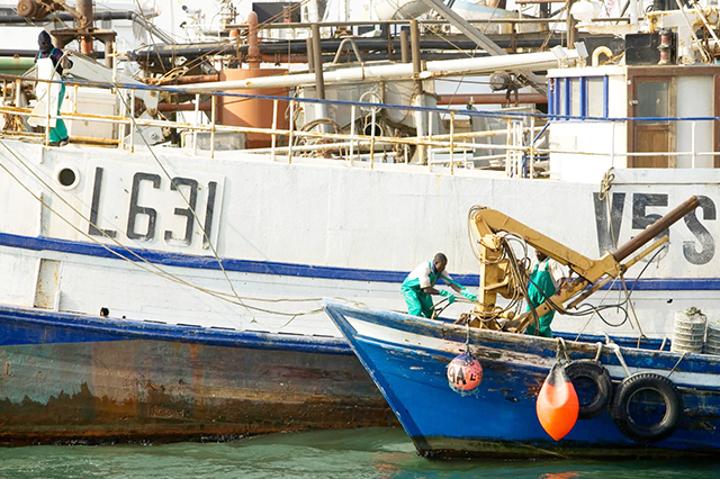
Erasmus’ study also found that Covid-19 has negatively impacted at-sea observation and data collection. This is because of the difficult working environment onboard vessels, where social distancing is impractical.
Additionally, the risk of contracting Covid-19 onboard vessels is also high because fisheries observers share spaces such as bathrooms and dining rooms with fishermen.
Participants in the study indicated that the hake longline fishery was the riskiest fishery, where observers were likely to contract the virus.
“This is probably because the vessels in this fishery are small, 30m long on average, up to eight people share a cabin, and they mostly have more personnel onboard at any given time,” the study indicated.
The observers, according to the study, avoided certain places onboard vessels for fear of contracting the virus, and this might have compromised data collection.
“Avoiding some places, such as the bridges, can lead to poor monitoring and observations of fishing activities. This has the potential to misinform fisheries management decisions, for instance, if some data is omitted on the data sheets because observers avoided the wheelhouse. The data collected by observers during the Covid-19 pandemic might be compromised,” the study found.
This study was undertaken to understand the observers’ perceptions of Covid-19, and identify its impacts on the observation of harvesting, handling, and processing of marine resources, and biological data collection during commercial fishing.
It was also to assess the risk of contracting Covid-19 onboard the fishing vessels, and to compare fishery catches for the pre-Covid-19 period between 2018 and 2019, and during the pandemic in 2020 and 2021.
For More News And Analysis About Namibia Follow Africa-Press