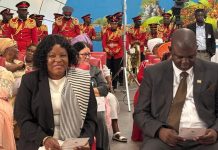
Africa-Press – Namibia. Representatives from various Southern African nations are currently convening in Namibia for the National Ozone Unit and Customs Twinning Workshop and Border Dialogue.
The primary aim of this meeting is to discuss effective ways of controlling the trade of ozone-depleting substances (ODS).
Namibia’s Deputy Minister of Industrialization and Trade Verna Sinimbo said at the opening of the workshop Wednesday that the joint border dialogue is to strengthen cooperation between customs departments from the countries in monitoring the trade of ODS.
“This comes in light of the challenges that we are currently facing at our shared border posts in controlling and monitoring Ozone Depleting Substances as well as challenges with the different Ozone Depleting Substances legislation and Licensing and Quota systems that need harmonization where possible,” she said.
The dialogue’s emphasis will be on discussing practical ways in which the National Ozone Unit and customs can collaborate to address these issues, she said, adding that seizures of ODS have increased in recent years, indicating that there is still a need for stronger enforcement measures.
The workshop is being organized by the United Nations Environment Programme (UNEP) and the Southern African Development Community (SADC) Secretariat. It is funded by the Global Environment Facility (GEF).
The participants will also discuss the implementation of the Montreal Protocol, an international treaty that aims to protect the ozone layer by phasing out the production and consumption of ODS.
The Montreal Protocol has been highly successful in reducing the production and consumption of ODS. As a result, the ozone layer is expected to recover by the middle of this century.
However, there are still challenges to overcome. One of the biggest challenges is to ensure that all countries comply with the treaty. Another challenge is to find substitutes for ODS that are not harmful to the ozone layer.
The workshop in Namibia is an important opportunity for Southern African countries to work together to address these challenges and protect the ozone layer for future generations.
In addition to the Deputy Minister of Industrialization and Trade, other speakers at the opening of the workshop included the UNEP Regional Director for Africa, the SADC Executive Secretary, and the heads of customs departments from the participating countries.
The workshop will run for two days and will conclude on Thursday. (Xinhua)
For More News And Analysis About Namibia Follow Africa-Press