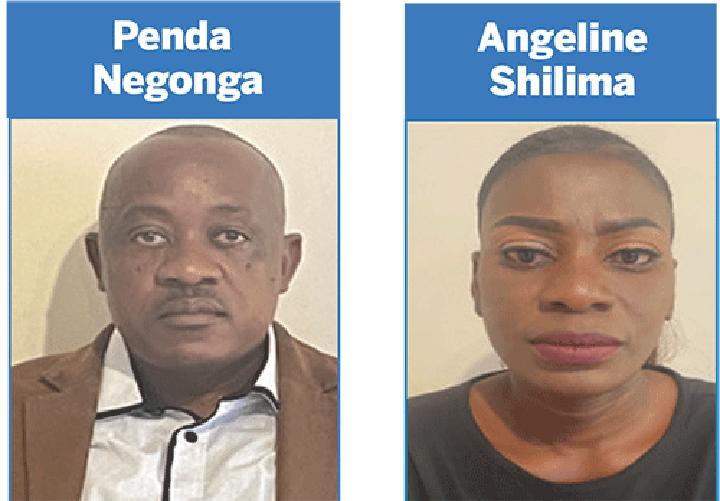
Africa-Press – Namibia. Penda Negonga and Angeline Shilima As Namibia prepares to commemorate thirty-four years of independence on 21 March 2024, the country is also preparing to hold its seventh National Assembly and Presidential elections this coming November.
Absent from the current debate of what constitutes a better government than the one which we currently have is the political and economic system which Namibia should
Namibia is being governed by the socialist movement, Swapo, using a failed Soviet Union style of governance within the capitalist constitution. The failed Soviet
Union style promotes centralised economic planning. As co-founders of the soon-to-be- established capitalist political party, we are here to argue for a more capitalist-oriented political and economic system as a viable alternative to the socialist governance system we currently have.
Capitalism is viewed as an exploitative system that thrives on the exploitation of the working class by demanding maximum output and rewarding with minimal wages. Given the high unemployment rate in Namibia and the abundance of labour, capitalism becomes a scapegoat when workers complain about low salaries, but this is not entirely true. Unlike socialism, capitalism thrives on innovation and creates more opportunity in the marketplace, which results in economic growth. When government opens up doors to opportunity and possibilities, entrepreneurs thrive and compete, which leads to more innovation and economic competitiveness.
A contemporary example one can give is the emergence of the taxi hailing service in Namibia called “Yango” (similar to Uber). In the past, commuters who did not have personal transport in the form of a private motor-vehicle were forced to flag down a taxi in town, which needed to be full before it dropped you off at your
destination. Commuters often complained about the unruly behaviour of taxi drivers and the safety element because some taxis are pirated and their drivers rob commuters, bad driving skills with drivers endangering the lives of their customers by stopping and parking anywhere, and the fact that taxis do not drop people at their destinations but at designated taxi ranks.
With the emergence of Yango, customers now have a choice, to pay more for better service or to take the traditional taxi. This is a result of capitalistic thinking, where business people are allowed to innovate. In a socialist economy, politically-connected individuals would be able to exert their political influence on government through lobbying to have Yango strong-armed out of the economy in favour of traditional taxis that fail to innovate and improve services for their end-consumer, the taxi commuters of Namibia. The current government makes provision for social services such as healthcare and education. As a result, these services are the most under-performing in the country. “In 2023, the education ministry received N$16.2 billion from the national budget, which constitutes 22.5% of the total national budget,” New Era of 22 December 2023 reported.
Despite such generous provision, “at least 75% of candidates who sat for the ordinary level Grade 11 national examinations in 2023 did not qualify to proceed with tertiary education or to Grade 12,” The Namibian newspaper of 11 January 2024 reported. The hospitals in the country are also a major concern, with them seeing an exodus of medical practitioners (some who were even sponsored by the government for their studies) to the private sector for better compensation and a better work environment
These examples showcase why we as the capitalist political party believe that a capitalist-oriented political and economic system is much better than a socialist- oriented one, not only in principle, but in operation as well!
As we gear ourselves towards the November elections, the citizens of Namibia should pre-occupy themselves with debate on the political and economic system that will transform Namibia from a developing to a developed country.
Source: neweralive
For More News And Analysis About Namibia Follow Africa-Press