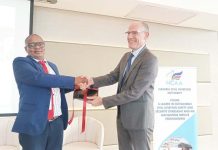
Africa-Press – Namibia. In a bold move to confront mounting pressure on Namibia’s healthcare system, the Development Bank of Namibia (DBN) has disbursed N$1 billion to a national health infrastructure programme, signalling a major escalation in efforts to modernise and expand critical medical facilities nationwide.
The funding, released on 27 March 2027, is part of the government’s ambitious “Roadmap” initiative led by the Ministry of Health and Social Services and aligned with the Medium-Term Expenditure Framework (MTEF). The programme forms a cornerstone of broader State efforts to upgrade healthcare delivery under the Sixth National Development Plan (NDP6), coordinated by the Ministry of Finance in partnership with the National Planning Commission.
At the heart of the investment lies the construction of a Windhoek District Hospital, a 500-bed Class C facility expected to significantly ease the chronic bed shortages in the Khomas region.
The project is also set to relieve mounting pressure on overburdened referral hospitals in Windhoek, where demand for care continues to outpace capacity.
Additional developments are earmarked for district hospitals in Nkurenkuru, Otjiwarongo, and Ondangwa, where access to quality healthcare has long been constrained by limited infrastructure and growing populations.
DBN Chief Executive Officer Titus Ndove described the funding as a strategic intervention designed to align financial resources with national priorities. He emphasised that coordinated financing between institutions is essential to delivering sustainable healthcare solutions.
“This investment demonstrates the power of coordinated financing by the Ministry of Finance in addressing national priorities while ensuring a holistic approach to healthcare delivery,” Ndove said, underscoring the long-term societal benefits expected from the initiative.
Beyond its immediate impact on healthcare access, the project is poised to deliver a broader economic boost.
Large-scale construction activities are expected to create jobs, stimulate local procurement, and inject momentum into the domestic economy.
For DBN, the investment also represents a calculated financial strategy that entails deploying capital into development-focused assets while strengthening its balance sheet.
The move comes amid growing concerns over the resilience of Namibia’s public healthcare system, which has faced increasing strain from population growth, urbanisation, and rising disease burdens. Analysts view DBN’s investment as both timely and necessary, though they caution that successful implementation will be key to achieving the intended outcomes.
As Namibia pushes forward with its infrastructure agenda, DBN’s billion-dollar commitment underscores that substantial, sustained investment is essential to Namibia’s healthcare ambitions.
For More News And Analysis About Namibia Follow Africa-Press