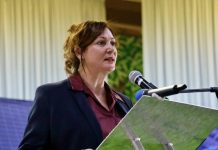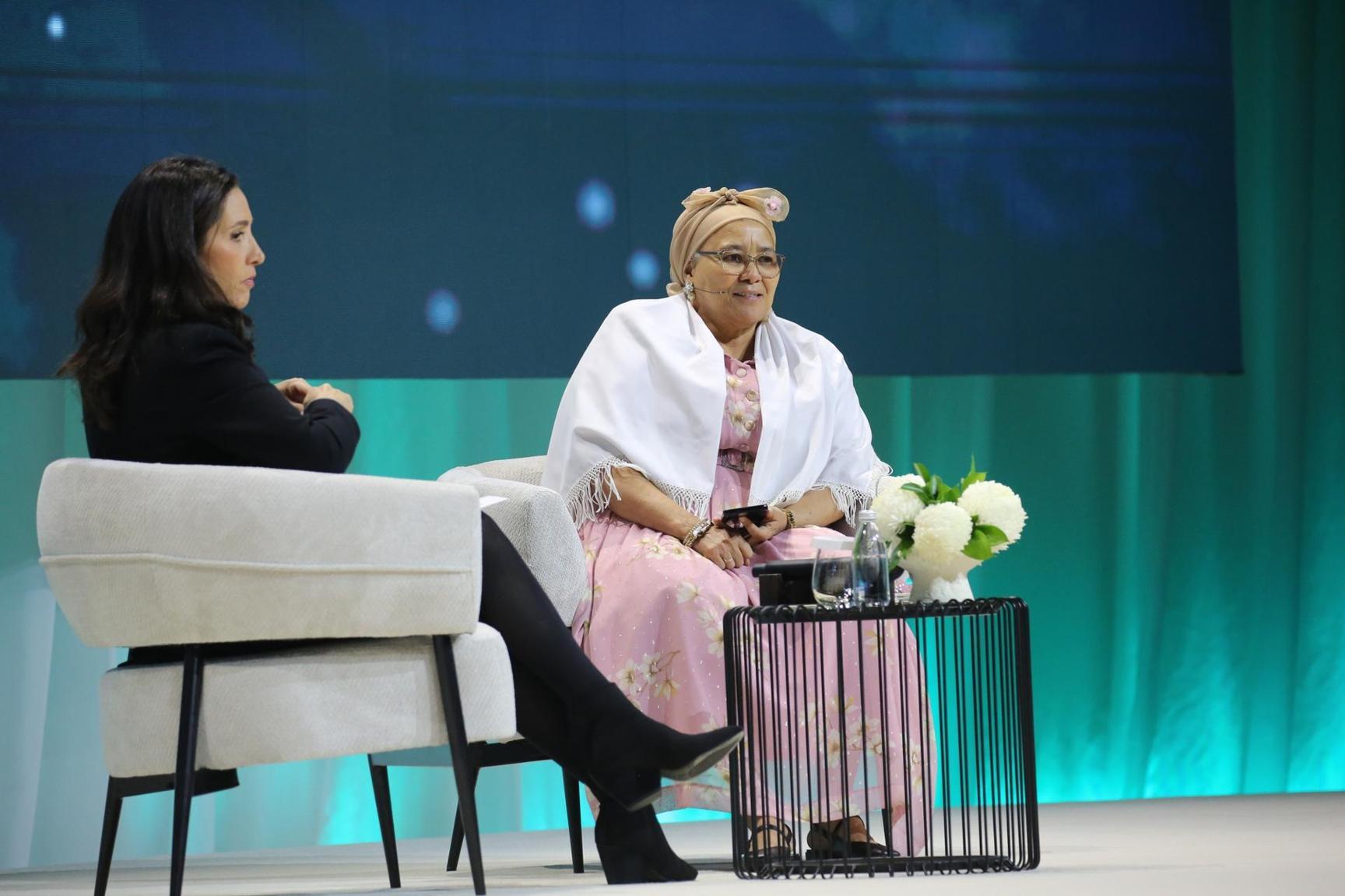
Africa-Press – Namibia. At the recent Global South Utilities Forum in Abu Dhabi, United Arab Emirates, Namibia’s Vice President Lucia Witbooi (LW) discussed key topics, including economic transformation, women’s and youth leadership, and innovative approaches to fostering inclusive, transformative growth in countries of the Global South.
Q: Madam Vice President, as nations pursue economic transformation in a rapidly changing world, inclusion has become a defining test of leadership. From a national perspective, how is Namibia shaping a development agenda that ensures growth is not only strong, but shared?
LW: That is a very important question, because for Namibia, growth has never been just about numbers. From our perspective, inclusive growth means that when the economy grows, it must be felt in people’s daily lives through job opportunities, in their communities, and in their sense of dignity. This is particularly a matter of high priority for Namibia, considering our socio-economic and political history of dispossession.
So, we are deliberately focusing on sectors that create real opportunities, especially for young people and women, such as renewable energy, agriculture, infrastructure, and value-adding industries. At the same time, we continue to invest in education, health, and social protection. For us, true progress is measured by whether growth brings people along, not whether it leaves them behind.
Our former and late president, Dr Hage Geingob, may his soul rest in peace, would always say: No one should feel left out!
Q: Your Excellency, effective governance today requires staying deeply connected to citizens’ realities while steering national strategy at the highest level. How do you balance these two responsibilities to ensure policy remains both visionary and grounded in the lived experience of Namibians?
LW: Leadership today really begins with listening. For me, staying connected to citizens is not separate from national leadership; it is integral to it. We spend time engaging with communities, listening to concerns, and understanding what people experience in their daily lives. That feedback matters, because it tells us whether our policies are actually working.
In practice, before national laws and policies are enacted, they undergo a rigorous and inclusive process. This includes public consultations, engagement with traditional leaders, civil society, the private sector, and technical experts, as well as parliamentary scrutiny. This ensures that policies are not developed in isolation but are informed by on-the-ground realities and aligned with our long-term national vision.
Although it can be lengthy at times, this approach allows us to govern with both empathy and foresight listening carefully to our people, while steering Namibia toward sustainable and inclusive progress.
Q: As one of the few women serving at the Vice-Presidential level globally, you bring a powerful lens to executive leadership. In your view, how does women’s leadership at the highest levels help reshape national institutions and decision-making systems for greater inclusion and resilience?
LW: In Namibia, women’s leadership at the highest levels is not symbolic it is systemic. Today, our President, H.E. Dr Netumbo Nandi-Ndaitwah, as well as the Speaker of Parliament, are women. It does not stop there: for the first time in our history as an independent State, the Cabinet also comprises more women than men. This is inclusive of the Minister of Agriculture, Fisheries, Water and Land Reform, who is part of my delegation. This is not accidental; it reflects a deliberate commitment to inclusive leadership and institutional transformation.
When women lead at the highest levels, institutions change, not overnight, but in lasting ways. Women bring perspectives shaped by lived experience, particularly around social realities, inclusion, and long-term impact. This does not mean women lead better; it means decision-making becomes more balanced, more responsive, and more human.
In Namibia, we have seen that women’s presence in executive leadership strengthens governance and deepens accountability. Just as importantly, it sends a powerful message to young girls and young women that leadership is not something to observe from a distance, but something they can confidently step into and help to shape.
Q: Namibia’s youthful population represents both an extraordinary opportunity and a strategic responsibility. From a national leadership perspective, what pathways are most critical today to ensure young people, particularly young women, are equipped to drive the country’s future economy and social progress?
LW: Our young people are not just the future of Namibia; they are its present energy. With a youthful population, our responsibility is to ensure that young people are equipped with the skills, confidence, and opportunities to shape the economy we want.
That is why education remains at the centre of our national priorities. Under the bold leadership of our President Netumbo Nandi-Ndaitwah, Namibia has taken a historic step by introducing subsidized tuition fees at all public institutions of higher learning, building on our long-standing commitment to free primary and secondary education. This decision is transformative as it removes financial barriers, expands access, and ensures that talent, not background, determines opportunities.
Beyond access, we are aligning education with the demands of a changing economy through skills training linked to real jobs and strong support for entrepreneurship and innovation. For young women in particular, empowerment is transformative. When young women have access to education, finance, and leadership opportunities, families and communities thrive.
If we invest in our youth today, we are investing in a more resilient, inclusive, and prosperous Namibia tomorrow.
Q: As Vice President, you not only shape Namibia’s future but also contribute to global conversations on development and inclusion. What message would you share with leaders and changemakers worldwide who are working to create inclusive pathways for transformative growth in their own nations?
LW: My message to leaders and changemakers everywhere is this: inclusion is not a luxury; it is the foundation of sustainable progress. Countries that invest in people, especially women and youth, build societies that are stronger, more innovative, and more resilient to change. In a world facing climate pressures, inequality, and rapid transformation, inclusive leadership is no longer optional.
Namibia believes in cooperation, learning, and shared responsibility. We may come from different contexts, but our challenges are connected and so must be our solutions. If we lead with courage, empathy, and vision, we can create pathways of growth that truly leave no one behind.
Source: neweralive
For More News And Analysis About Namibia Follow Africa-Press