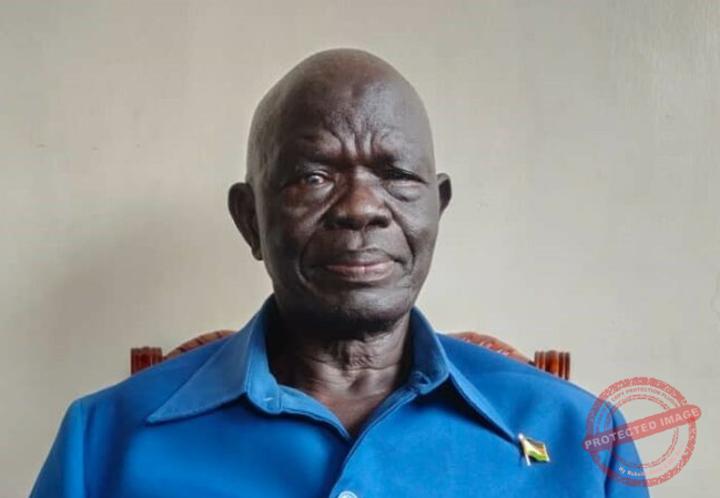
Africa-Press – Namibia. The Technical Advisor for Revenue Matters at the South Sudan Revenue Authority, Aggery Tisa Sabuni, has stated that the government must reclaim the sale of crude oil from individuals and return it to state institutions to address a liquidity crisis.
Speaking during a public hearing for the 2025–2026 Draft Budget and Finance Bill on Thursday, February 12, Sabuni outlined how a policy of allocating oil for infrastructure has impacted the banking sector and foreign reserves.
Regarding the origins of the economic strain, Sabuni identified a specific policy failure when he remarked, “We have a problem in the oil sector that has resulted in the current liquidity crisis, starting with the good policy of allocating oil for infrastructure.”
He explained that the payment method for these projects shifted from cash to the resource itself. “When that thing was done, it turned out the payment was actually in oil rather than in cash.”
“Paying in oil means the contractor sells the oil and brings the money he deems fit,” Sabuni further clarified the consequence of this change, adding that the amount allocated for infrastructure was no longer sold by the government.
According to Sabuni, before this arrangement, the government utilized an Oil Marketing Committee, which included the Minister of Finance, the Minister of Petroleum, the Bank of South Sudan, and the Minister of Trade.
“Before this arrangement, this committee would sit, vet the contractors, I mean the bidders buy our oil, our work, and the whole amount would be received in the account of the Minister of Finance with the Bank of South Sudan,” Sabuni described the previous oversight process.
He stated that through the current system of giving cargoes to contractors, the state no longer ensures that dollars flow into the country.
Sabuni emphasized the importance of national revenue management when he said, “When you export something, you are paid in foreign currency, dollars in particular,” which are used to “build your foreign reserves.”
He warned that allowing individuals and banks outside the country to handle these sales causes a loss of revenue and reserves, stating, “Now, when the oil is sold by individuals and banks outside, you lose two things. You lose the money, and you lose the foreign reserve aspect, foreign currency aspect as a reserve.”
He noted the long-term impact of this shift, observing that the practice has led the nation to “systematically lose the foreign reserve aspect because the dollars no longer flow in.”
This lack of dollars at the Central Bank has direct consequences for the economy, as Sabuni pointed out that there are “no dollars to the commercial banks, meaning no dollars to the business community to use for what? For imports.”
While he acknowledged the current availability of goods, he noted, “So far, we are very lucky” because markets contain food items, building materials, fuel, and pharmaceuticals, but he added the qualification that “they are not funded through the banking system.”
Sabuni highlighted the breakdown in the financial sector by stating, “The banking system has long ago lost confidence” and “the business community has long ago lost confidence in the banking system because they benefit nothing.”
He concluded that for traders, there is “no incentive for the money they realize through the sale of their commodities… to take them to the bank. They keep it outside.” According to him, this lack of institutional control has resulted in states being “afloat with the foreign currency in the form of dollars.”
Sabuni compared this to regional standards, stating, “In other places, and contrary to the regulation of the Bank of South Sudan, dollars come in and go straight to them. That’s where the business people go and scoop the dollars.”
He argued that this lack of regulation is unique to the country, noting that such a situation “can never happen in Uganda, Tanzania, Ethiopia, or anywhere else.”
He explained the local market reaction by saying, “The availability of dollars in the streets encourages the business community to hoard local currency in order to buy from this one, since there are no dollars in the banking system.”
To address this, Sabuni argued for a return to original protocols, stating the government must “go back to the initial idea of selling oil by the government so that the dollar flow first comes to the government and then it is taken to the central bank and down the line to the commercial banks and to the business community.”
He acknowledged the difficulty of the task, admitting, “We need to do this. It is painful, but we need to do it.” He concluded by linking these reforms to the responsibility of the state, saying that if people are “serious about delivering or implementing the social contract,” then “charging realistic rates for taxes and taming the monetary aspect of our policies will enable us to be viable members of the neighborhood or the community.”
For More News And Analysis About Namibia Follow Africa-Press