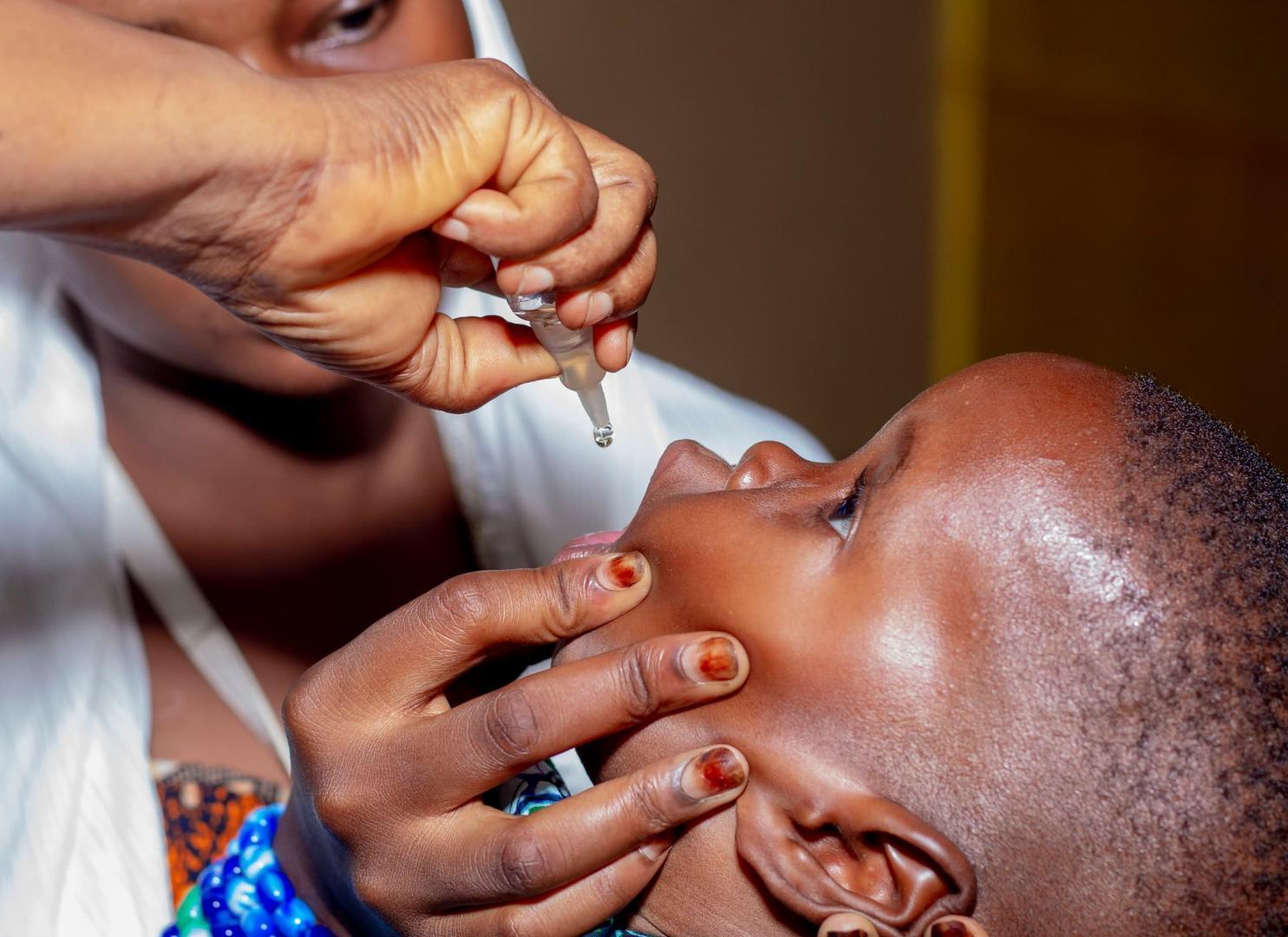
Africa-Press – Namibia. Namibia reached a remarkable milestone with the first phase of the national polio immunisation campaign, which ran from 26 to 29 January, vaccinating over 800 000 children across the country.
With the nationwide immunisation campaign having reached well over 800 000 children during the first phase, this marks a vaccination coverage rate of 91% and reflects the strength and efficiency of the country’s health response systems.
Health minister Dr Esperance Luvindao yesterday announced that outreach teams from the ministry traversed the whole country to ensure that thousands of Namibian children under the age of 10 years are vaccinated against polio and Namibia is kept polio-free.
“This achievement demonstrates that when we mobilise as one nation, we deliver results. Protecting every child from preventable disease is not optional. It is our responsibility. The 91% is a strong step forward, but we will continue pushing until we reach every child,” said Luvindao.
Namibia, which has been polio-free since 2006, last year November recorded its first case of polio type-2 in Rundu’s Ndama location in the Kavango East region.
The detection was made through routine environmental surveillance in a sewage sample collected at Ndama.
Poliovirus type-2 is known as one of the three serotypes of poliovirus that causes poliomyelitis, a viral infection affecting the central nervous system.
Polio is a highly infectious disease that largely affects children under five, causing permanent paralysis or death in 2% to 10% of those paralysed.
The virus is transmitted from person-to-person, mainly through the fecal-oral route or, less frequently, by contaminated water or food.
The virus multiplies in the intestine, from where it can invade the nervous system and cause paralysis.
Up to 90% of those infected are either asymptomatic or experience mild symptoms and the disease usually goes unrecognised.
“We proudly announce a remarkable 91% vaccination coverage rate achieved in the latest round of the national polio immunisation campaign. This milestone reflects the strength of our systems, the dedication of our healthcare workers, and the trust of our communities. Polio is preventable. Every vaccinated child represents protection, hope and progress toward a polio-free Namibia,” she said.
“Achieving 91% coverage is not just a statistic. It represents over 800 000 children vaccinated. It is thousands of children protected from lifelong paralysis. It is outreaching teams travelling to the most remote villages. It is nurses, community health workers and volunteers ensuring that no child is left behind,” stated the minister.
Luvindao said the ministry remains committed to further strengthening routine immunisation and improving outreach strategies to ensure that they close the remaining gaps to reach 100% protection and overall vaccination coverage.
The minister clarified that the ongoing vaccination campaign is not part of the regular immunisation schedule, as it uses the novel Oral Polio Vaccine type 2 (nOPV2), which has been specially developed for outbreak responses to control the spread of poliovirus type 2.
As part of the ongoing immunisation campaign, the ministry will launch phase two on 24 February and will run until 27 February 2026.
It will serve as an opportunity for those who did not get their children vaccinated during the opening round.
Surveillance
Namibia has more than 414 disease surveillance sites and of these 66 are categorised as high priority sites requiring weekly visits, 83 are medium, requiring bi-monthly visit and 265 are classified as low priority requiring a monthly visit.
All these sites irrespective of classification, report weekly for Integrated Disease Surveillance and Response (IDSR).
Based on the surveillance data, the country has maintained its status of being polio free with no wild polio virus detected since 2008.
Routine vaccination against polio remains relatively high with a national average of 90%.
For More News And Analysis About Namibia Follow Africa-Press