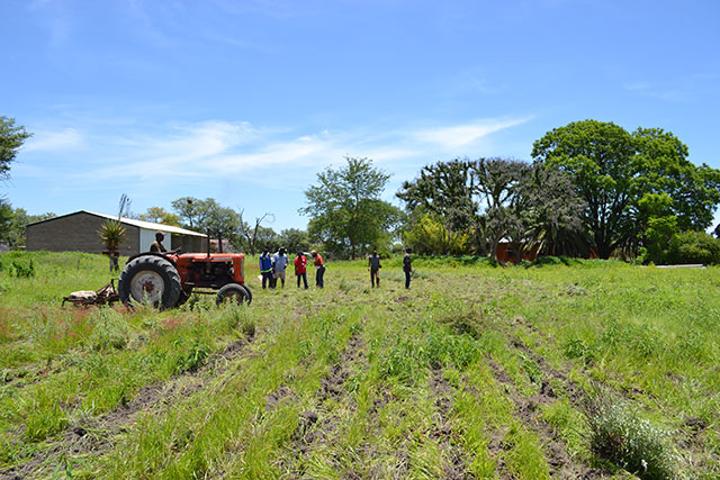
Africa-Press – Namibia. THE agricultural sector, which constitutes about 8% of the country’s gross domestic product (GDP), posted a growth of 2,0% in 2021, compared to 2020.
This was supported by 4,6% year-on-year (y/y) growth in crop farming and 3,2% y/y growth in fish production. According to a Simonis Storm Securities analysis, livestock farming weighed down the sector last year, declining by 2,2% y/y.
The Bank of Namibia forecasts 3,8% growth for the agricultural sector, with 4,5% growth forecast for livestock farming, 3% for crop farming and 3,8% for the fishing sector this year.
“Net investment in the agricultural sector (excluding fishing) has increased by 7,7% on an annualised basis in the last five years. This is indicative of herd restocking taking place following the drought, among others, whereas net investment in the fishing sector has declined significantly in the last five years.
“We remain net positive on the agricultural sector and it remains one of the sectors supporting our 2,5% GDP growth forecast for 2022,” said Simonis.
LIVESTOCK According to national figures, cattle marketing decreased by 12,4% y/y last month, sheep decreased by 34,6% and pigs by 6,8%, but goats went up 6,4%.
“On a quarterly basis, the livestock sector recorded positive growth, where improvements in cattle and sheep slaughtering by export-approved abattoirs mainly supported growth in the sector.
“Beef and sheep exports increased by 137% and 35% in 1Q2022 (first quarter of 2022) respectively, compared to the same period last year. These are early signs of the herd rebuilding season following the drought, coupled with soft commodity prices incentivising additional supply,” Simonis added.
According to the Meat Board, year to date average auction prices increased from N$32,11/kg to N$33,47/kg, an increase of 4,2% for cattle, while sheep decreased from N$35,22/kg to N$34,17/kg (3,0%), goats from N$37,04/kg to N$36,52/kg (1,4% drop) and pigs from N$36,76/kg to N$34,28/kg (6,7% drop) compared to the same period last year.
Live cattle exports decreased by 4,3% y/y, sheep rose 43,9% y/y and pigs rose16,8% y/y in March 2022. “At least 28% of beef was exported to South Africa, 27% to Europe (mainly Norway) and 18% to China. South Africa and Botswana were the main export destinations for sheep and pork during March 2022,” said Simonis. Viruses that decimated herds across the globe have led to higher meat prices in general.
Earlier this month, a cattle lung disease was recorded in Kavango West region. Control measures were implemented to contain the highly contagious disease. About 60 cattle showed clinical signs and about 30 succumbed earlier this month. However, no new major outbreaks have occurred to pose as a significant growth risk in the cattle subsector.
HORTICULTURE Last month, Namibia kept borders closed for the importation of butternut, cucumber, coloured pepper, green pepper, pumpkin and sweet potato, according to the Namibian Agronomic Board (NAB).
At the end of last month, NAB barred the importation of only four products for this month, namely butternut, cucumber, coloured peppers and pumpkin as local production forecasts are insufficient to meet demand.
“Global beef prices are expected to rise further in coming months, owing to higher demand from China, as well as higher input costs due to feed shortages and rising fuel prices,” said Simonis.
Local horticulture farmers are also under pressure, as global fertiliser prices have increased significantly in recent months. These factors imply a conservative approach to overall growth forecasts in the agricultural sector for the rest of this year, said the analysts.
For More News And Analysis About Namibia Follow Africa-Press