Africa-Press – Namibia. UIS, a mining settlement with a population of 5 000 or less, has become a hot spot for rare earth mineral explorers, with an Australian company recently announcing it found high-grade lithium-caesium-tantalum-rubidium-type rocks.
This company joins the scouting frenzy for rare earths, such as AfriTin Limited that has announced big deposits of lithium.
Listed on the Australian Stock Exchange, Askari Metals recently reported its find of high-grade lithium-caesium-tantalum-rubidium-type rocks has set a foundation for further development.
The project is about 2,5 kilometres from the Uis Tin Mine owned by AfriTin Mining PLC in the Erongo region.
The company said its primary purpose is to acquire, explore and develop a portfolio of high-grade lithium and precious metal projects across Western Australia, the Northern Territory, New South Wales and Namibia.
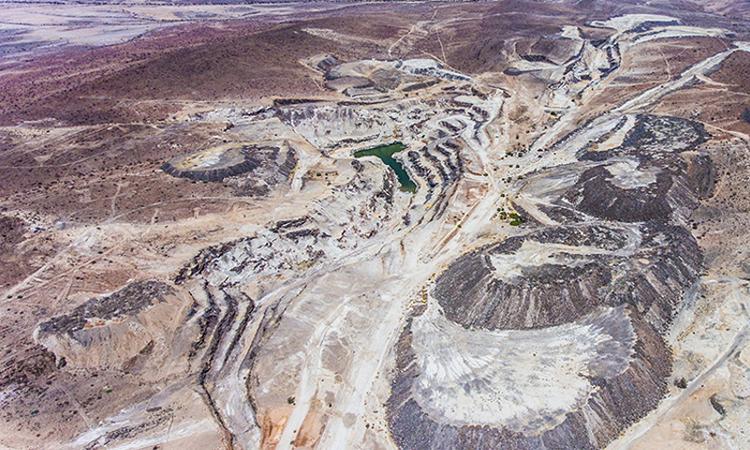
The Uis Lithium Project boasts more than 80 mapped pegmatites, many of which have been mined historically for tin and semi-precious stones.
Askari Metals owns exclusive prospecting licence 7345 that covers 113 square kilometres.
On Wednesday, the company said the overall outcome of the due diligence sampling campaign was highly positive, with 52% of the samples indicating fertile lithium-caesium-tantalum pegmatites with results above 234 ppm lithium, 47 ppm caesium and 20 ppm tantalum.
Caesium is used in getting oil to run your car and power your home. It can also be a lubricant in oil drilling and on cellphones’ GPS systems.
“The maximum assay results for lithium oxide, tin and tantalum are 2,1% Li2O, 1,3% Tin (Sn) and 658 ppm tantalum (Ta), respectively,” the company said.
In addition, Askari Metals said they found rubidium, whose average grade is 971 ppm Rb. Rubidium is used in manufacturing solar panels, electric vehicle batteries, other types of batteries, telecommunications systems, and medical tech.
Askari Metals also found tantalum commonly used as tank and pipe linings for process vessels and as a heat exchanging material in shell and tube heat exchangers, condensers and heaters.
According to Askari Metals, the maximum tantalum value received from the reconnaissance DD programme at the Uis project is 658 ppm Ta, and there are 31 samples that returned results greater than 200 ppm Ta, while the average tantalum grade for all 196 samples is 107 ppm Ta.
“This confirms that the tantalum prospectivity of the Uis project owned by Askari Metals is significant and potentially demonstrates that it is not only rich in lithium and tin but also tantalum, similar to the AfriTin Mining plc,” the company further said.
Askari Metals vice president for exploration and geology Johan Lambrechts said the initial reconnaissance exploration programme has validated the field observations and confirmed the high-grade nature at the Uis project.
“We have encountered numerous historical mine workings with abundant altered/weathered spodumene and lepidolite mineralisation at the surface. The grades are high, and the workings, in many cases, are extensive, offering immediate drilling targets,” Lambrechts said.
He further said the strategic location of the Uis project within 2,5km of an operating battery metals mine demonstrates the project’s potential.
“We have now proven that it hosts strike extensions of the same mineralised lithologies as the mine next door and offers Askari Metals significant exposure to the battery metals sector,” he said.
The company was only listed on the ASX last year July and on the Franfurt Stock Exchange in February this year.
Share price at the time of going for printing was at N$5,01 per share and rebounded after being on a downward path since April this year when it had reached N$8,98 per share.
Company financial statements as of June 2022 shows the company was running on a N$26 million loss, and an asset base of N$84,4 million.
Key owners of the company include 10 Bolivianos Pty Ltd (11,94%), Gino D’Anna (9,71%), Mining Equities Pty Ltd and Bnp Paribas Nominees Pty Ltd that own less than 3%.
Email: [email protected]
This company joins the scouting frenzy for rare earths, such as AfriTin Limited that has announced big deposits of lithium.
Listed on the Australian Stock Exchange, Askari Metals recently reported its find of high-grade lithium-caesium-tantalum-rubidium-type rocks has set a foundation for further development.
The project is about 2,5 kilometres from the Uis Tin Mine owned by AfriTin Mining PLC in the Erongo region.
The company said its primary purpose is to acquire, explore and develop a portfolio of high-grade lithium and precious metal projects across Western Australia, the Northern Territory, New South Wales and Namibia.
The Uis Lithium Project boasts more than 80 mapped pegmatites, many of which have been mined historically for tin and semi-precious stones.
Askari Metals owns exclusive prospecting licence 7345 that covers 113 square kilometres.
On Wednesday, the company said the overall outcome of the due diligence sampling campaign was highly positive, with 52% of the samples indicating fertile lithium-caesium-tantalum pegmatites with results above 234 ppm lithium, 47 ppm caesium and 20 ppm tantalum.
Caesium is used in getting oil to run your car and power your home. It can also be a lubricant in oil drilling and on cellphones’ GPS systems.
“The maximum assay results for lithium oxide, tin and tantalum are 2,1% Li2O, 1,3% Tin (Sn) and 658 ppm tantalum (Ta), respectively,” the company said.
In addition, Askari Metals said they found rubidium, whose average grade is 971 ppm Rb. Rubidium is used in manufacturing solar panels, electric vehicle batteries, other types of batteries, telecommunications systems, and medical tech.
Askari Metals also found tantalum commonly used as tank and pipe linings for process vessels and as a heat exchanging material in shell and tube heat exchangers, condensers and heaters.
According to Askari Metals, the maximum tantalum value received from the reconnaissance DD programme at the Uis project is 658 ppm Ta, and there are 31 samples that returned results greater than 200 ppm Ta, while the average tantalum grade for all 196 samples is 107 ppm Ta.
“This confirms that the tantalum prospectivity of the Uis project owned by Askari Metals is significant and potentially demonstrates that it is not only rich in lithium and tin but also tantalum, similar to the AfriTin Mining plc,” the company further said.
Askari Metals vice president for exploration and geology Johan Lambrechts said the initial reconnaissance exploration programme has validated the field observations and confirmed the high-grade nature at the Uis project.
“We have encountered numerous historical mine workings with abundant altered/weathered spodumene and lepidolite mineralisation at the surface. The grades are high, and the workings, in many cases, are extensive, offering immediate drilling targets,” Lambrechts said.
He further said the strategic location of the Uis project within 2,5km of an operating battery metals mine demonstrates the project’s potential.
“We have now proven that it hosts strike extensions of the same mineralised lithologies as the mine next door and offers Askari Metals significant exposure to the battery metals sector,” he said.
The company was only listed on the ASX last year July and on the Franfurt Stock Exchange in February this year.
Share price at the time of going for printing was at N$5,01 per share and rebounded after being on a downward path since April this year when it had reached N$8,98 per share.
Company financial statements as of June 2022 shows the company was running on a N$26 million loss, and an asset base of N$84,4 million.
Key owners of the company include 10 Bolivianos Pty Ltd (11,94%), Gino D’Anna (9,71%), Mining Equities Pty Ltd and Bnp Paribas Nominees Pty Ltd that own less than 3%.
For More News And Analysis About Namibia Follow Africa-Press